
The Kroos Replacement Project: A Delayed Analysis from the Summer Files
A Scout's Interrupted Notebook

I began this project with 30 names and a clear mission: find the heir to Toni Kroos. However, the scouting trail was interrupted by a professional opportunity with a professional club last summer that demanded my full attention. Rather than let these insights gather dust, these are the core profiles that survived my initial vetting before I traded the laptop for the touchline.
🧐 The Enigma
Real Madrid's problem is lucid and enigmatic at the same time. It is plain because the solution is clear: finding a deep-lying midfielder, the new Toni Kroos. On the other hand, it is a conundrum because nobody is like Toni Kroos.
First, events have to be put in their historical context.
Carlo Ancelotti stated this after the German had retired:
“We lose an important player that needs to be replaced. I don’t say with the same technical characteristics, because it’s impossible, but with someone else. We have the idea of how to replace him with Tchouameni, Camavinga, Valverde…”
Whereas the progression metrics weren’t impacted by the absence of a profile like Toni Kroos, the decline was evident in the buildup (buildups/90, 10+ passes, passes per sequence, and OPPDA). Real Madrid had attempted fewer passes and became more direct compared to what they were in the presence of Toni Kroos' orchestration.
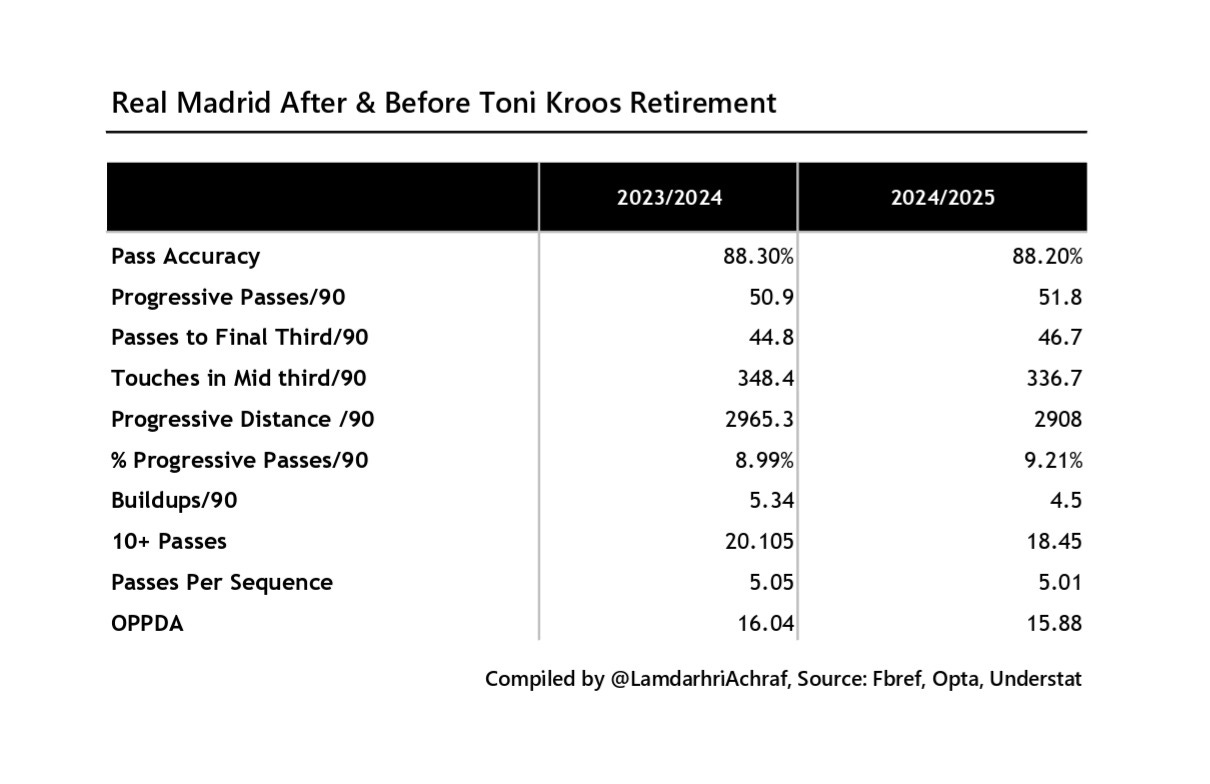
In addition, Los Blancos accumulated 336.7 touches in the middle third per 90 minutes in the 2024/25 season, 11.7 fewer than in the 2023/24 season. That is aligned with the lack of control the team suffered from post-Kroos’ retirement.
As Carlo Ancelotti said, Real Madrid aimed to replace Toni Kroos by utilizing the players they already had and play in a different way. However, you can’t acquire all that you desire. Injuries hindered any intentions of doing so. Thus, it was mandatory to tweak things. But still, the balance hadn’t been reinstated in the white castle.
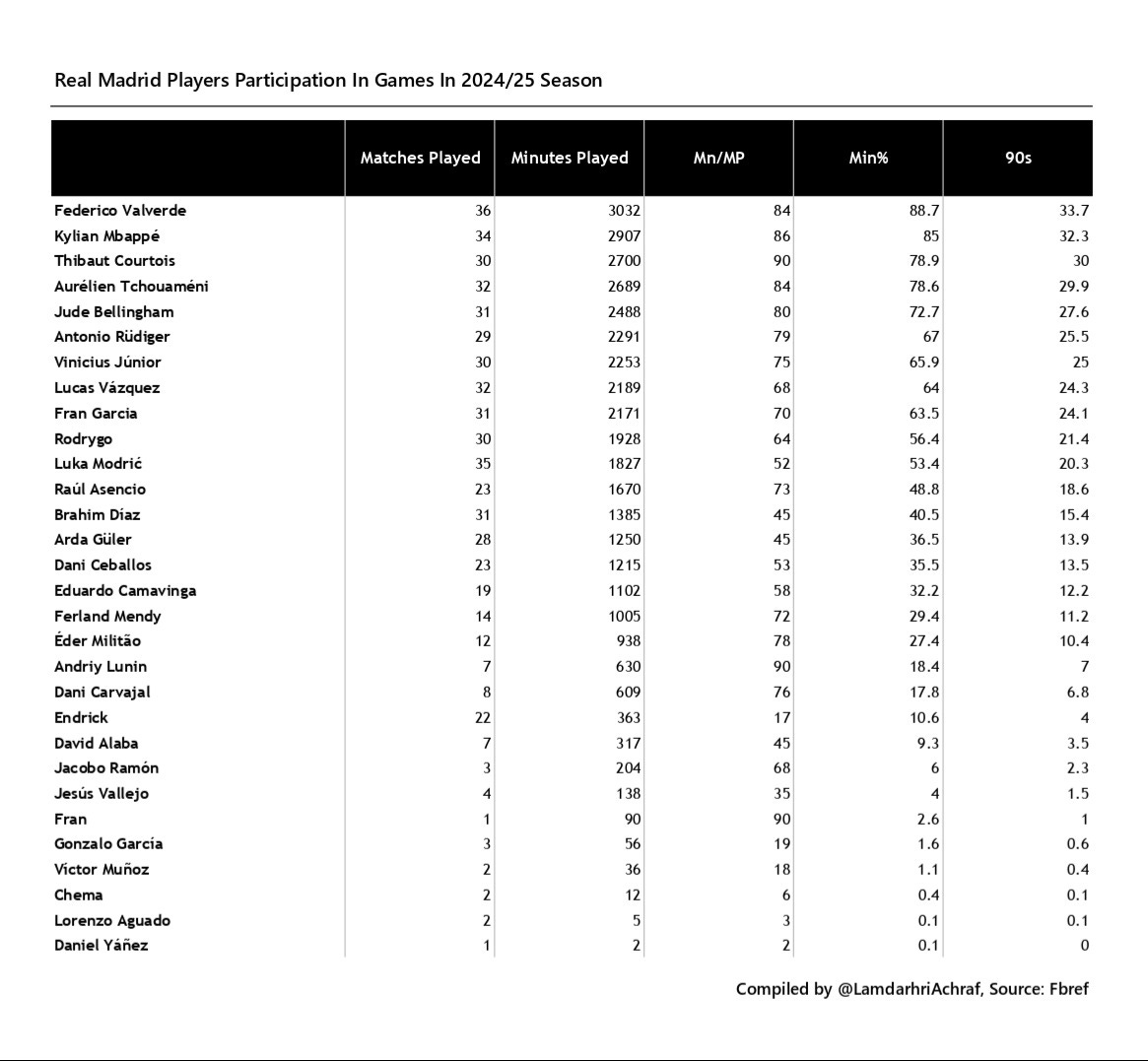
That was usually due to many reasons:
Players operating out of position to fill in the gap of an injured member (Aurélien Tchouaméni featured as a right center-back 50% of his games);
Midfielders growing up in age;
Midfielders didn’t get Ancelotti’s trust for a reason only the Italian manager knew;
Tactical and profile differences;
Injuries;
Digging deep into the statistics and based on what last season unfolded, it appeared that Dani Ceballos was the one Carlo Ancelotti resorted to fulfill the Toni Kroos role. The former offered the carrying quality through the thirds. And even though Dani Ceballos’ passing numbers were promising, Toni Kroos’ long, progressive passing range and switches are undeniable and simply irreplaceable. Not only that, but the German midfielder also provided the team with more ball security compared to his peers.
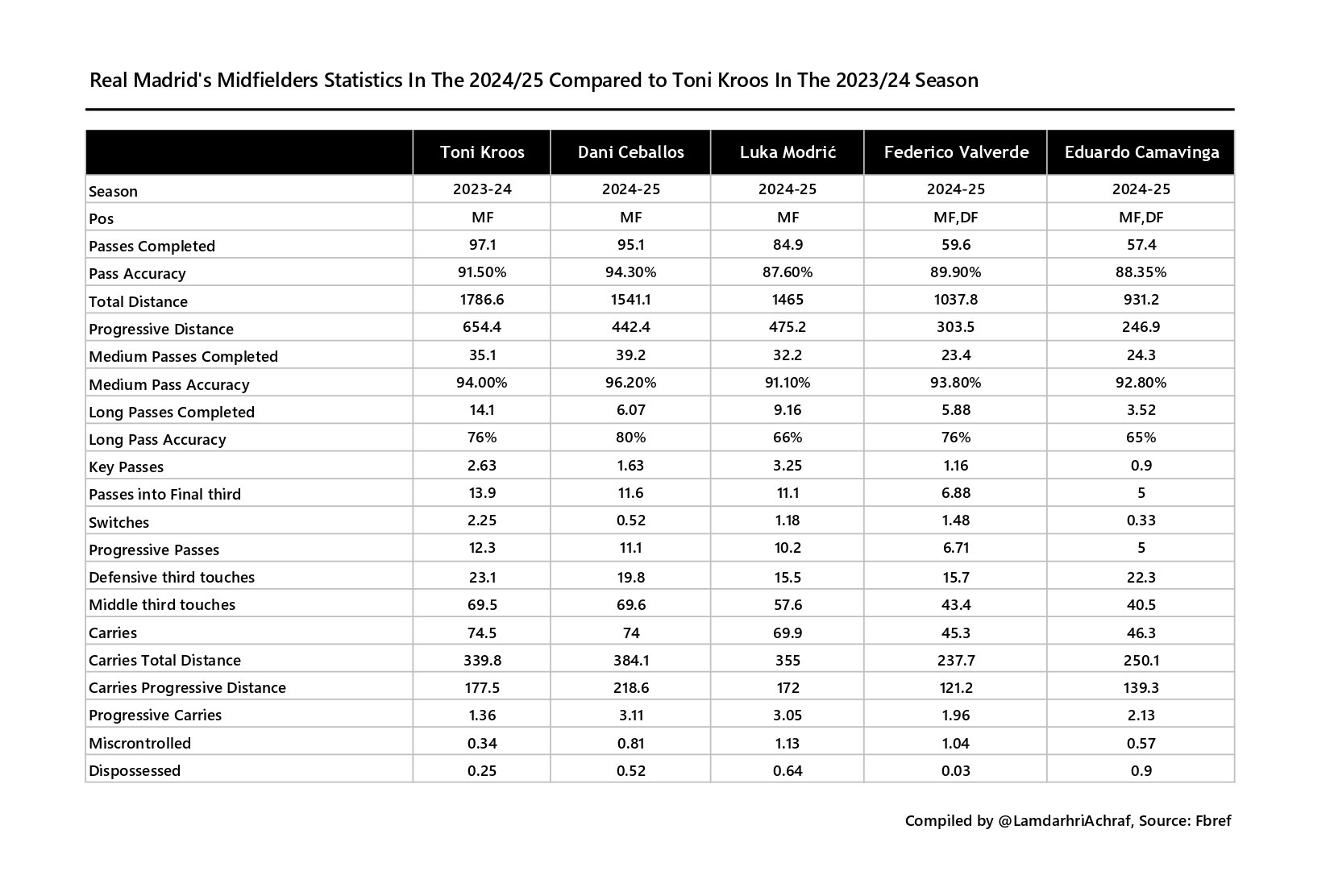
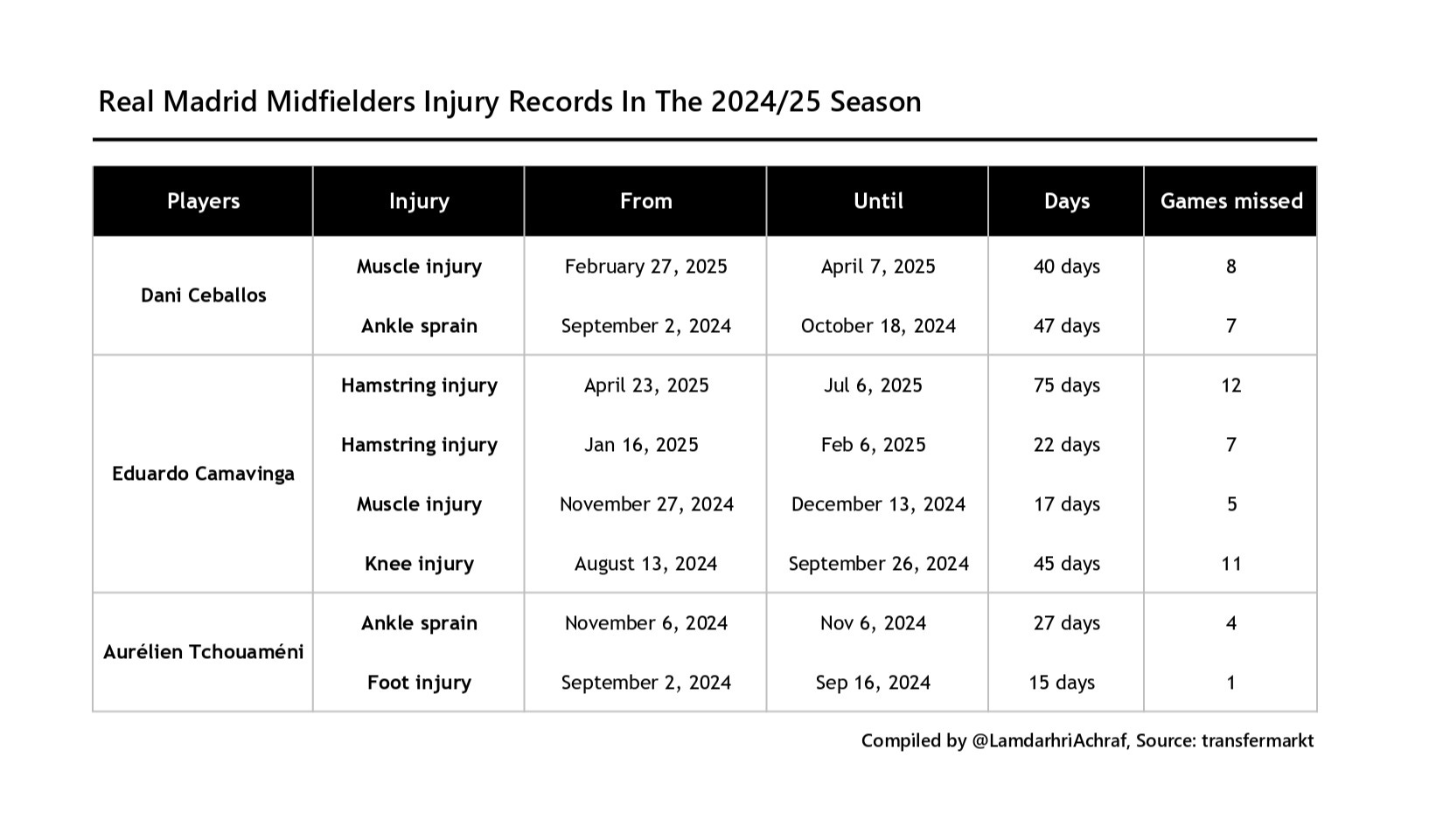
Misfortunes never come singly. Dani Ceballos missed the early period of the 2024/25 season, and the most critical time in a club season. In general, Real Madrid lacked control over the events of the games. They didn’t establish a foothold in big games due to a lack of a metronome, a cold-nerves cog who could steer and hegemonize the cadence of the games by slowing it down or speeding it up.
A part of the problem was Real Madrid’s recruitment after bringing home the 15th UEFA Champions League and 36th La Liga titles. Kylian Mbappé came in for free after a long saga with Paris Saint-Germain. In addition, Endrick landed in Madrid once he turned 18 years old, coming from Palmeiras. The season kicked off, and the need for a Kroos resurrection loomed on the horizon.
The lack of players in the backline and a deep-lying midfielder in big games, who could afford buildup, progression solutions, ball retention, and rhythm control, was glaring in the way Real Madrid approached the matches. Most of the time, Thibaut Courtois or one of the back four chipped long passes forward, hoping to collect the second ball (another problem for another occasion). Or, teams found joy in pressing Los Blancos high up the pitch to generate turnovers or regain to retain.
These were the white team partnerships in midfield in all the big games:
Real Madrid - Barcelona (0-4): Tchouaméni-Camavinga-Valverde-Bellingham;
Real Madrid - AC Milan (1-3): Tchouaméni-Modrić-Valverde-Bellingham;
Liverpool - Real Madrid (0-2): Camavinga-Modrić-Valverde-Bellingham;
Real Madrid - Barcelona (SuperCup) (2-5): Camavinga-Valverde-Bellingham;
Arsenal - Real Madrid (3-0): Camavinga-Modrić-Bellingham;
Real Madrid - Arsenal (1-2): Ceballos-Tchouaméni-Tchouaméni;
Real Madrid - Barcelona (Copa Del Rey) (2-3): Tchouaméni-Valverde-Bellingham;
Barcelona - Real Madrid (4-3): Ceballos-Valverde-Bellingham.
The midfield screamed stability. And most importantly, it missed a Kroos-esque player. Toni Kroos summarized as follows:
“One thing is clear, and that is that the central midfield position is fundamental in modern football; there’s no doubt about it. Look at what happened to Manchester City after a player like Rodri got injured, What happens is that a good central midfielder or defensive midfielder is missed when he’s not there. When he’s there, it’s something that’s taken for granted; it’s as if you don’t notice it, as if everything is in order and then the forwards can finish games with ease.”
The case is set. So, let’s go straight to the investigation.
🕵️ The “Detective Conan” Investigation
Before we dive in, we must be aware of what we are looking for.
Carlo Ancelotti handed the dugout to his former player at Real Madrid and Bayern Munich, Xabi Alonso. The latter took the steer, inaugurating a new era in the white castle. A different playing style, new dynamics, and a modern footballing vision, the Spanish manager has tried to implement in the Club World Cup, and he will hardly attempt to ingrain them in the 2025/26 season.
From the typical fan to the Club’s president, Florentino Perez, everyone is aware that the team is in desperate need of a Kroos replacement. However, how about asking the following question: Who is Xabi Alonso’s Granit Xhaka?
From here came the idea of looking for a midfielder who blends both styles. A pivot who has an Xhaka-Kroos combination inside him. Hence, searching for someone who can function as the new Toni Kroos means:
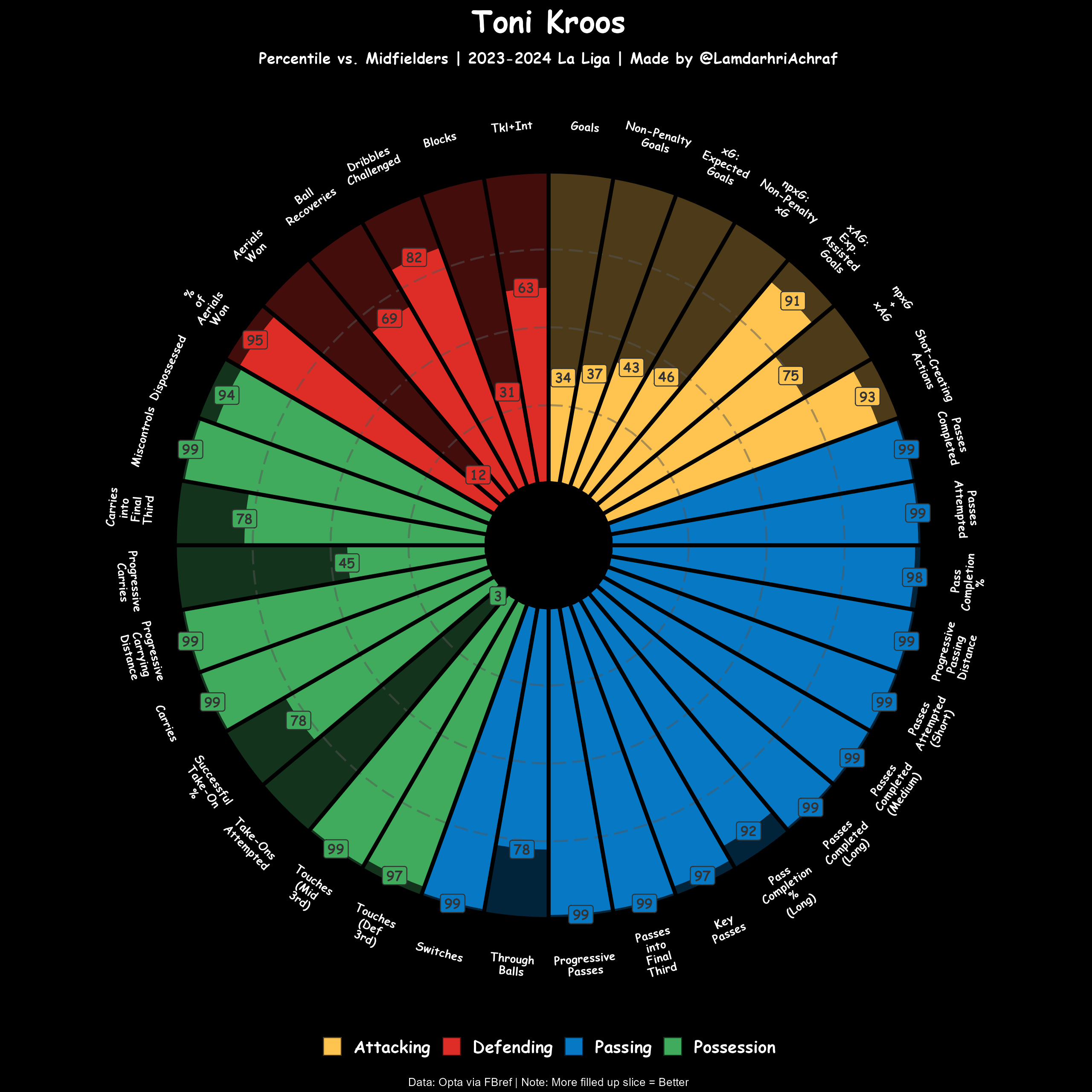
A midfielder who doesn’t get terrified, shaky, or trembling under pressure waves;
Calm, composed, relaxed, as if nothing is happening, processing options around and ahead of him;
Constant scanning, cunning, perfect body usage for leverage;
Spot tight lanes to slide passes, notice traps and danger. Always has another option in mind to pick out in case he is closed down from a certain side;
Can play switches as he hands the ball with his hands to the player who is subject to receive the pass (driven switches);
A one-touch play midfielder;
A risk-calculator and intelligent in preventing opponents from reloading the press via a nimble sense of reading the situation to counter their intentions;
Ball retention, passing range, and accuracy are no-brainers.
To complete the combination, the Granit Xhaka profile is:
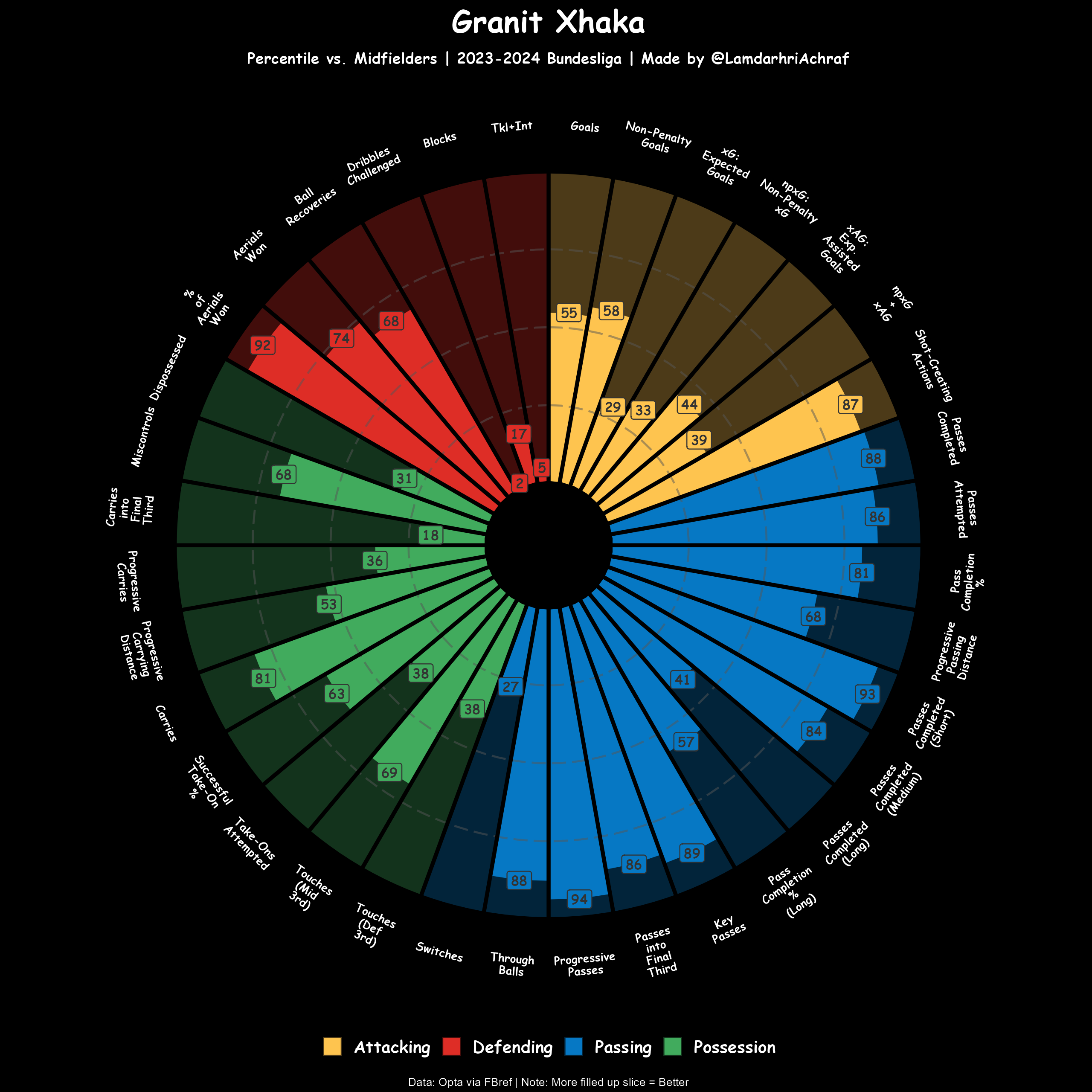
A midfielder who is able to lead and direct the out-of-possession phases, mainly the high press, without sacrificing intensity, especially when he steps up;
Good passing lane coverage;
Always checks his shoulder before taking a step, follows his man to his home;
In a zonal defense, always alert to jump, apply pressure, and force the ball holder to quick releases;
Wise, proactive, and smart in positioning to win the second balls;
Recovery runs, zone 14 and 17 presence;
Aggressive counter-presser;
provides line-breaking progression vertically and diagonally;
Can gallop the length of the pitch via carries;
A tempo setter and controller;
In a nutshell, the profile must combine:
Deep playmaking and press resistance;
Vertical progression, intensity, and defensive work rate;
Tactical intelligence, consistency, and high-volume passing;
Leadership and adaptability in various tactical setups;
Setting the tactical and technical floor paved the road for the following steps. Firstly, the search drove us to dissect the Xhaka-Kroos’ hybrid profile to establish the midfield key performance indicators. The investigation revolved around the framework, as follows:
➜ Technical and distribution
Passes attempted per 90: Tests the volume and control.
Pass completion% (short, medium, long): Reflects accuracy across ranges.
Progressive passes per 90: Vertical progression, ability to contribute to helping the team progress through the thirds via passing;
Progressive carries per 90: The capability to break lines through holding and advancing the ball under pressure;
Passes into the final third per 90: Highlights the frequency, astuteness to find passing lanes and avenues to access the defensive third of the opponents, and take the play into advanced positions.
Key Passes per 90: The definition is as follows: a pass that creates a goal-scoring opportunity for a teammate, leading to a shot on goal, even if the shot is not scored. Therefore, it measures the player's offensive contribution; in this case, it sheds light on deep playmaking.
➜ Ball security
Possession Lost under pressure per 90: Indicates ball security and retention;
➜ Defensive and physical aspects
Tackles + Interceptions per 90: defensive activity and ball winning;
Blocks per 90: Measures the number of times the player stands on the ball’s path. And it accentuates the midfielder's quality in anticipating a pass, shot, for example, to adopt the optimal positioning and timing to block off the ball’s direction.
Aerial duels: More emphasis on how a midfielder approaches the duel, how he uses his arms to create separation, unbalance his opponent, and how he utilizes his legs to generate momentum on the jump. In addition, how that midfielder reads the flight. Also, decision-making is a key aspect in this KPI, especially in the air, to determine whether he clears the ball anywhere or his headed clearances are directed to safe areas where his teammates can collect his delivery;
Ground duels: 1v1 battles (offensively and defensively), contact resistance, athleticism, ability to maintain and regain possession;
➜ Positional influence
Touches per 90 (Middle + Defensive Thirds): Involvement in buildup phases;
Progressive Passes Received per 90: Positioning to receive forward balls;
The process started by filtering all the midfielders operating in the top five European leagues who are 28 years old or younger and played at least 1200 minutes. As a result, we gathered 207 midfielders to study.
Then, we assigned each KPI a score between 0 and 10, normalized by percentile, to apply the following weight system:
Technical Score: 35%;
Defensive Score: 30%;
Positional Influence Score: 20%;
Ball Security Score: 15%;
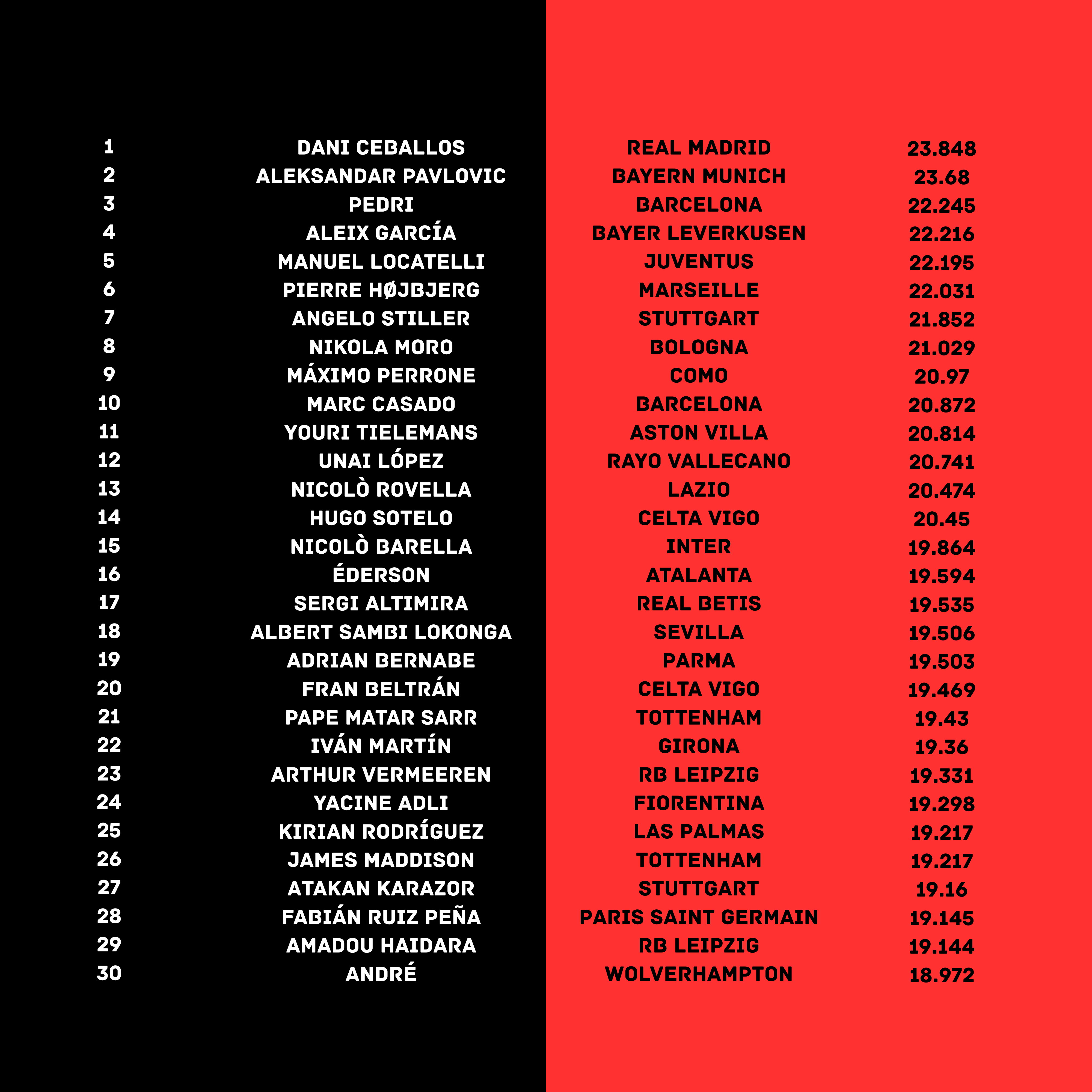
At the end, we culled out a list of 30 midfielders to put them to an eye test
👉 Aleksandar Pavlović
This is what Martin Zubimendi has learnt from Xabi Alonso when the current Real Madrid manager was coaching in Real Sociedad B.
“With him, I learned to recognise and differentiate [types of] presses, overcoming them. Before then, I played the way that more or less came naturally. With him I started to truly understand concepts for bringing the ball out, building play. He insisted a lot on the analysis. We would walk it through, inflatables positioned where the opposition would be.” ~ Martin Zubimendi
Recognizing press types, gaps, avenues to target, and weaknesses is one of Pavlović’s attributes. He always scans and checks his shoulders to spot where the pressure is coming from, where the free spaces are, and if there are free teammates to find after he receives. He targets the weakest spots of his opponents to gain a space-time advantage.
When he plays alongside Joshua Kimmich, he adjusts his positioning accordingly. When the latter drops situationally at the backline, the former attempts to sneak behind the opponent’s first line, looking for the blindside of one of the opposition players there to come short and open up a passing lane to take the ball forward. He comfortably links from first-time touch. Adding to that, Aleksandar Pavlović uses both feet, making him less angle-biased and hard to predict and press. Hence, he could access more angles. Once he releases the ball, he goes through the same process: scan, find available zones, read the situation to recognize how to be free, receive, pass, or carry.
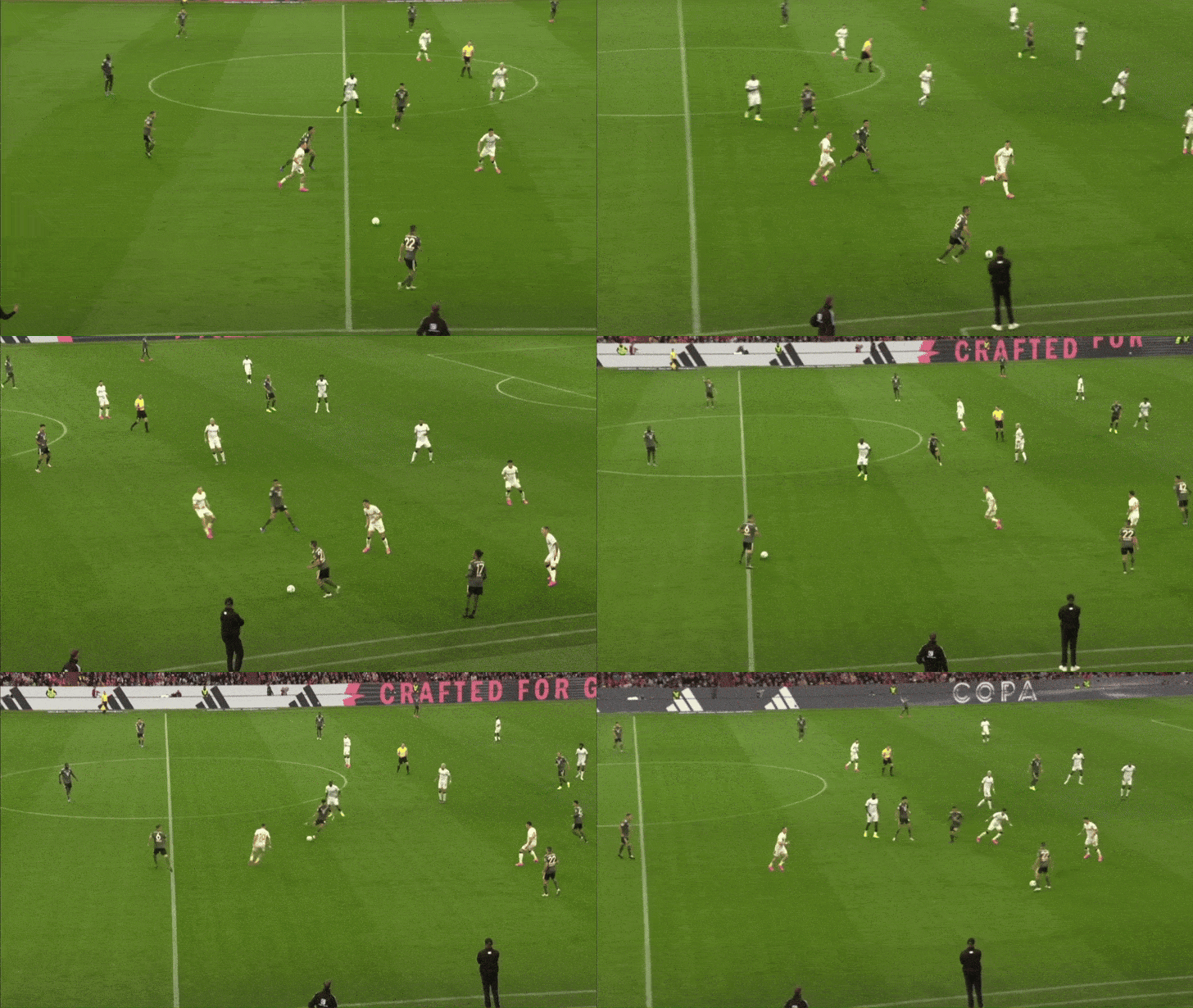
His tactical awareness gives him the edge, as it serves him well in picking up different positions and filling in other spaces than his partner in the pivot to avoid clogging certain areas. That secures the positional interchangeability and smooths the flow of the buildup and progression.
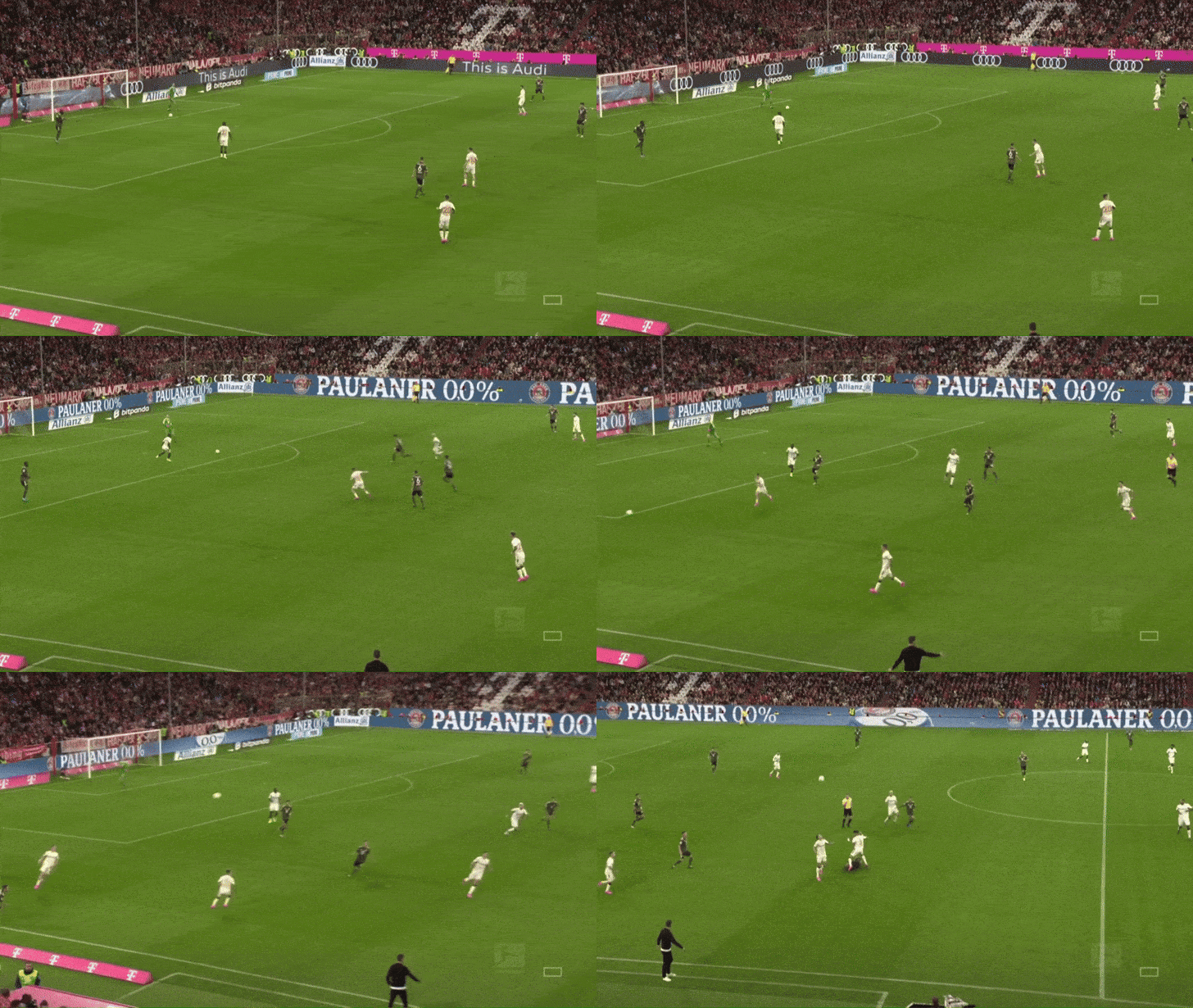
Aleksandar Pavlović is nothing more than calm under pressure. In deep positions, he directs his teammates, having a scenario constructed in his mind to get the ball out. This scene against Bayer Leverkusen is a prime example of what is aforementioned. He keeps pushing forward to draw Andrich with him, and in the meantime, he points to Neuer to advance into the space in front of him. Once the latter does that, Pavlović immediately switches on and sprints toward the German goalkeeper. On one hand, he gains separation. On the other hand, he has space to bounce the pass to Upamecano.
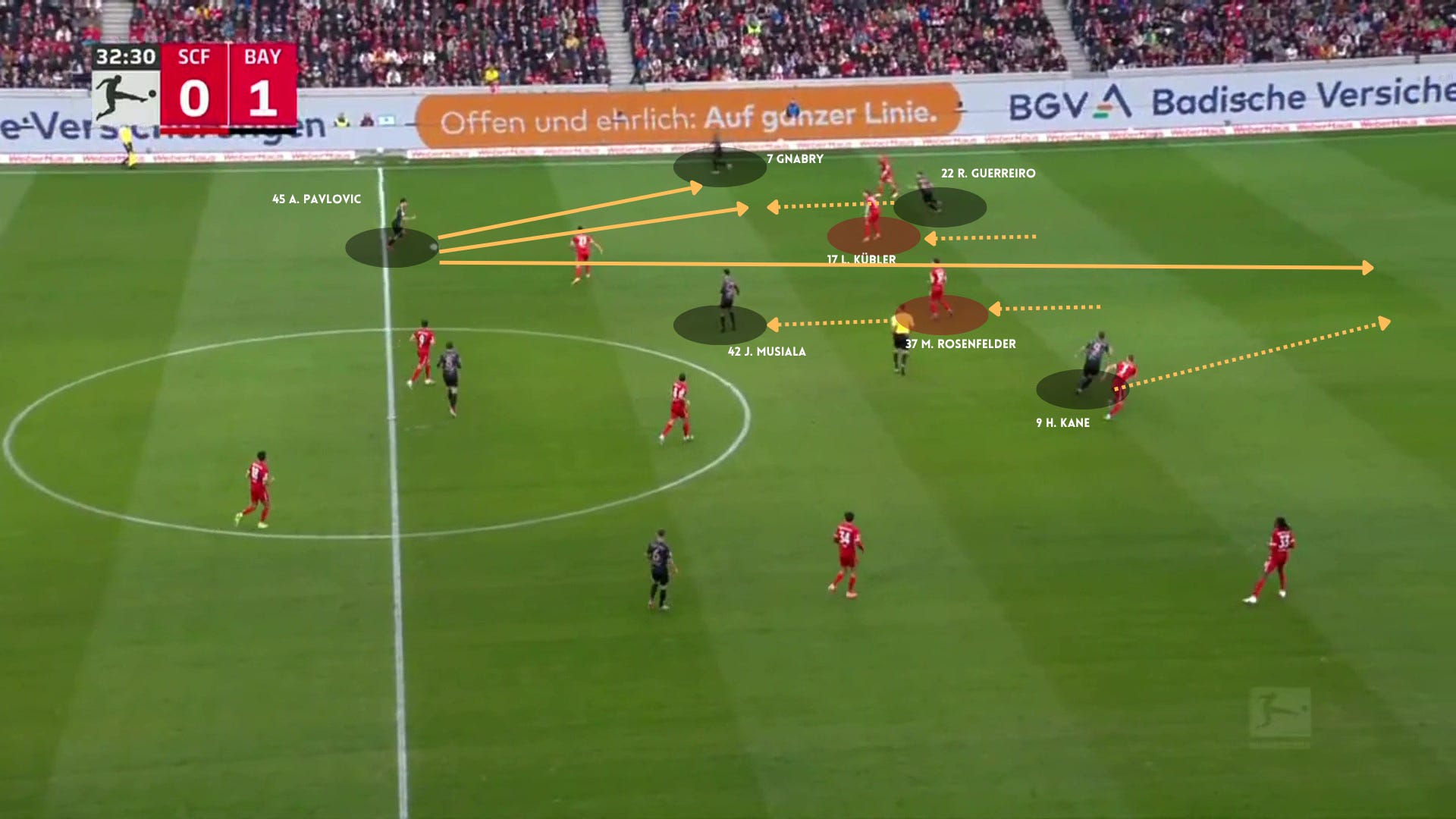
Staying on the same perspective of space and separation, Pavlović’s tactical intelligence enables him to interpret vacated zones based on his teammates’ off-ball movements. His buildup runs (dropping out and coming short) are conducive to evading pressure. Here, he recognizes Musiala pulling wide, so he moves to that evacuated area. And then, Gnabry comes into the scene, so Pavlović quickly adjusts his stance to collect the pass. Freiburg's right back, Kübler, continued his jump. As a reaction, Pavlović pokes the ball backward, spreads his arms across to shield it, and moves in the opposite direction—clockwise—to disrupt Kübler’s momentum. As a result, he spins past, leaving his marker in his wake to access the space that initially looked closed off.
Scanning is what makes Aleksandar Pavlović a unique player. It enables him to plan his next steps, to picture the future, and to decide what and how to execute his football actions. It allows him to determine where the pressure is coming from and where to move. By doing so, he drives himself to concentrate his effort on perfectly executing his actions after receiving. His technique of getting rid of pressure when his back faces the opposite goal is as follows: he detects the direction of the pressure, orients his body a little bit “side-on” to let the ball run across him, spins into space, and leaves his opponents in his wake.
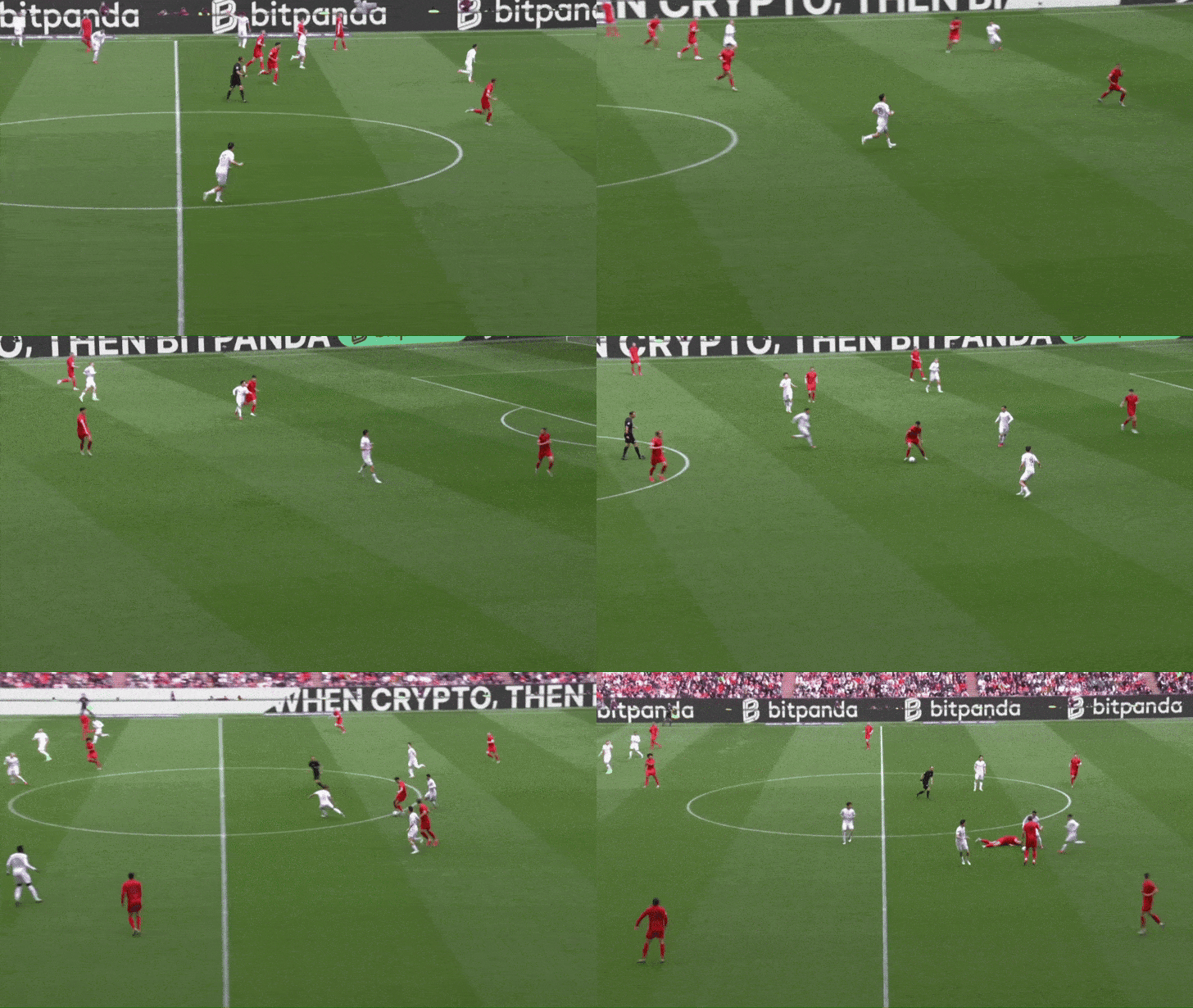
Allowing Pavlović space and time is asking for trouble. He is already comfortable operating in tight zones. In spacious areas, he has time to think, scan, assess, and adjust his body to carry or pass. When he is unpressurized, he seeks perfection in every action. He intends to pick out the most optimal option that will result in a tremendous impact: breaking down lines, setting one of his teammates behind defensive lines, or sliding passes down the inside channels.
Either through carrying or passing, Aleksandar Pavlović affords the quality of breaking down opponents' lines. Only his teammate Joshua Kimmich overrides him in terms of carrying progressive distance per 90 in the 2024/25 season, and he is also a top-notch defensive midfielder in sliding passes that travel the length of the pitch.
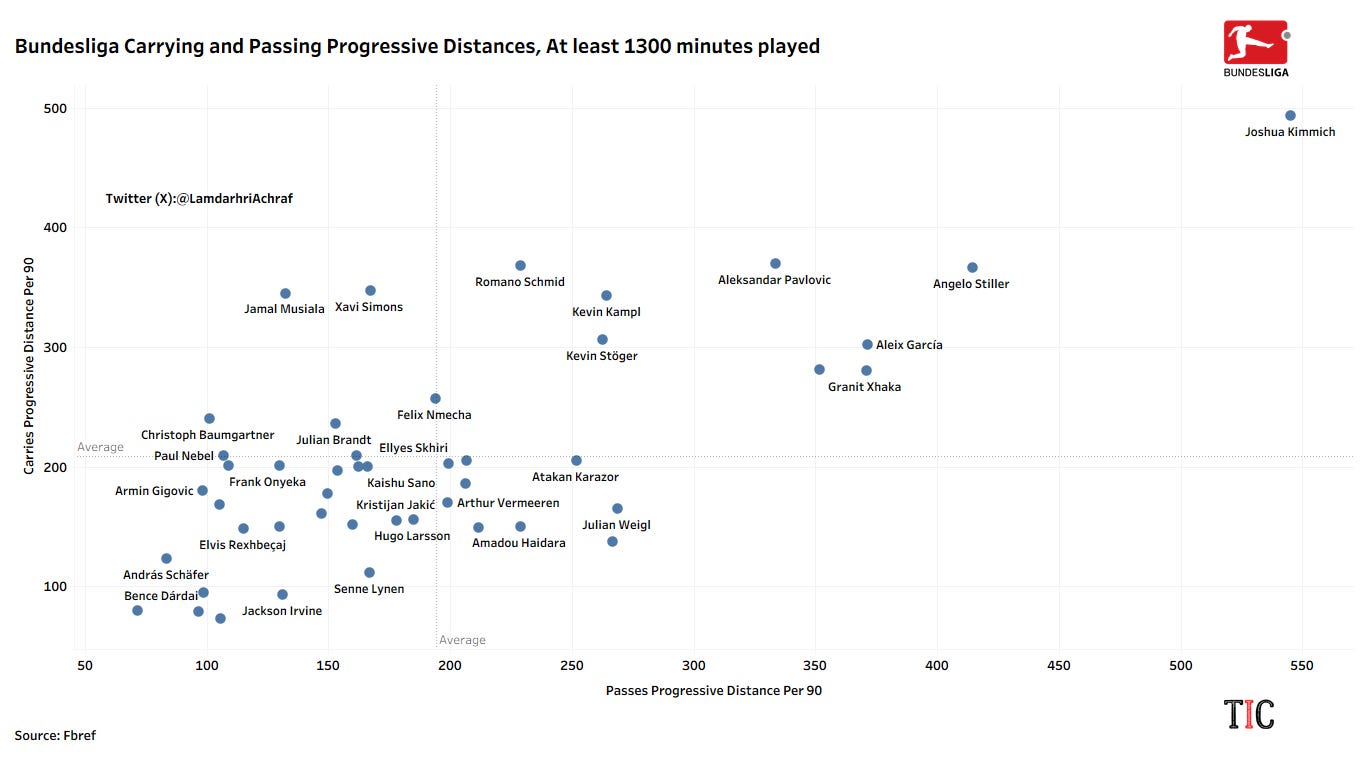
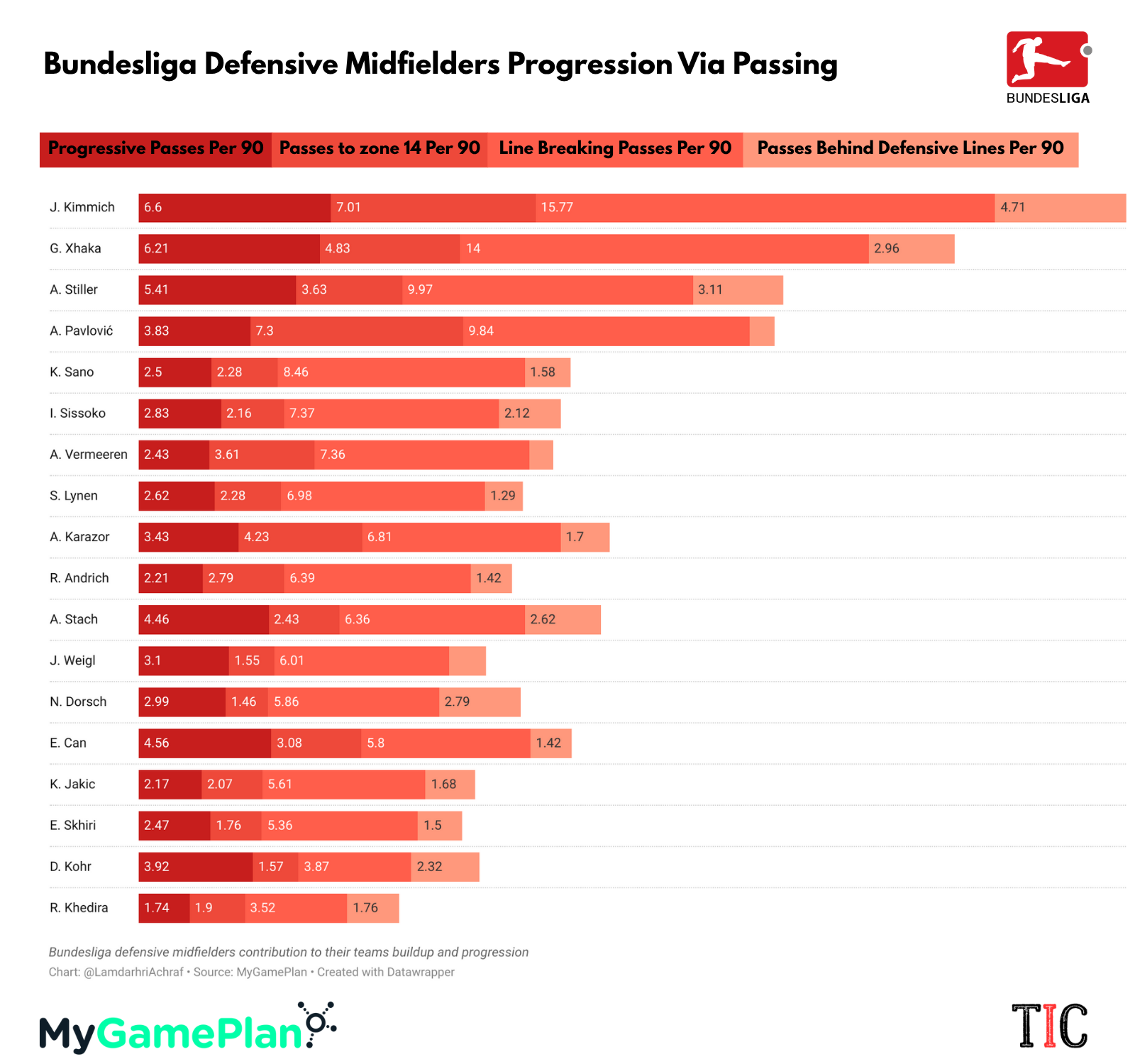
Furthermore, his ability and frequency with which he finds options between the lines (9.84 per 90) and glides the ball into zone 14 (7.3 per 90)—the golden zone—are eye-catching. He dictates play from deep and contributes heavily to developing Bayern Munich’s attacks via his weighted passes. In settled possession, he can find tight passing lanes to thread precise, incisive passes into high-impact areas with minimal error probability.
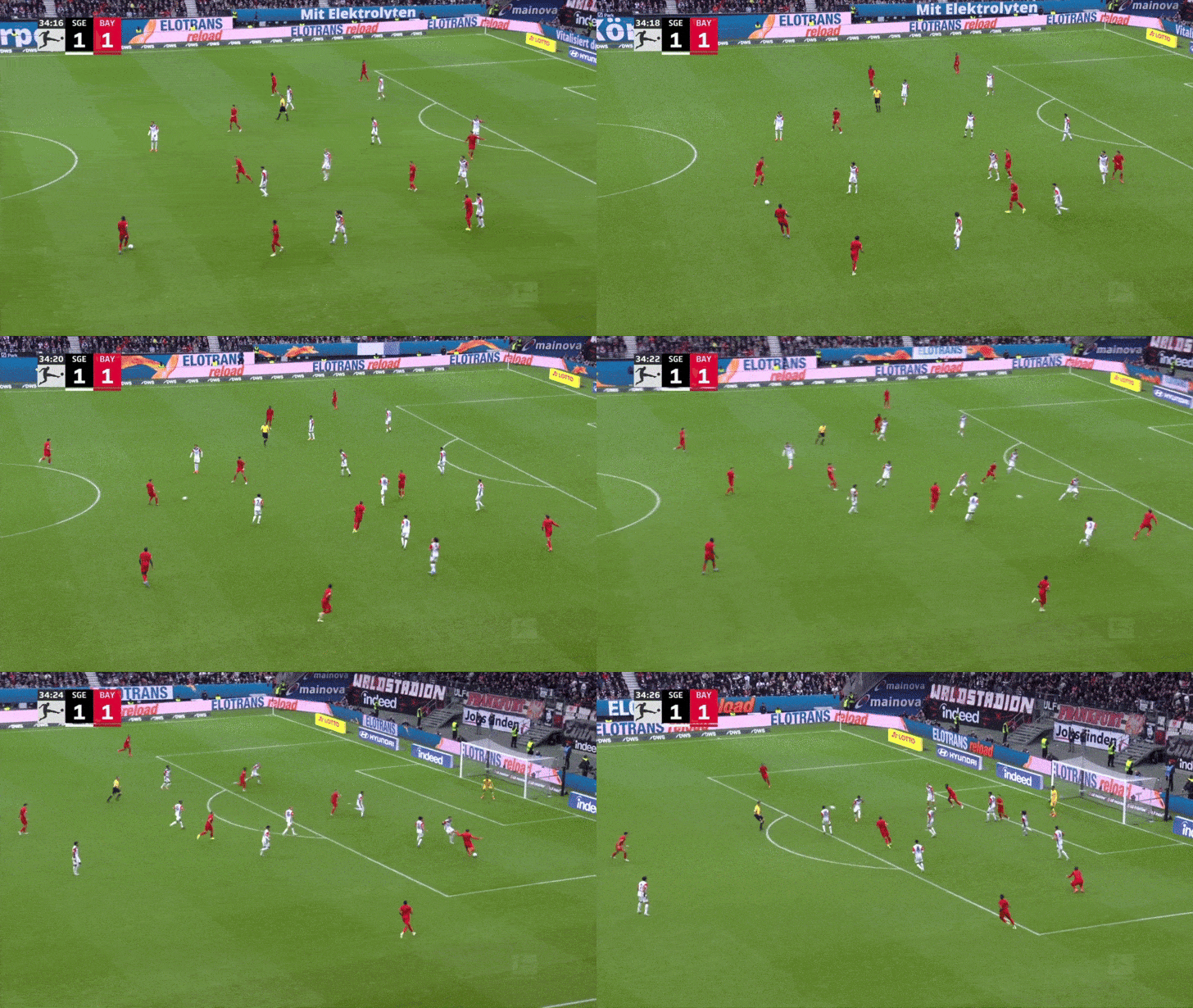
Check this scene. As aforesaid, he attacks the blindside of one of the players in the front line to receive. Here, he darts behind Ekitiké —toward the right— after the latter had done his scan. Then, he instantly identifies Thomas Müller, roaming in free space because Olise dragged Eintracht Frankfurt’s left-back Theate. So, he collects the ball with his left, turns, and prods the pass onto his compatriot behind.
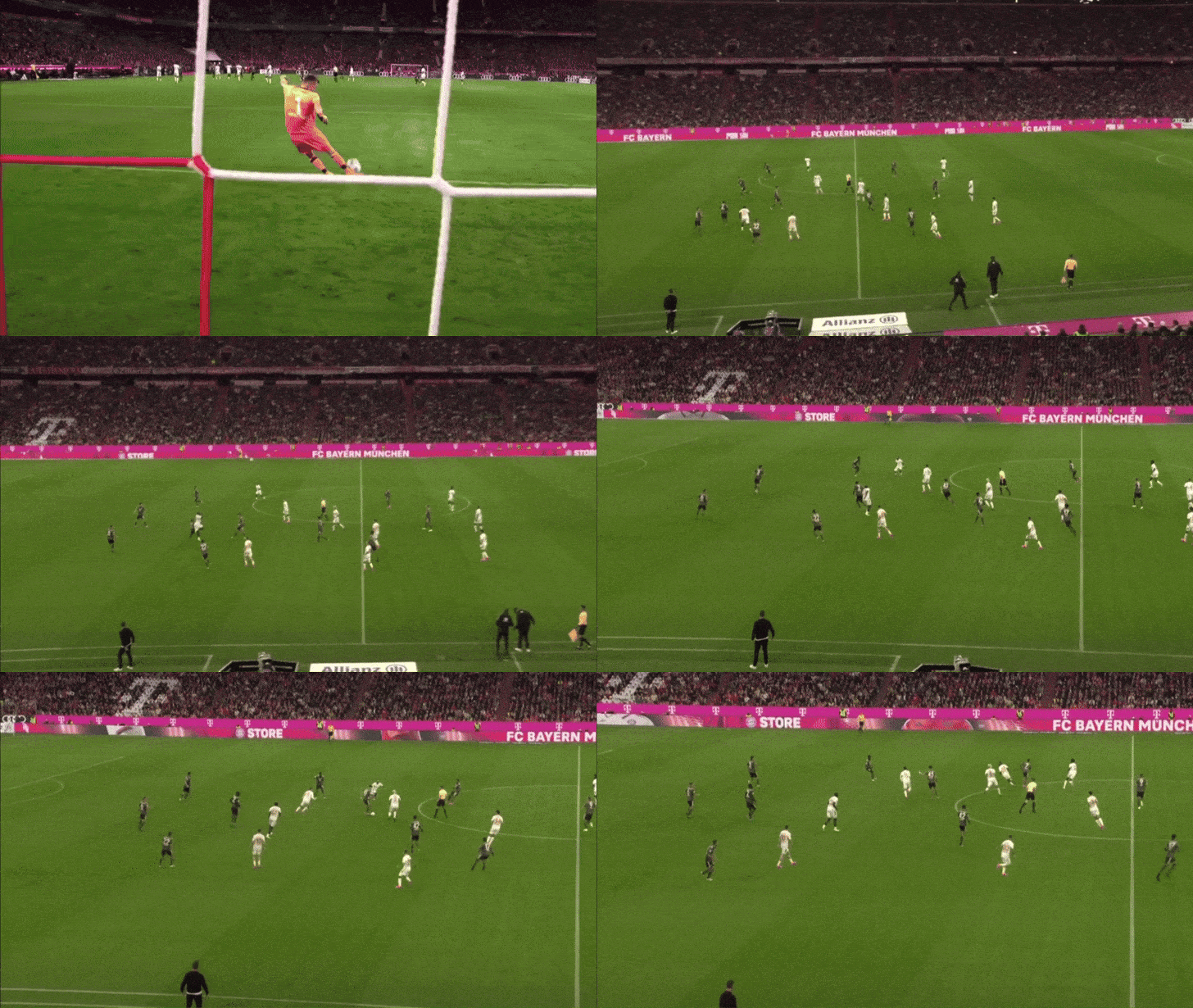
Defensively, he reads the situation well, be it in a high press, second, or loose balls. He is the type of player who lives off anticipation, strategic planning, and prediction. According to MyGamePlan, Aleksandar Pavlović leads the table of second balls won per game among the defensive midfielders with at least 1300 minutes played. He is usually in the right position and at the right time to collect the ball after an aerial duel.
In high press, he usually occupies one of the double sixes. He is always thinking, processing, and reading between the lines to anticipate the opposition’s intention. That is helpful to his decision-making, especially when Bayern Munich shut down one of the pitch sides, as he could easily decide whether to continue marking his player or retreat to provide protection behind. In addition, he keeps an optimal distance with his player to be able to jump and arrive in time or to backpedal (shift across as well) to an area where the danger is transferred.
Also, his imminent goal is to force the pass backward or into a zone where his team could draw leverage or where the opposition might be uncomfortable.
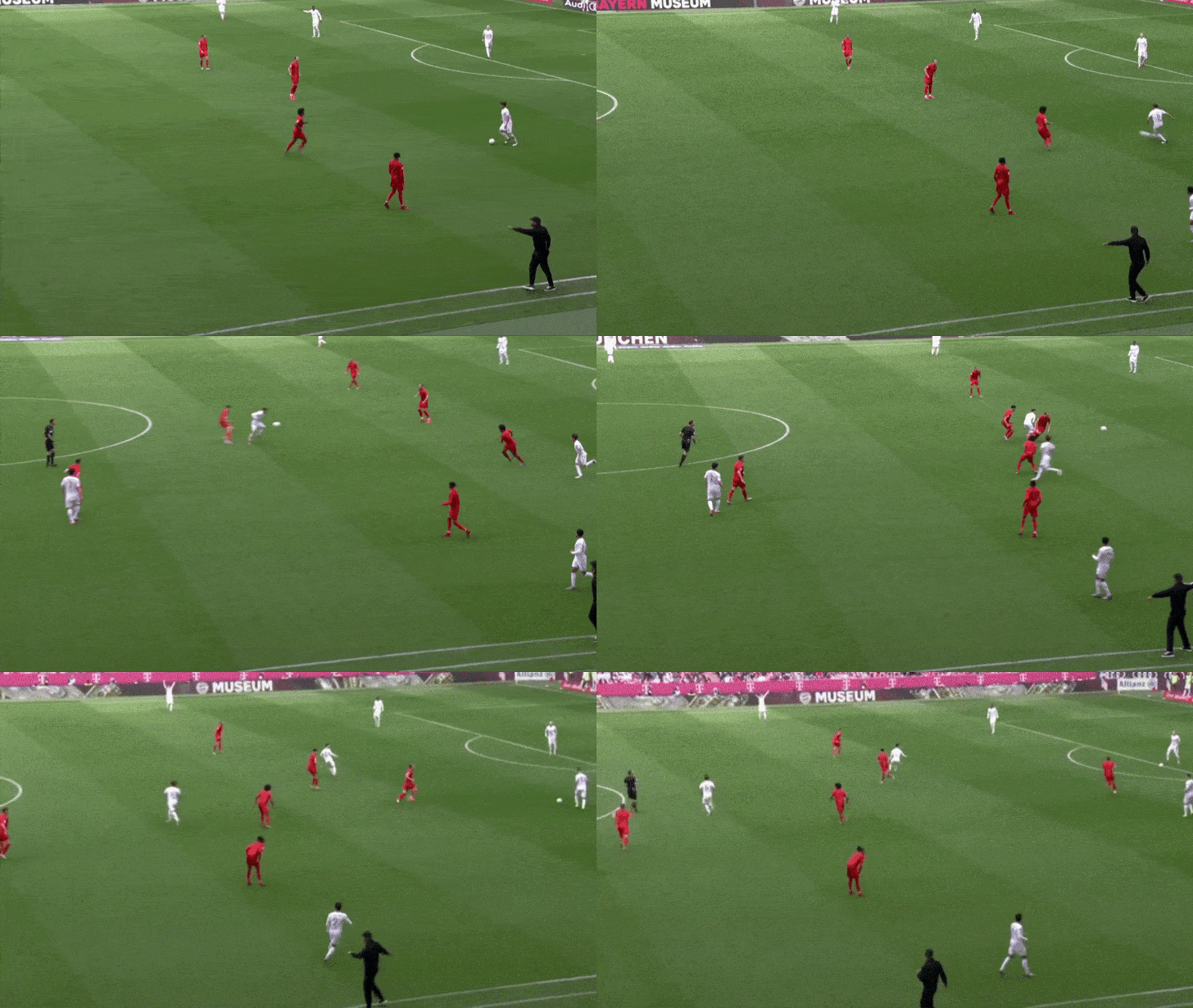
Pavlović’s jumps are well-timed, as he pounces on an opponent when he is fully certain he will intercept, block off the ball, or dispossess his man. His long frame also plays an important role in shutting down angles, cutting off passes, and regaining the ball through a “poke and prod” style. Furthermore, it is worth mentioning that Pavlović intends to regain the ball in a way that enables Bayern Munich to retain, sustain attacks, or turn over.
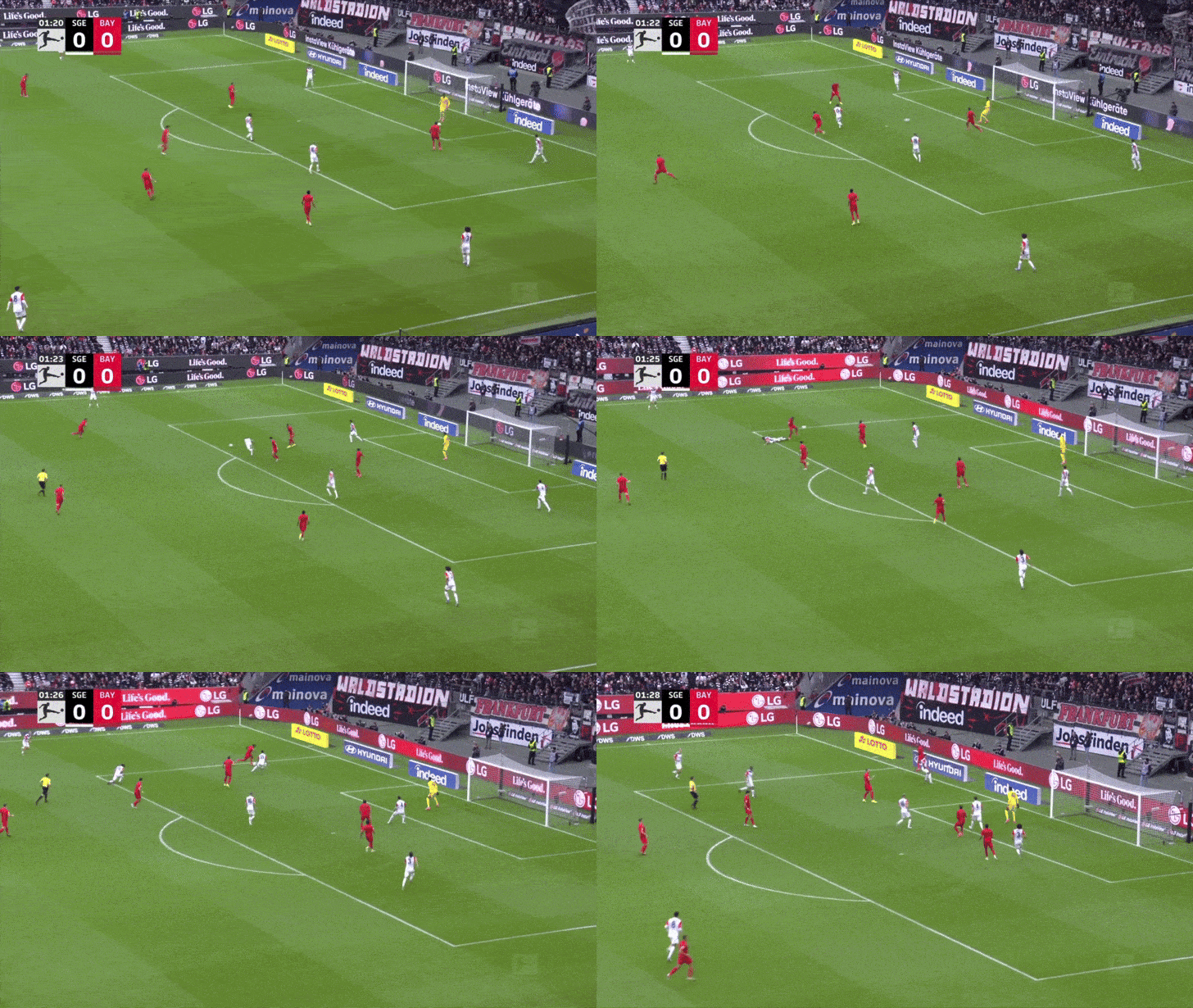
In counterpressing situations, he covers well the inside channels or central corridors by staying close to the potential players who may be a subject or target through which the transition can occur. Hence, he provides a solid structure for the rest defense by his immediate reaction and jumps to negate the space and nip any counterattacking attempt in the bud.
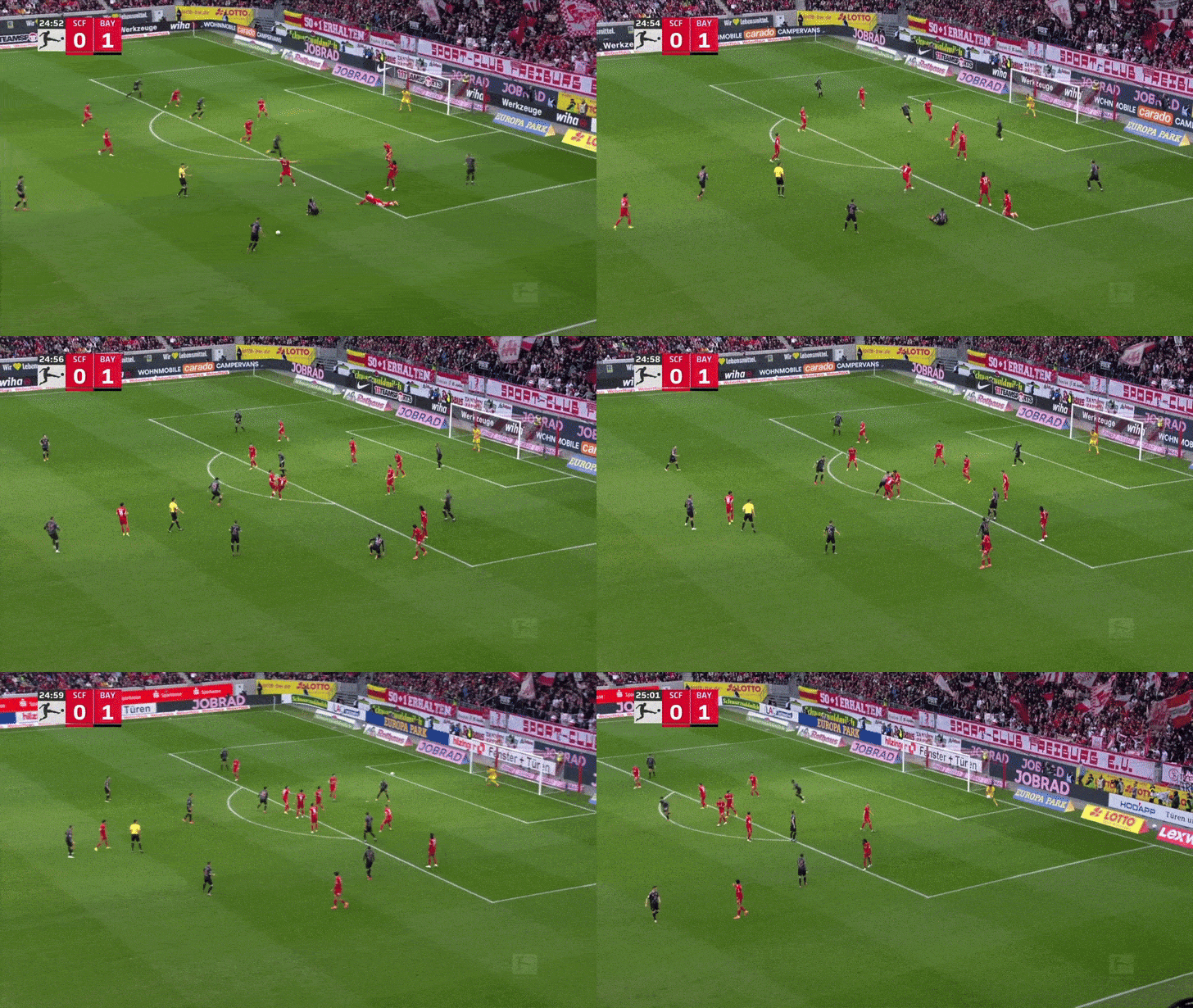
Despite managing to accumulate 0.62 tackles in the final third in the 2025/24 season, sliding tackles are a rare occurrence in his case unless it is the only way and the last resort to ward off a counterattack.
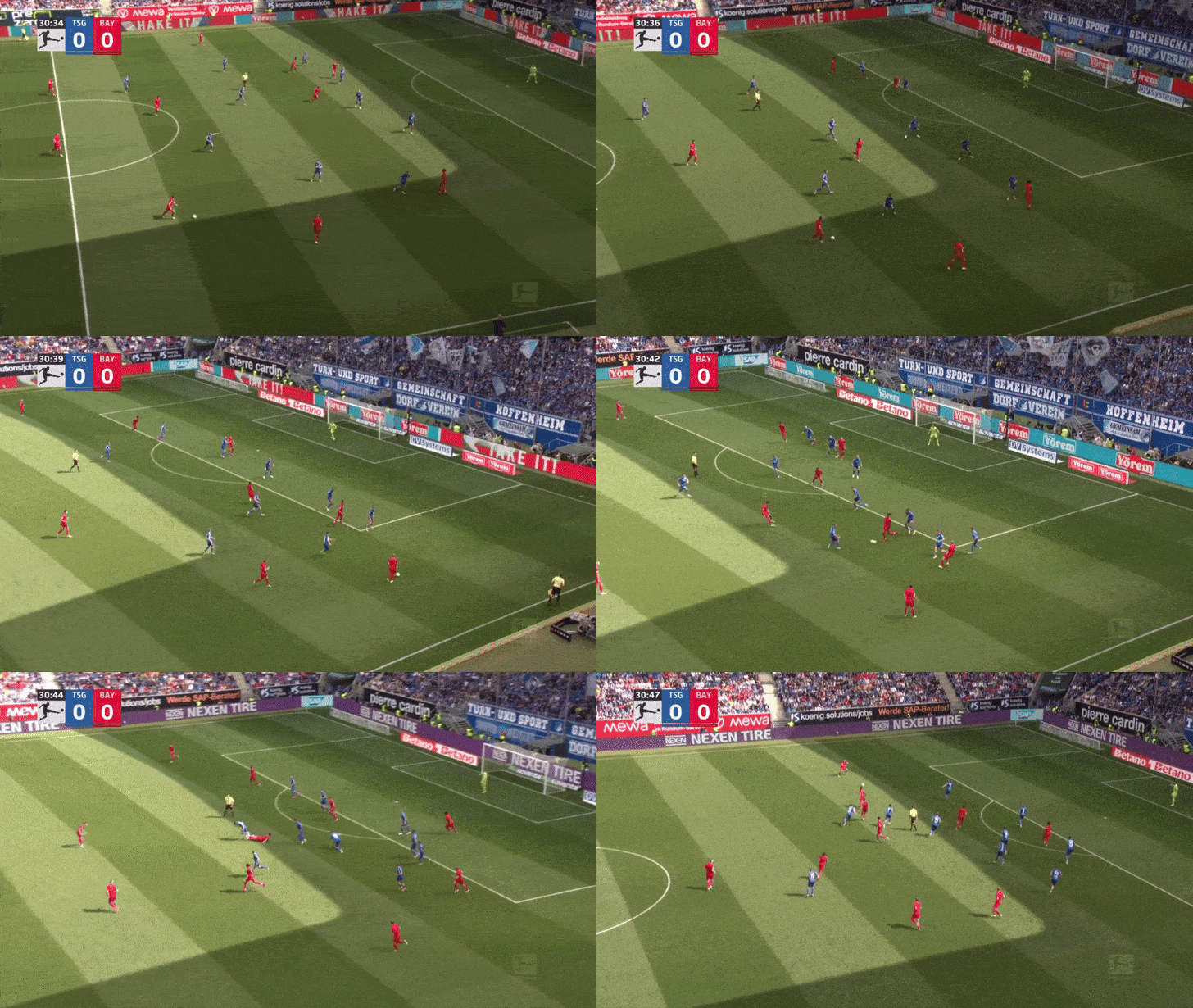
Otherwise, his style of counter-pressing is clean and based on stripping the ball off opponents through anticipation, good positioning, blindside exploitation, and proactivity.
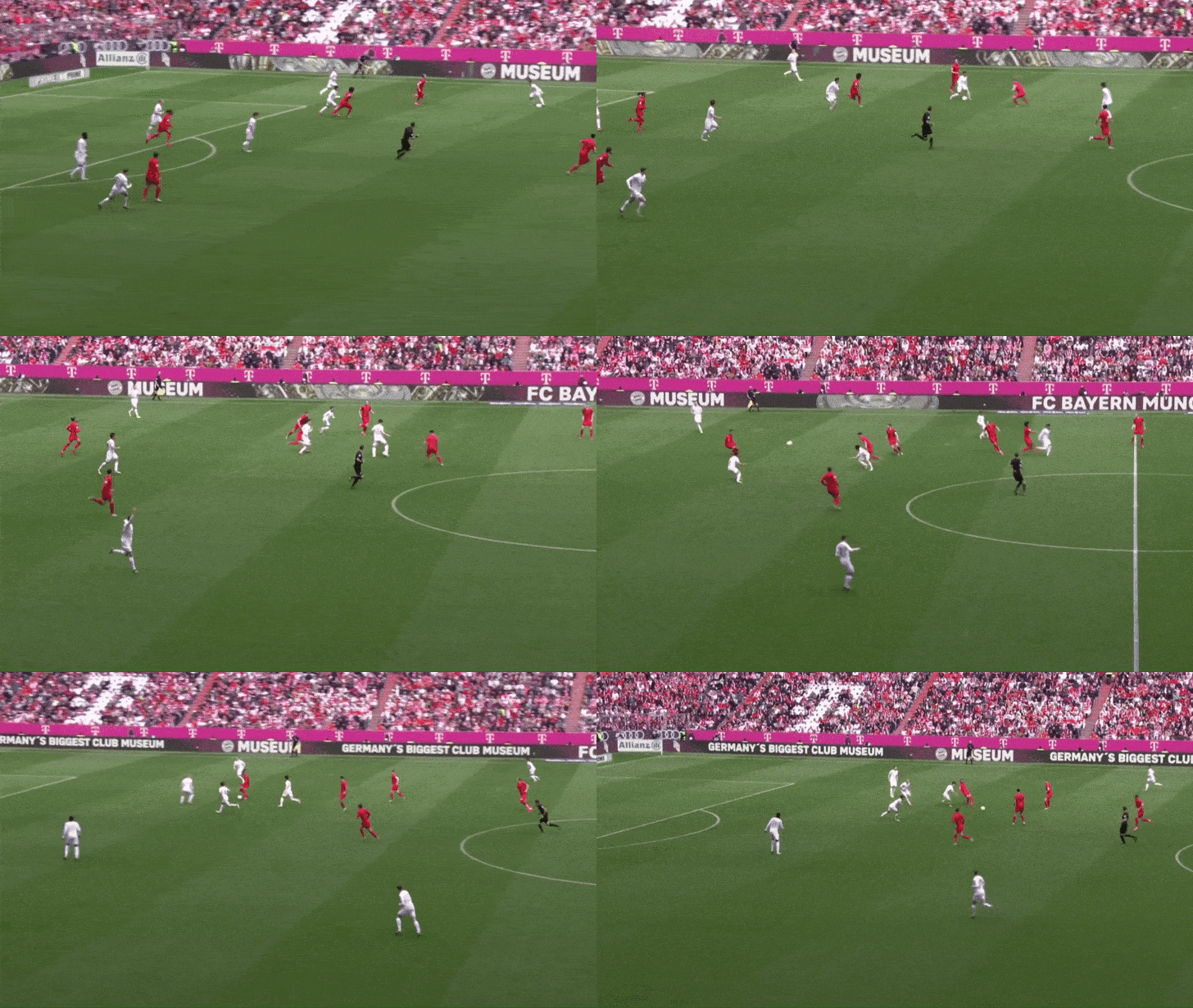
He challenges dribblers quite frequently (2.27 per 90). His approach in such positions revolves around matching the ballholder in cadence. He attempts to avoid selling himself and provides getaways through:
Keeping a close distance with his opponent to enable him to react;
Optimal body position: Standing on the forefeet, Knees are flexed, Torso is leaning forward;
Maintaining the center of gravity within the base of support to provide balance and stability;
Keeping the ball in his midline;
Moving with a high step frequency with his feet planted in the ground to give him momentum and keep up with the ballholder’s movements;
Good sense of anticipation. So he could be in sync with the opponent;
Timing of the tackle.
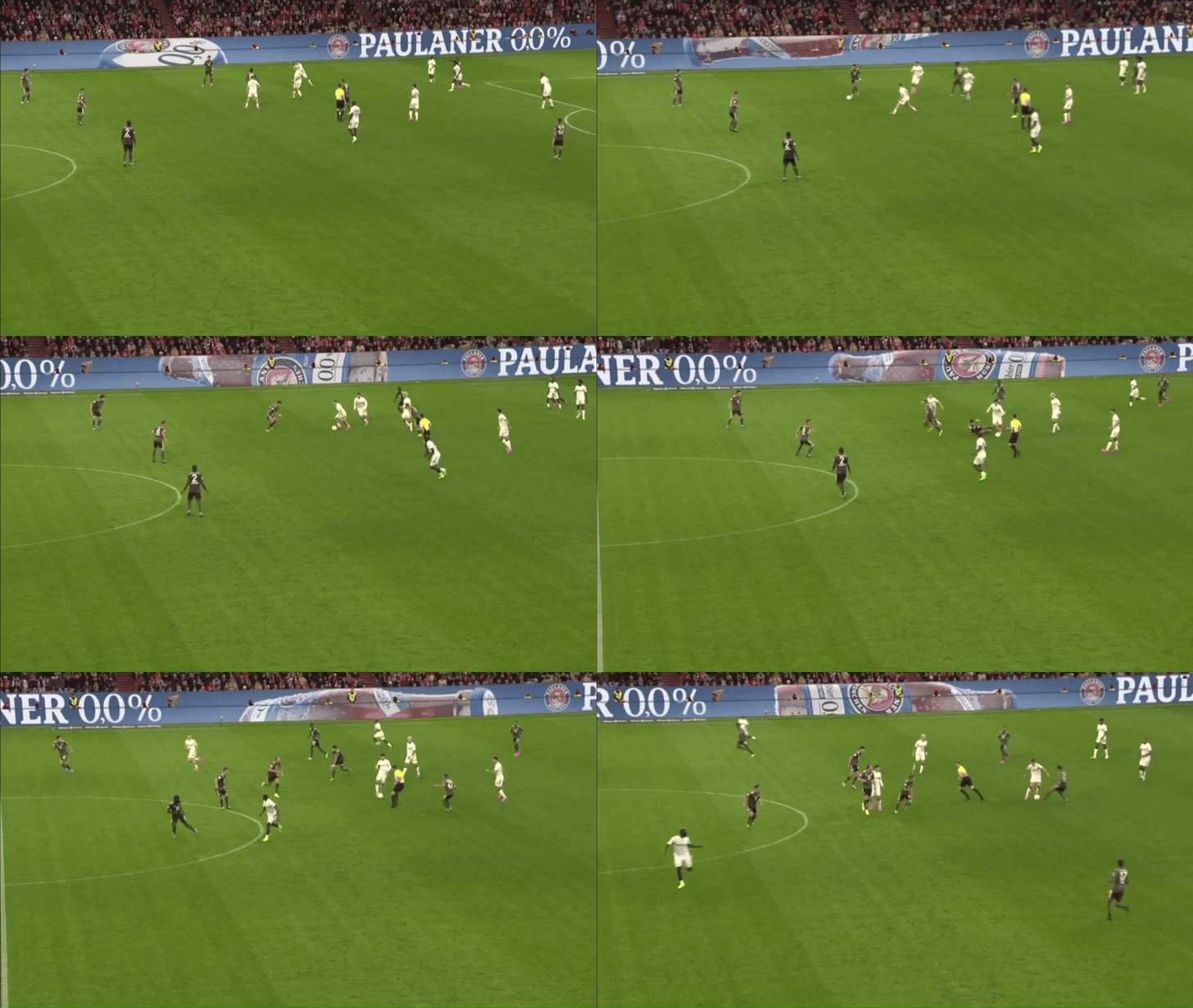
Pavlović conserves all his qualities when defending in a low block: good coverage to the half spaces and the central channel. He is urgent and pounces on loose balls. He is also aggressive and times his “step-ups” without committing mistakes. Here, he adopts a side-on stance to be able to drop backward or jump on. He just goes around Eggestein, spreads his legs, and prods the ball cleanly before it arrives at the feet of the Feiburg midfielder.
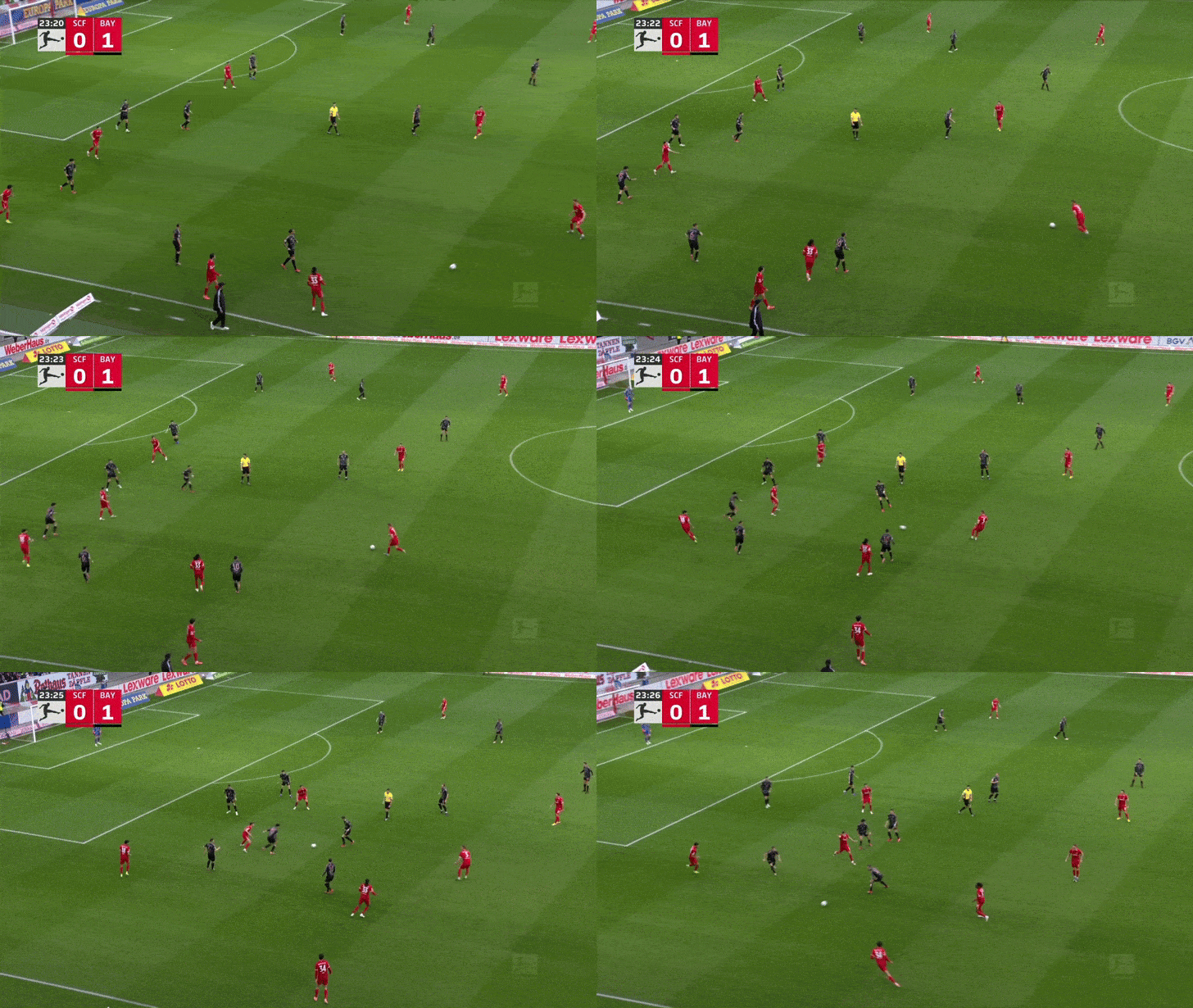
Aerially, Aleksandar Pavlović won 60% of his duels in the 2024/25 season. He stands at 188 cm, which gives him the edge to tower over opponents in the air. Aggressiveness isn’t his go-to plan. However, it is more about adopting the right approach.
Usually, Pavlović starts goal-side of his opponent, maintaining a distance with his man that allows him to control his run-ups and take steps to generate power in the jump via a strong foot plant. He positions his body to lean into his opponent. Plus, he makes use of his arms to nudge, destabilize, and drive him to mistime his jump. Additionally, his headers are usually directed to safe places, toward free teammates, or into areas where they could swarm to collect the second ball.
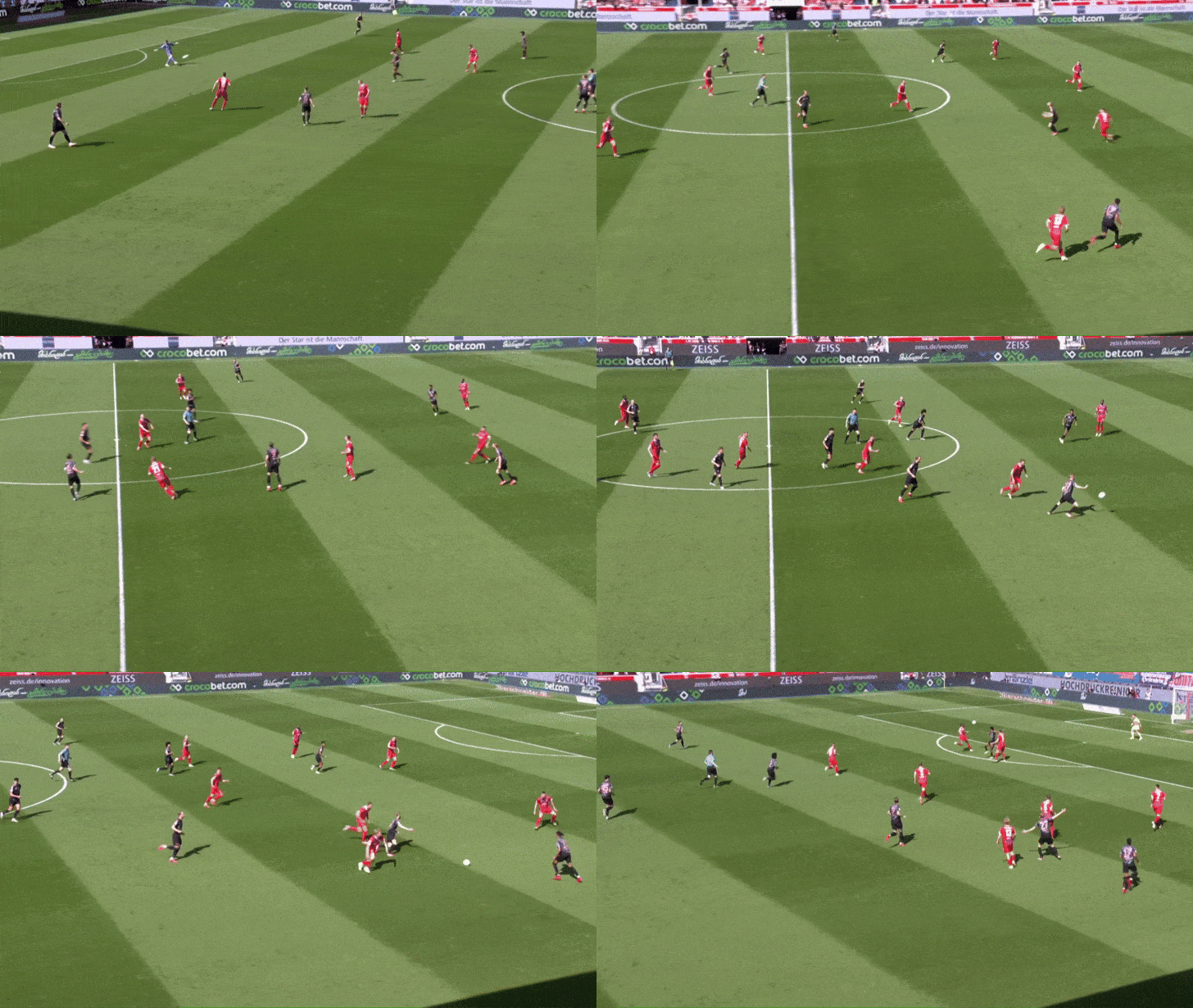
Although he amassed a 60% win rate of his aerial duels, he lost in situations where he could do better in terms of flight reading, putting on more intensity, adjusting his starting position, and timing his runs before the jump.
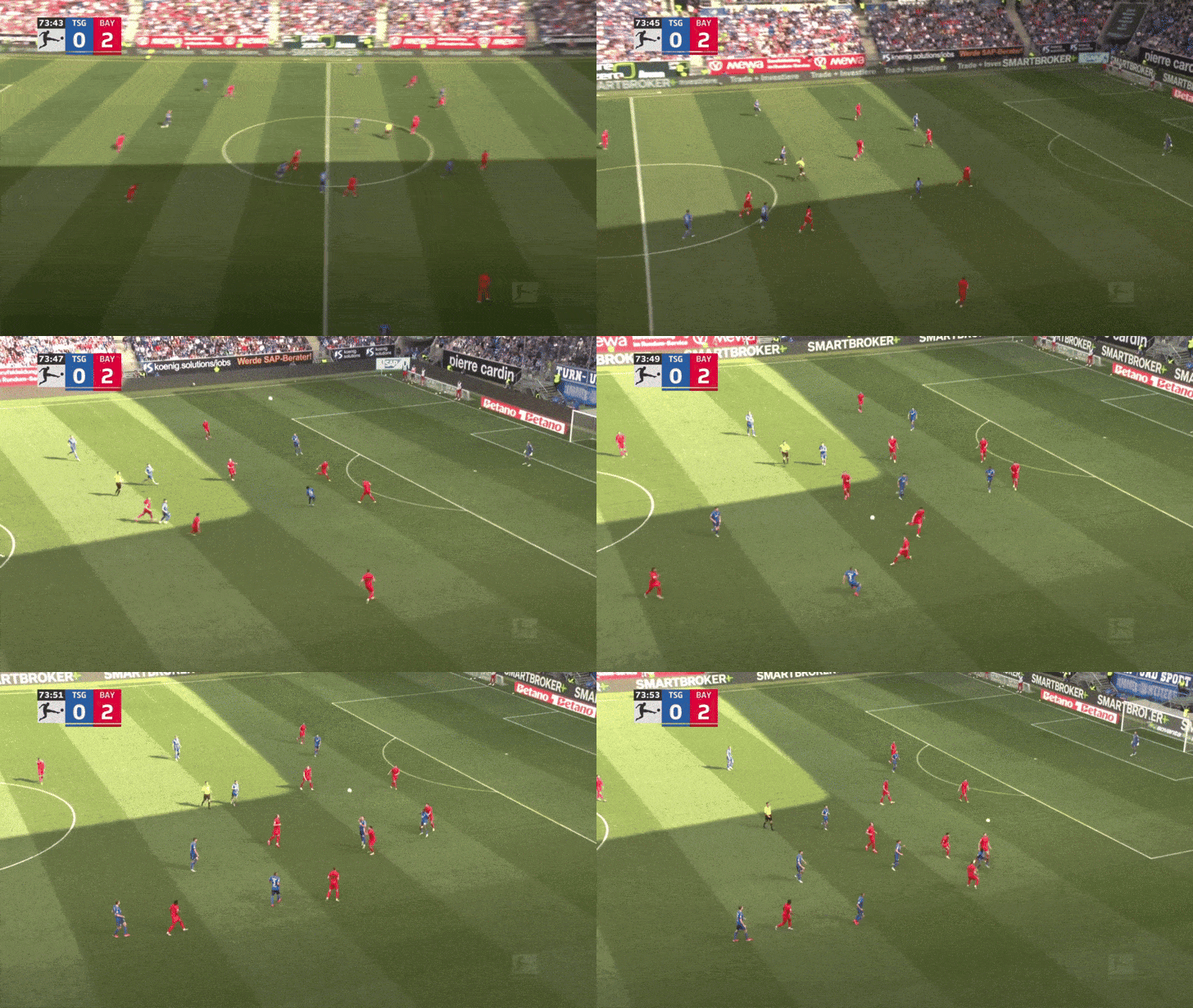
👉 Aleix Garcia
Aleix Garcia’s actions in the buildup are a reflection of his Spanish genes. He would move deeper into a free zone in the backline to cause mayhem within the opposition. His dropping off runs tend to invite pressure and lure one of the players in the second line to generate a gap between the opposition lines for one of his teammates to exploit.
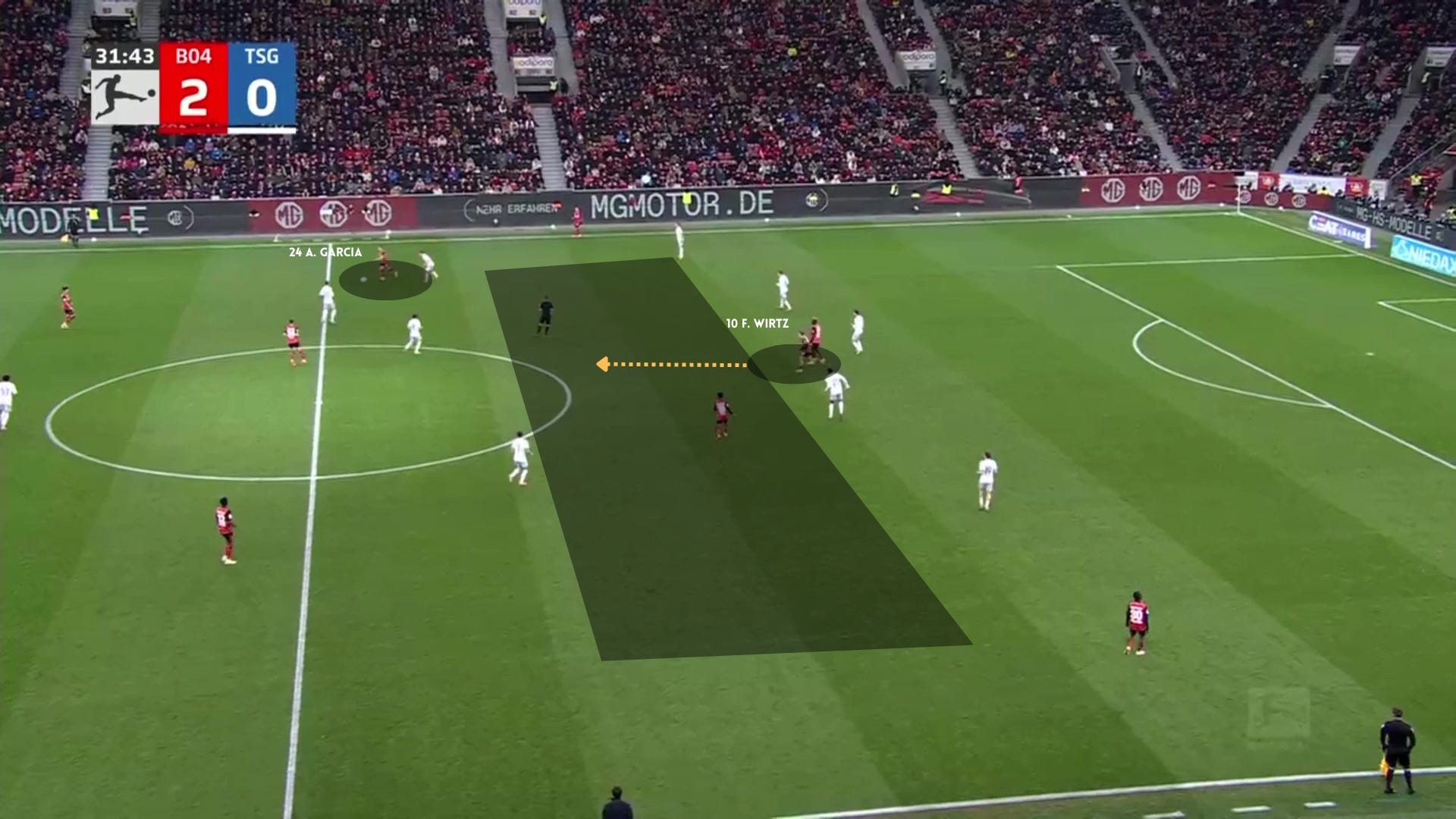
His passes are simple but effective and purposeful. He is the type of midfielder who passes the ball and instantly looks for a movement to the space his dropping-off run created. His aim remains the same: affording the ball holder space to carry his body into.
His off-ball movements are measured. His scanning and non-verbal communication tip the scales in his favor, as his pre-planning puts him ahead in terms of space and time he gains from such actions. His style is typical yet has an enormous effect. For instance, he checks his shoulders and spots a space between Bochum’s lines. In addition, his diagonal movement opens up a passing angle between him and the ballholder. As a result, he exploits the free space to receive and quickly prods the pass behind the defense.
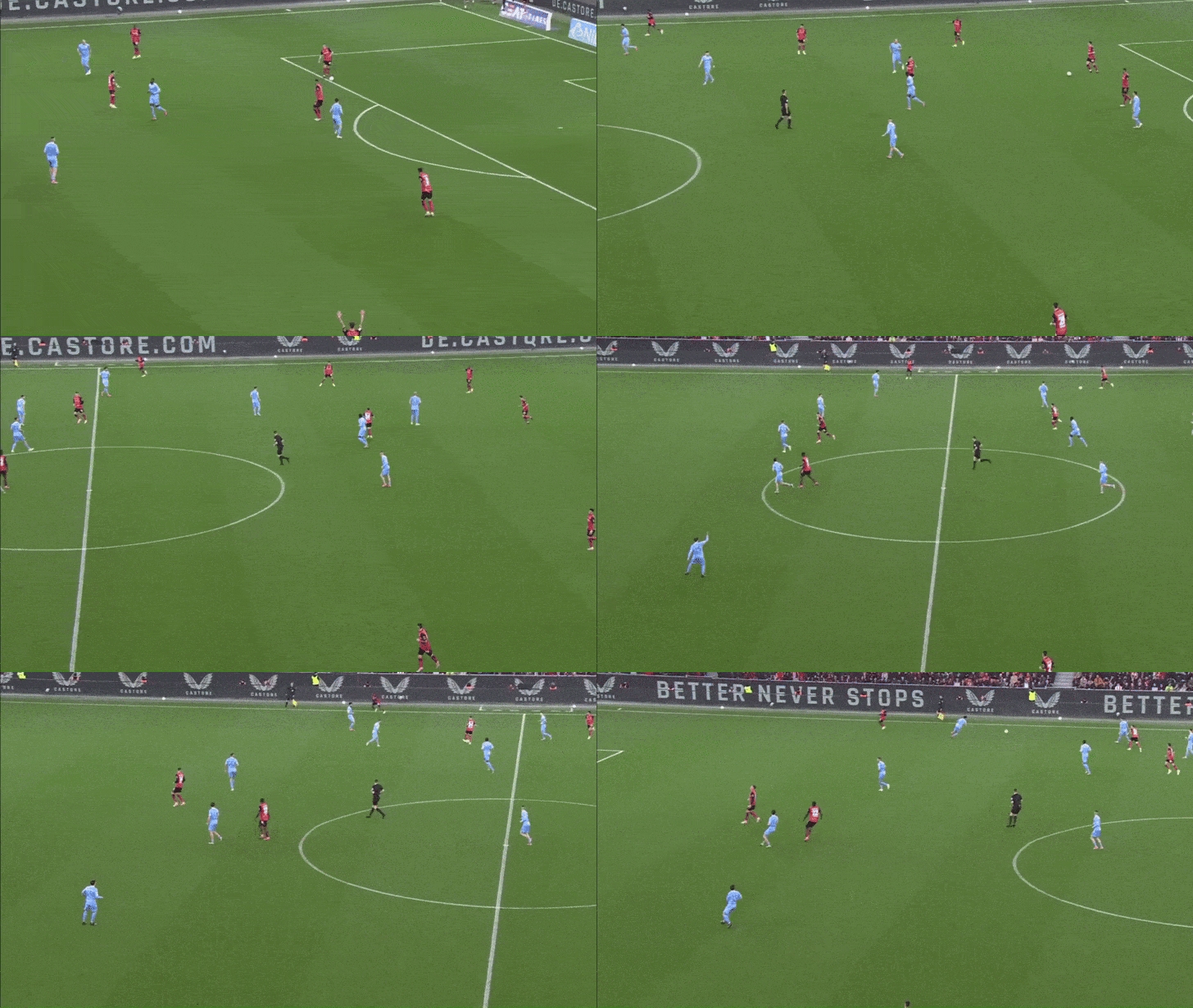
His intentions are cunning. When he wants to access a clogged zone, he would shuffle the opposition across, combine briefly in a tight passing lane before whipping a switch to the far side. The process frequently leads to the creation of a 2v1 situation.
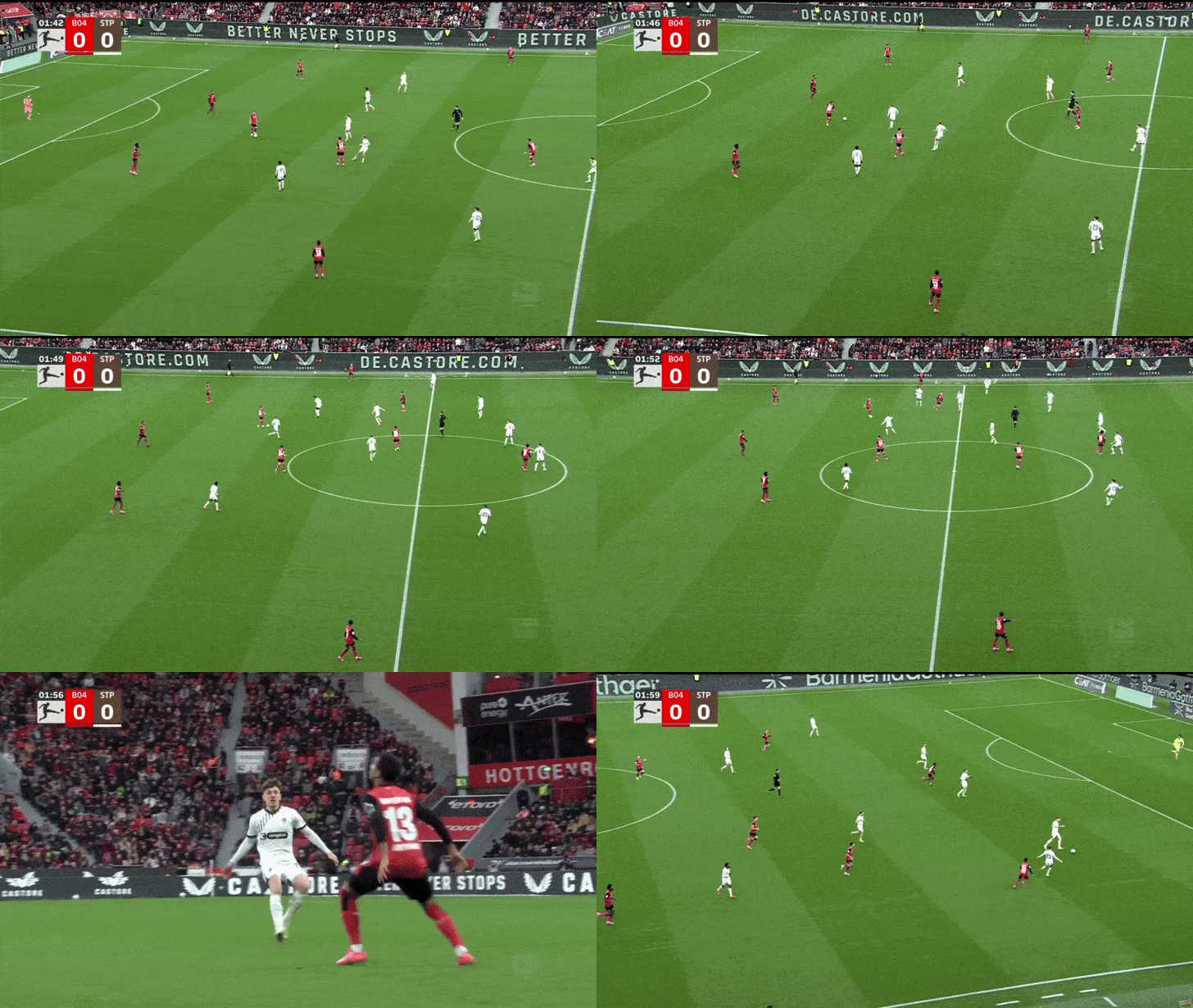
“The supreme excellence is simplicity,” Henry Wadsworth Longfellow, an American poet, once said. As aforementioned, Aleix Garcia is an embodiment of simplicity. However, he is effectively simple. His routine in deeper positions is as follows: he scans his surroundings, recognizes a passing option, and then breaks down the press with a sharp, incisive pass. His short passing range is from the Busquest, Rodri, and Zubimendi’s book.
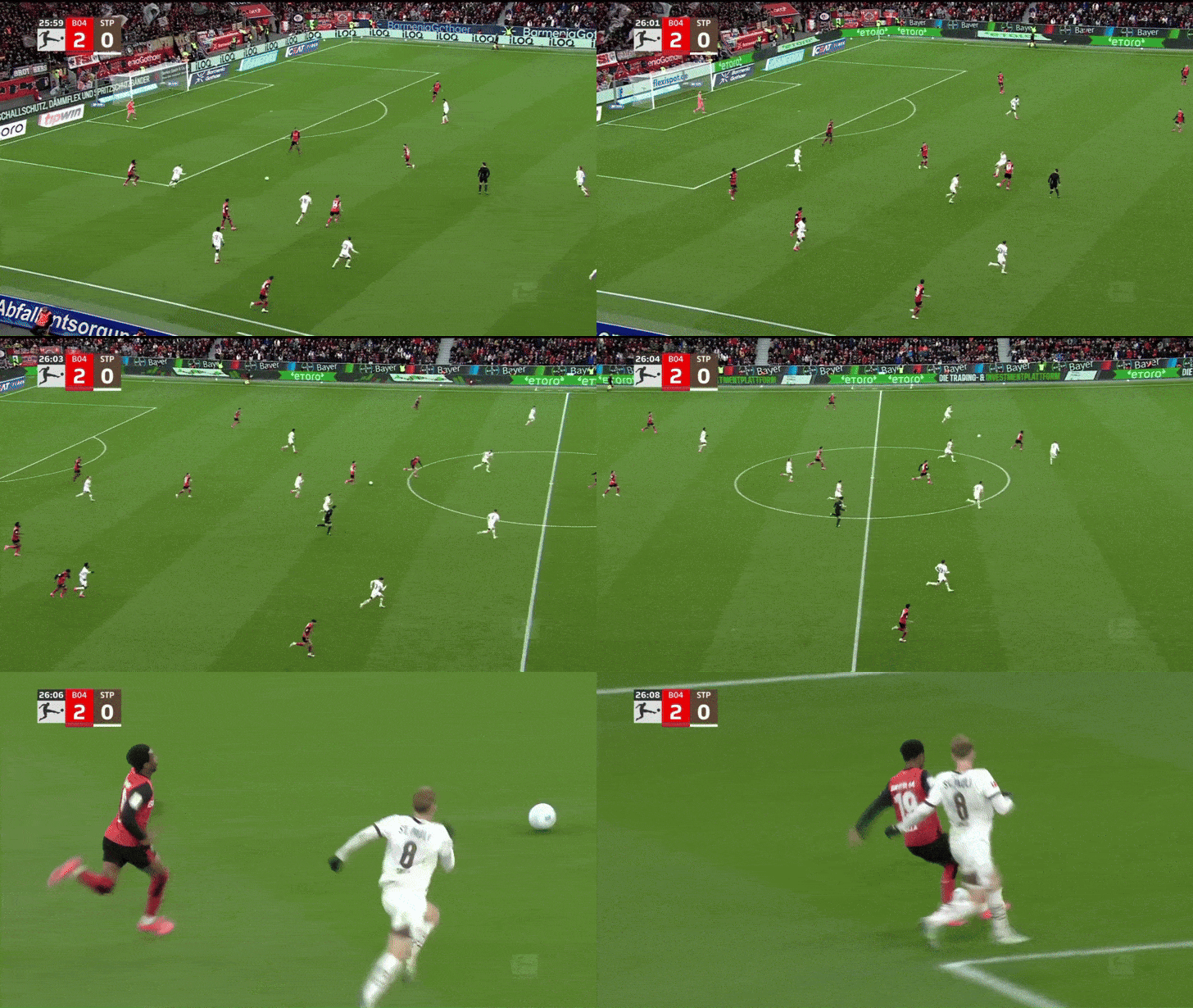
He keeps probing, testing the waters, and looking for angles to develop the team’s attack.
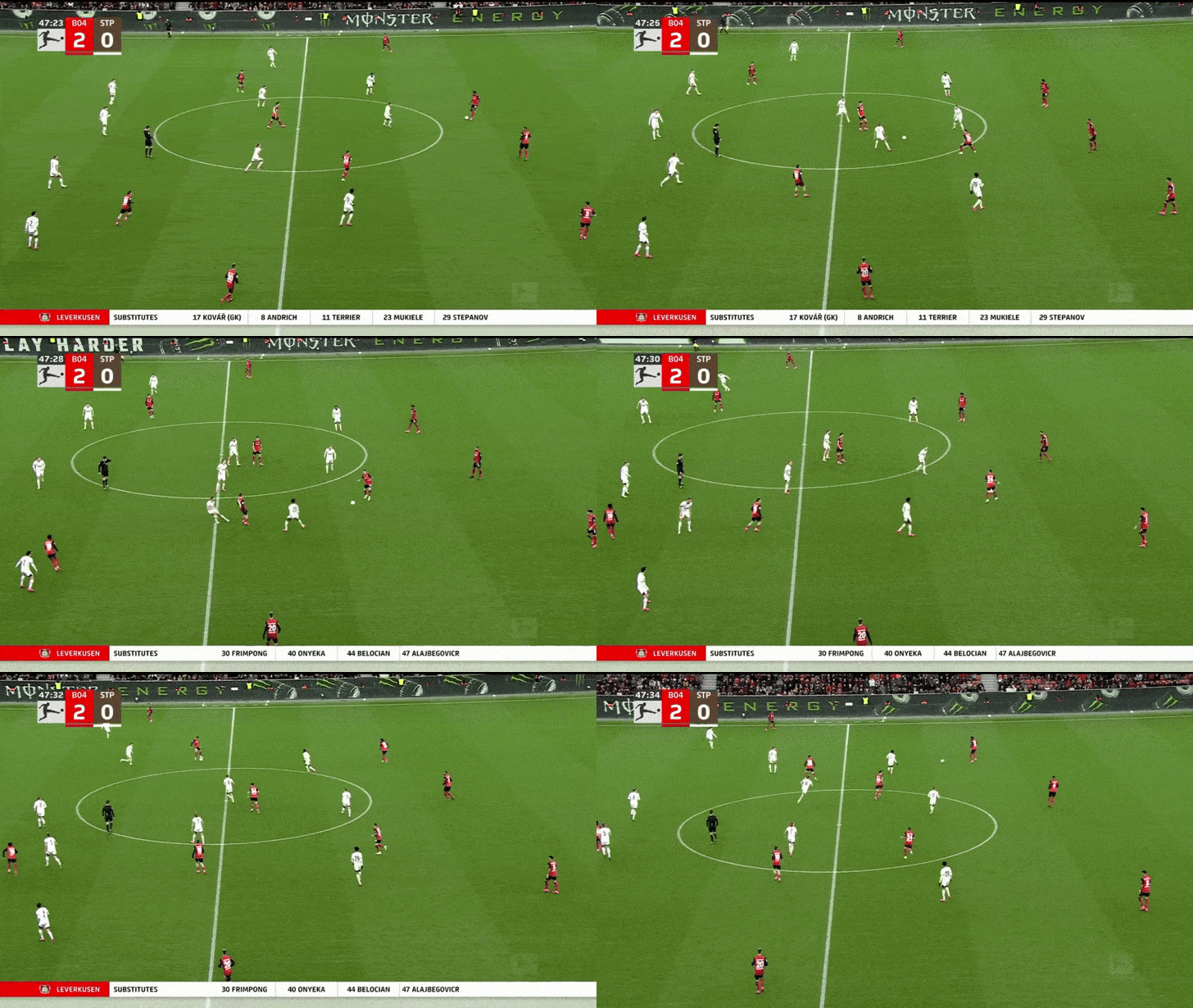
He is also comfortable across the pitch and is not angle-biased. That’s why he always maintains the play in motion by finding pockets of space to thread and controls the cadence at which the ball circulates.
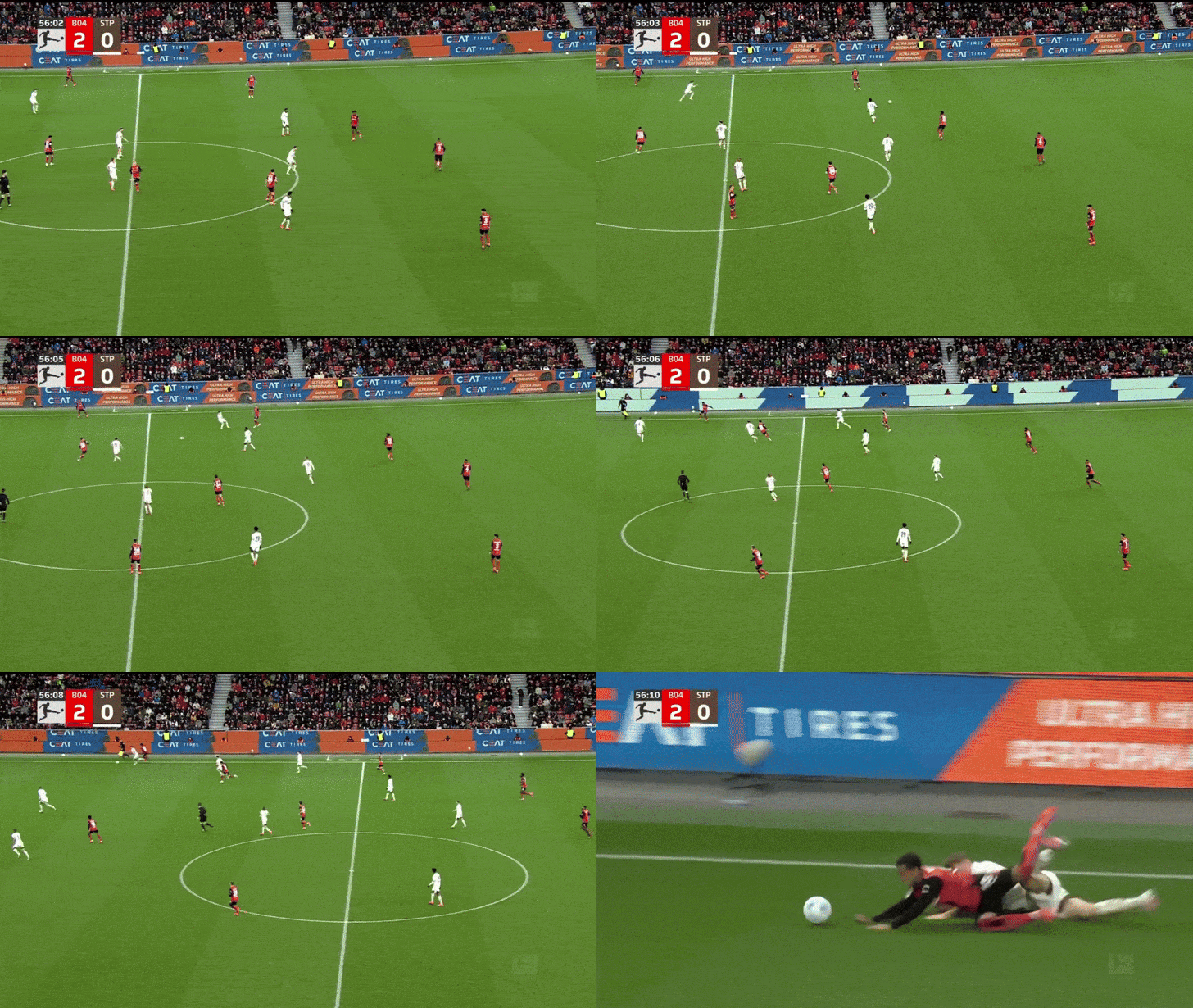
As indicated previously, Aleix Garcia’s actions hold an intent. He plays with pausa, can shield the ball, and retain it in critical areas. That comes through spreading his arms across and using the opposite leg to draw leverage. Furthermore, his passes repeatedly break down the opposition lines, be it a progressive ball, a line-breaking pass, or behind defensive lines.
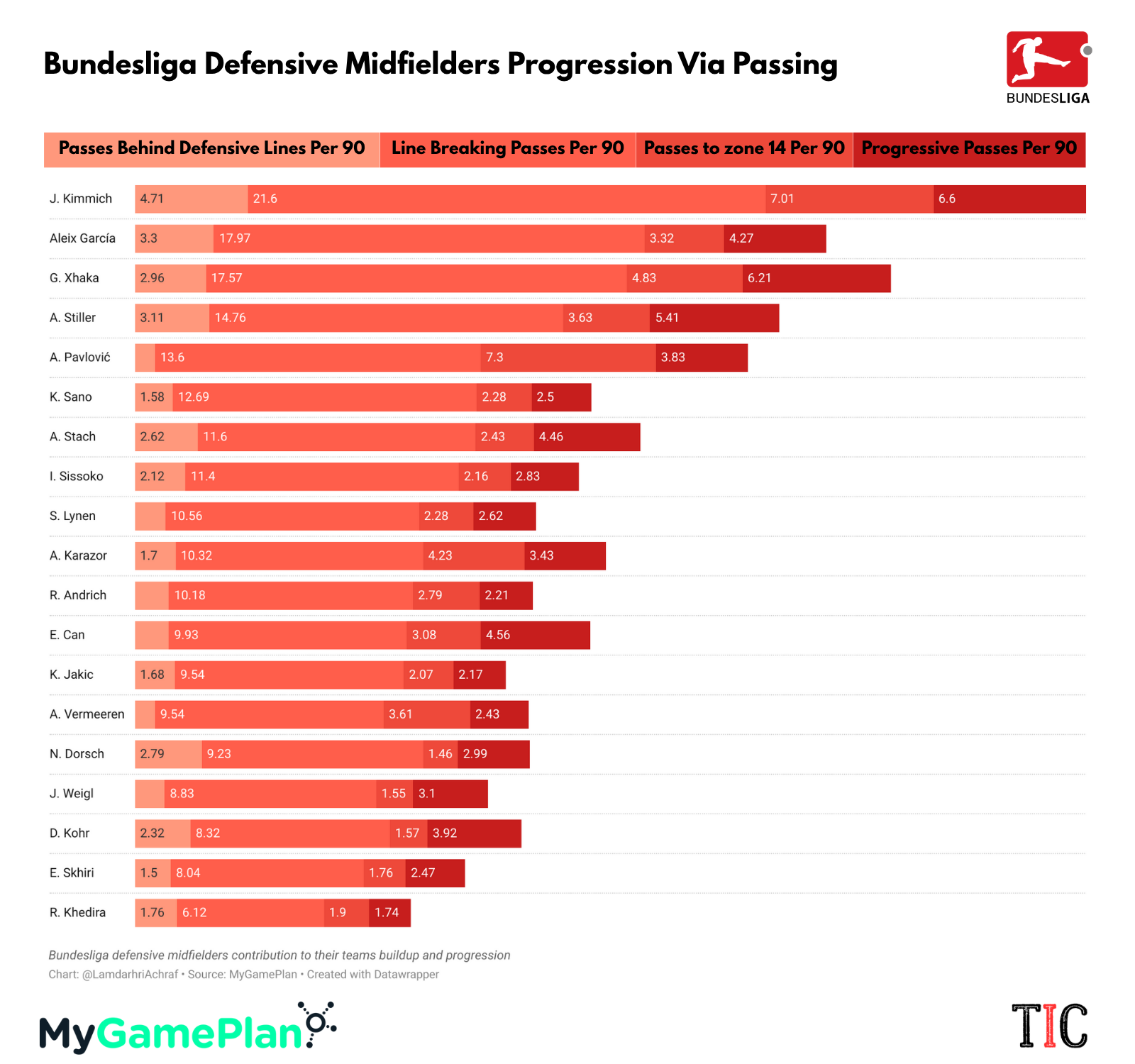
Aleix Garcia amassed 17.97 attempted breaking line passes per 90 in the 2024/25 season in the Bundesliga, with 13.35 passes finding their targets. He is second after Joshua Kimmich when it comes to gliding balls behind defensive lines. Give him a runner and leave the rest to him.
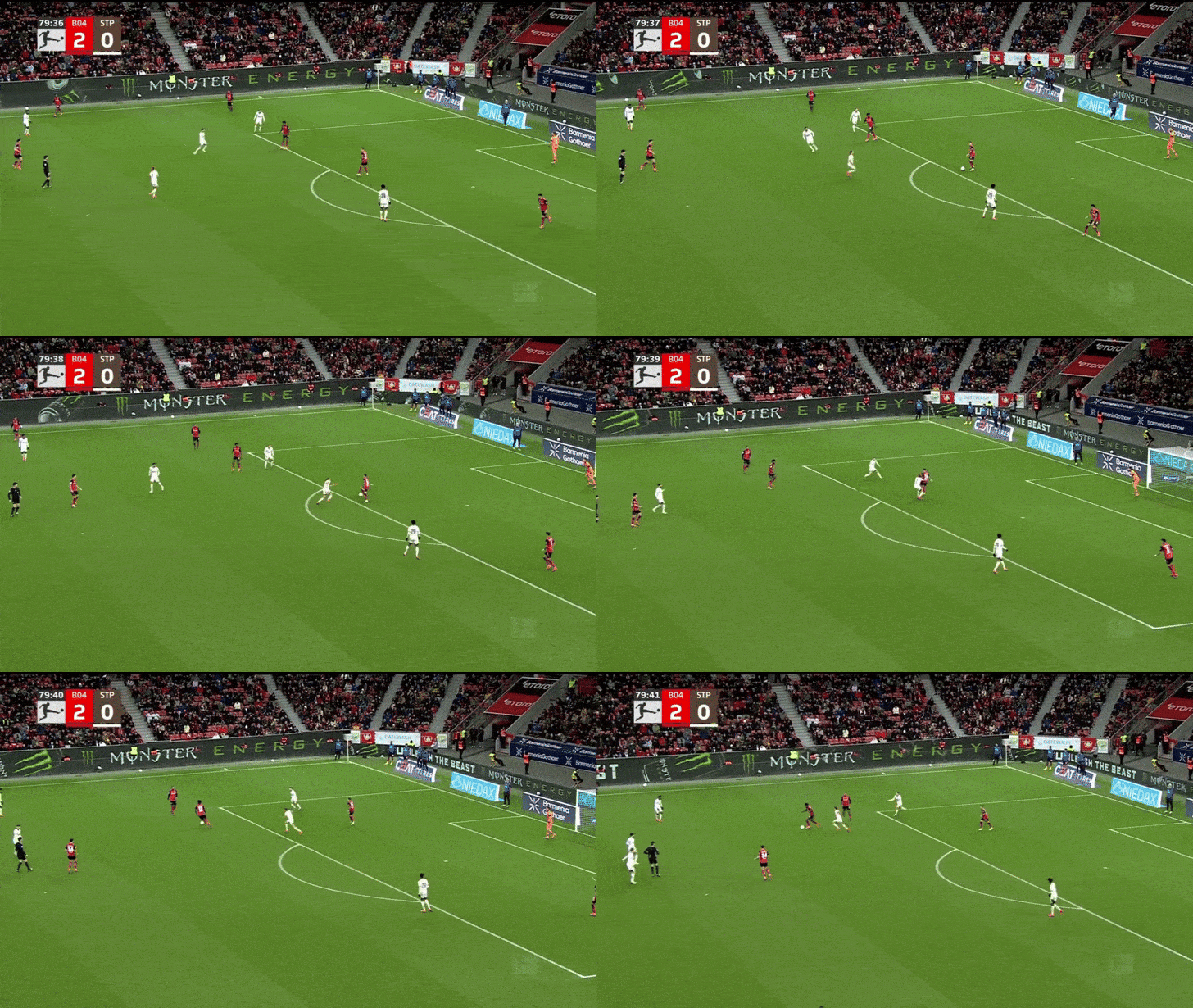
Check this example. He waves to Tapsoba with his hands to pick him out, because he initially noticed Hoffenheim's advanced backline. Moreover, he picked up Frimpong's readiness to sprint behind and prodded the pass down the inside channel to set the Dutch free.
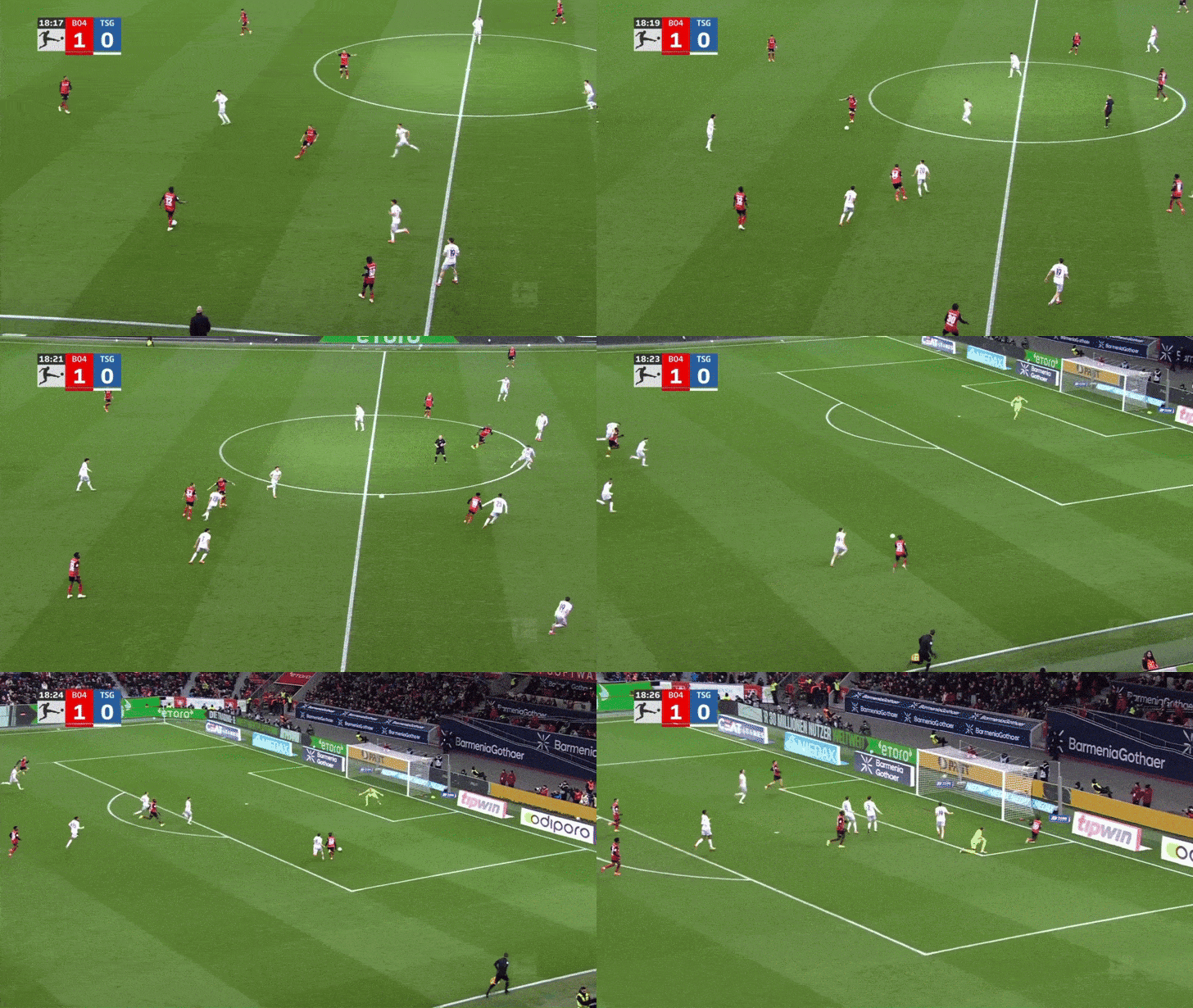
Aleix Garcia's switches are executed with precision, within the optimal height and weight. He is ranked in the 99th percentile of midfielders in this regard, with 2.13 switches per 90. His deliveries drive through the receiver and travel with enough speed to allow his teammate to control them with ease. Additionally, it enables the team to exploit the space on the opposite side of the pitch before the opposition slides across or one of the players jumps to apply pressure.
This sequence is a prime example. Aleix Garcia switches the play into the space where Jonas Hofmann effortlessly controls the ball down and squares it to Florian Wirtz. Aleix Garcia’s driven pass enabled Leverkusen to exploit Mainz’s underloaded side, generate a 2v1 situation, and end the sequence with a shot.
Aleix Garcia isn’t a first-thought “carry” midfielder. When he does, there is usually a free and large space ahead to keep holding the ball for a long distance.
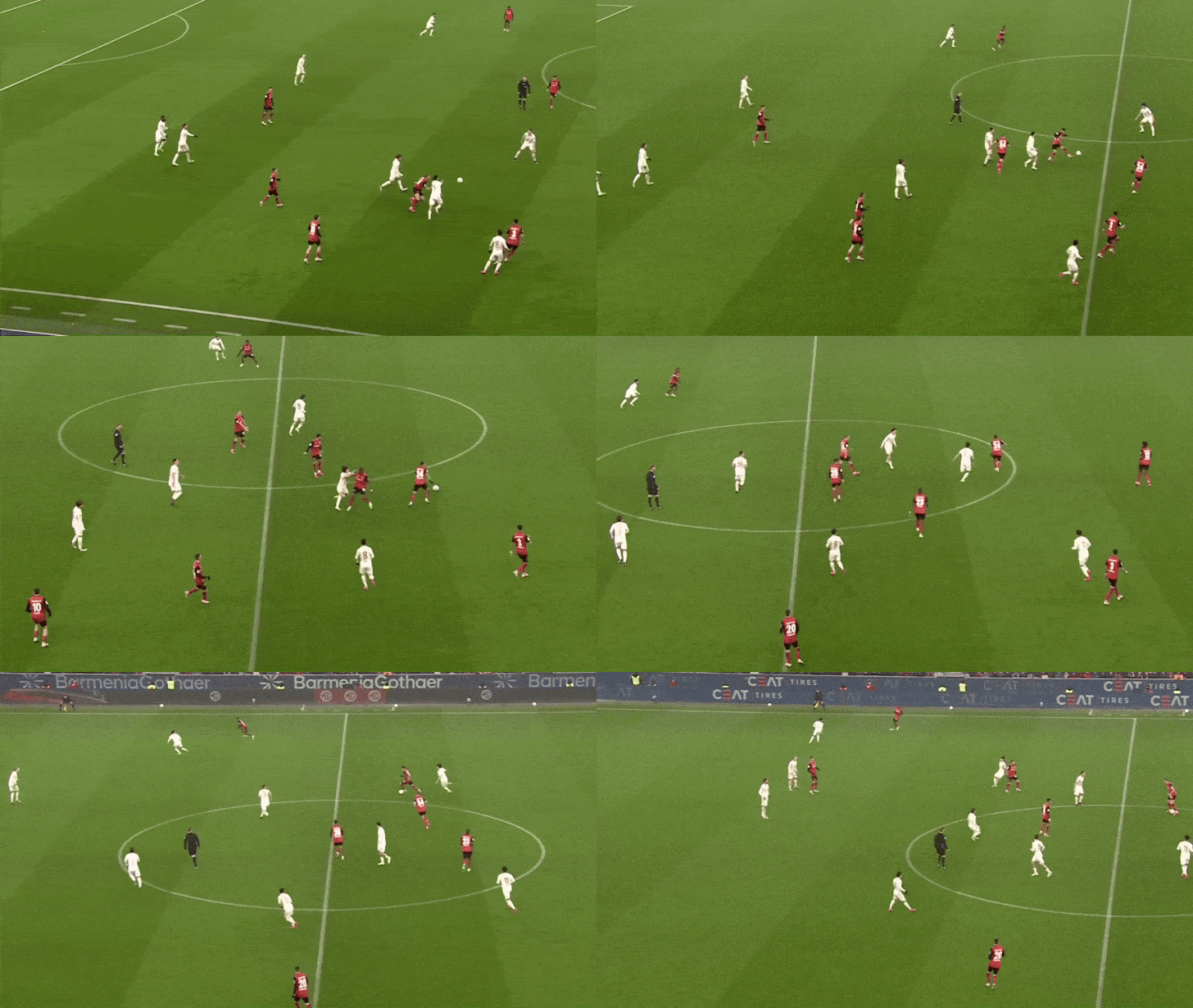
Or, when the opposition fails to shuffle their lines across, Aleix Garcia would seize the opportunity and scamper forward.
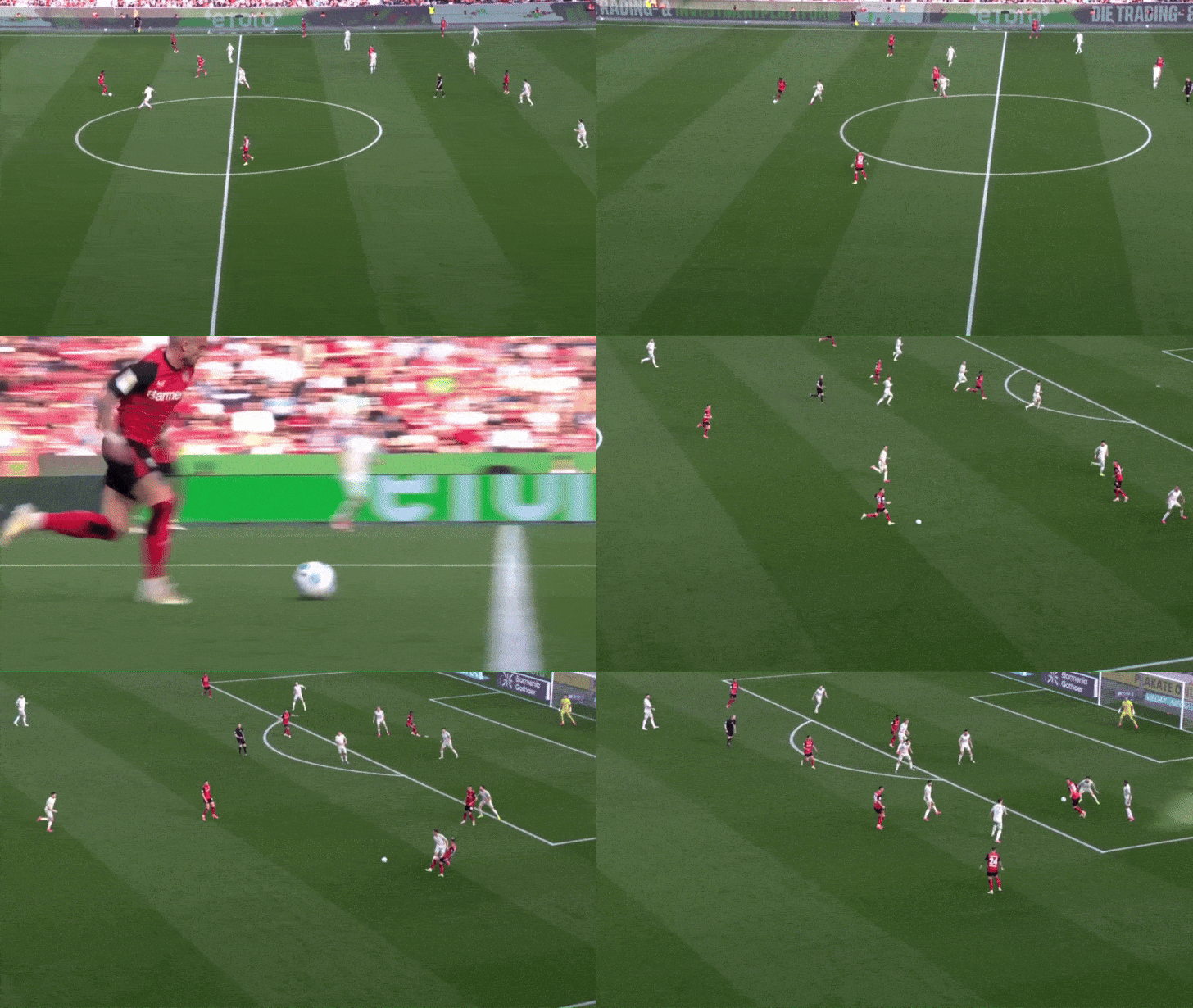
Here is another one in which he gallops the length of the pitch with an island in front of him until he sets the angle to feed Wirtz in zone 14.
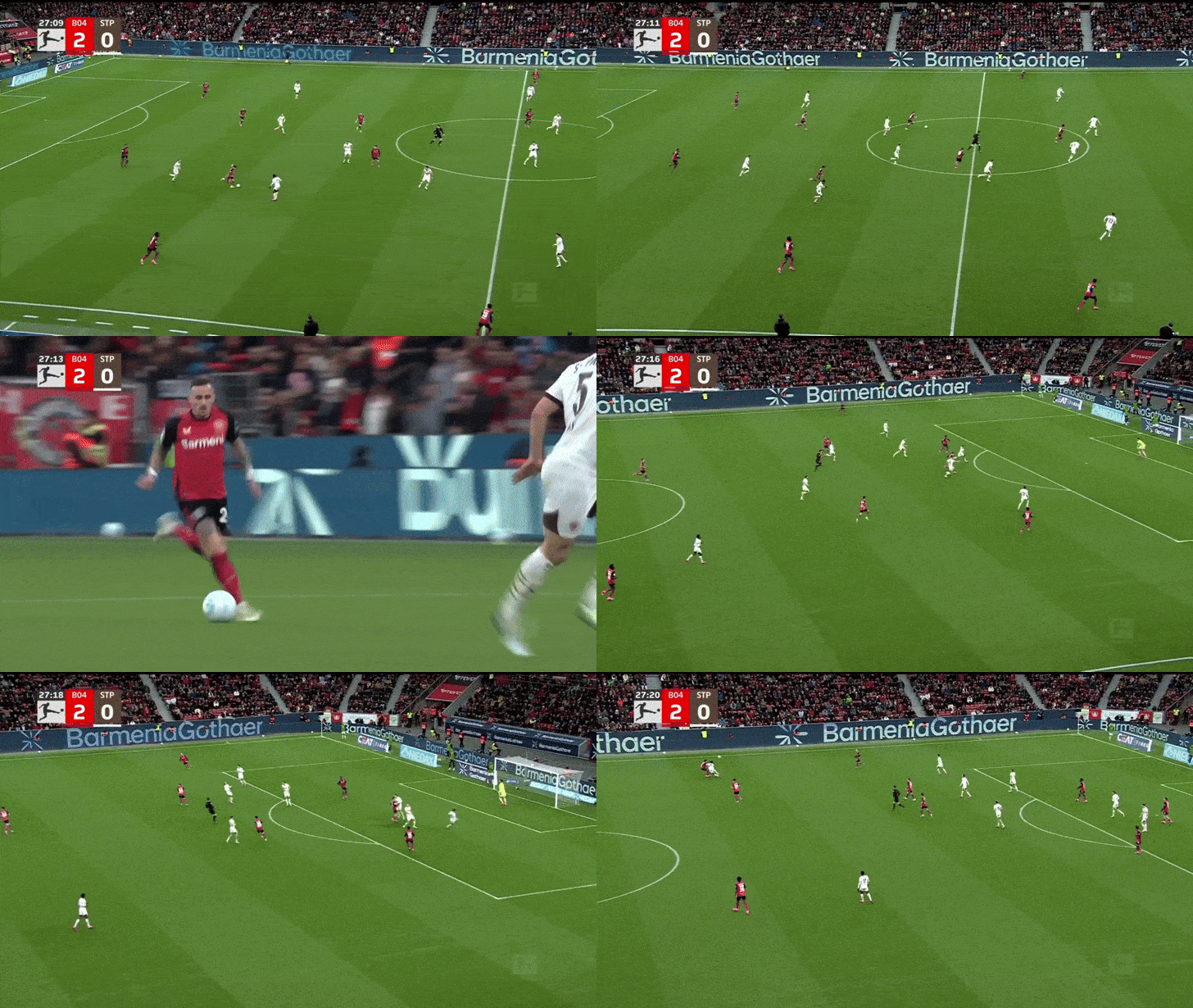
Aleix Garcia is similar to Aleksander Pavlović in terms of collecting the second balls. It is more about being in the right position and at the right moment. In other words, it is more about intelligent positioning, being close to the ball, and anticipating where it is going to land rather than relying on brutal force. According to MyGamePlan, he is the sixth among the central and defensive midfielders in the Bundesliga 2024/25 who won the most second balls with 0.39 per 90.
Following a possession loss in the final third, Aleix Garcia provides optimal coverage to the inside and central channels, switching on immediately to jump and delay as much as possible the counter. His intentions are driven to funnel the ballholder toward the touchlines by closing off the passing lanes and shrinking the opponent’s operational space.
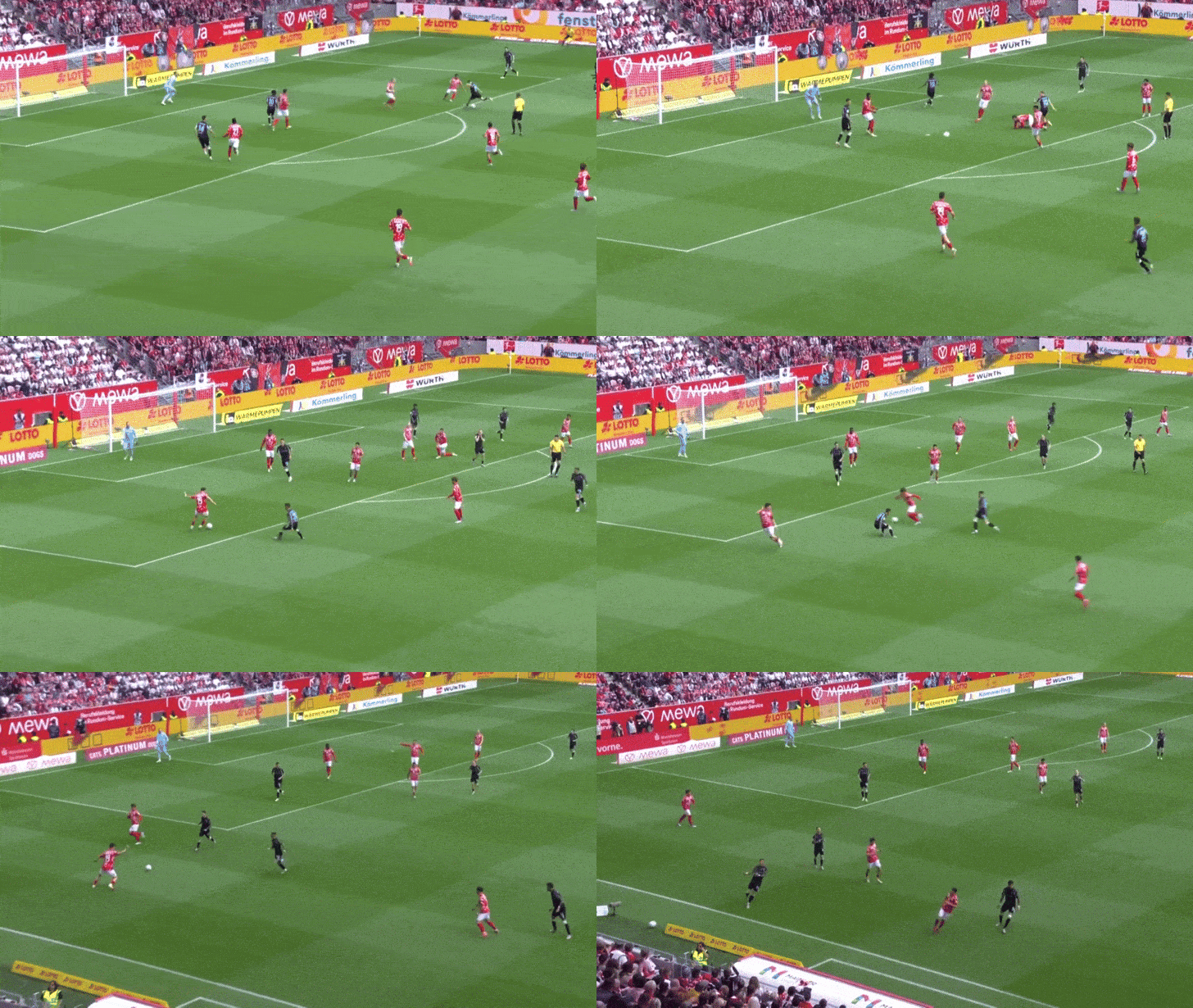
He maintains a high level of concentration on the play after the possession loss, keeping a close proximity with the ball and the nearest passing option. His counterpressing actions —whether possession gains, interceptions, or sliding tackles— are usually the reward of an operation of calculating situations and adjusting his position accordingly. Rather than chasing impulsively, he assesses the situation, recalibrates his angles, and commits only when the opportunity is optimal.
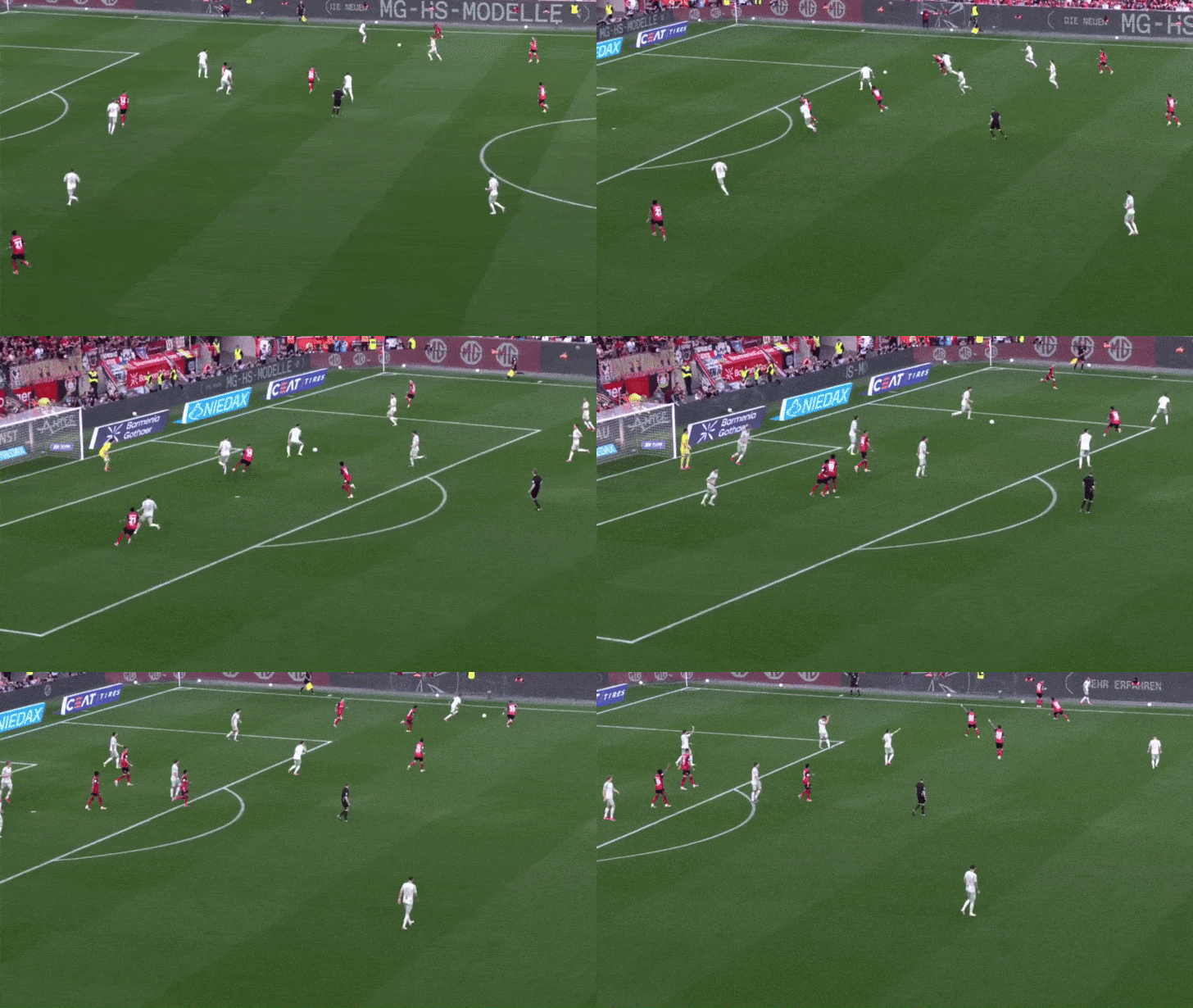
Aleix Garcia is not aggressive, nor a top-tier defending midfielder like Zubimendi, for example. All his successful defensive actions are a result of anticipation and positioning, as previously noted. However, his proactive sense is unmatchable. He comes out of nowhere, spreading his leg to intercept the pass.
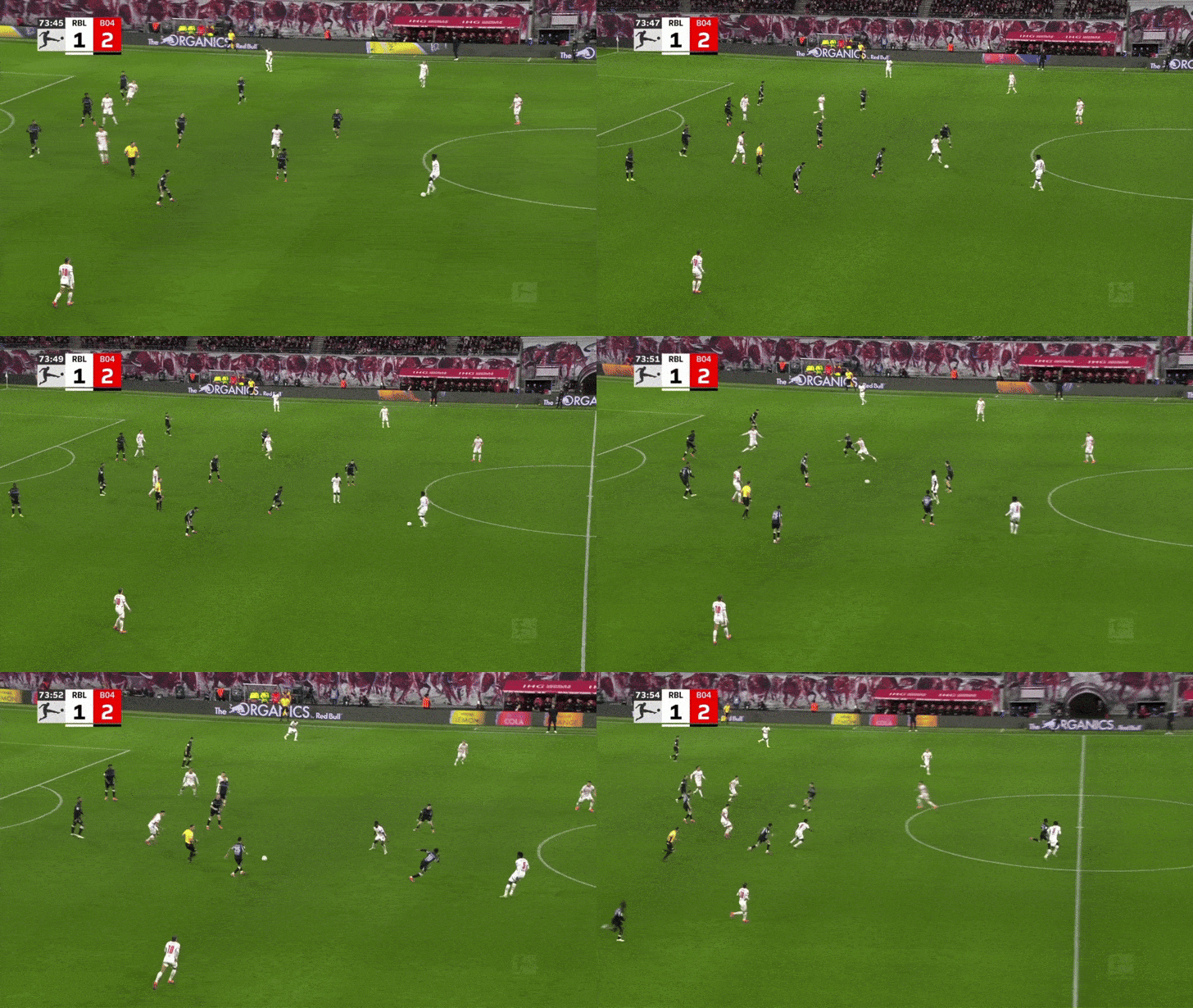
He prefers to wait, read the opponent’s body language, and react accordingly. Hence, it is nearly impossible to see him rush and jump onto.
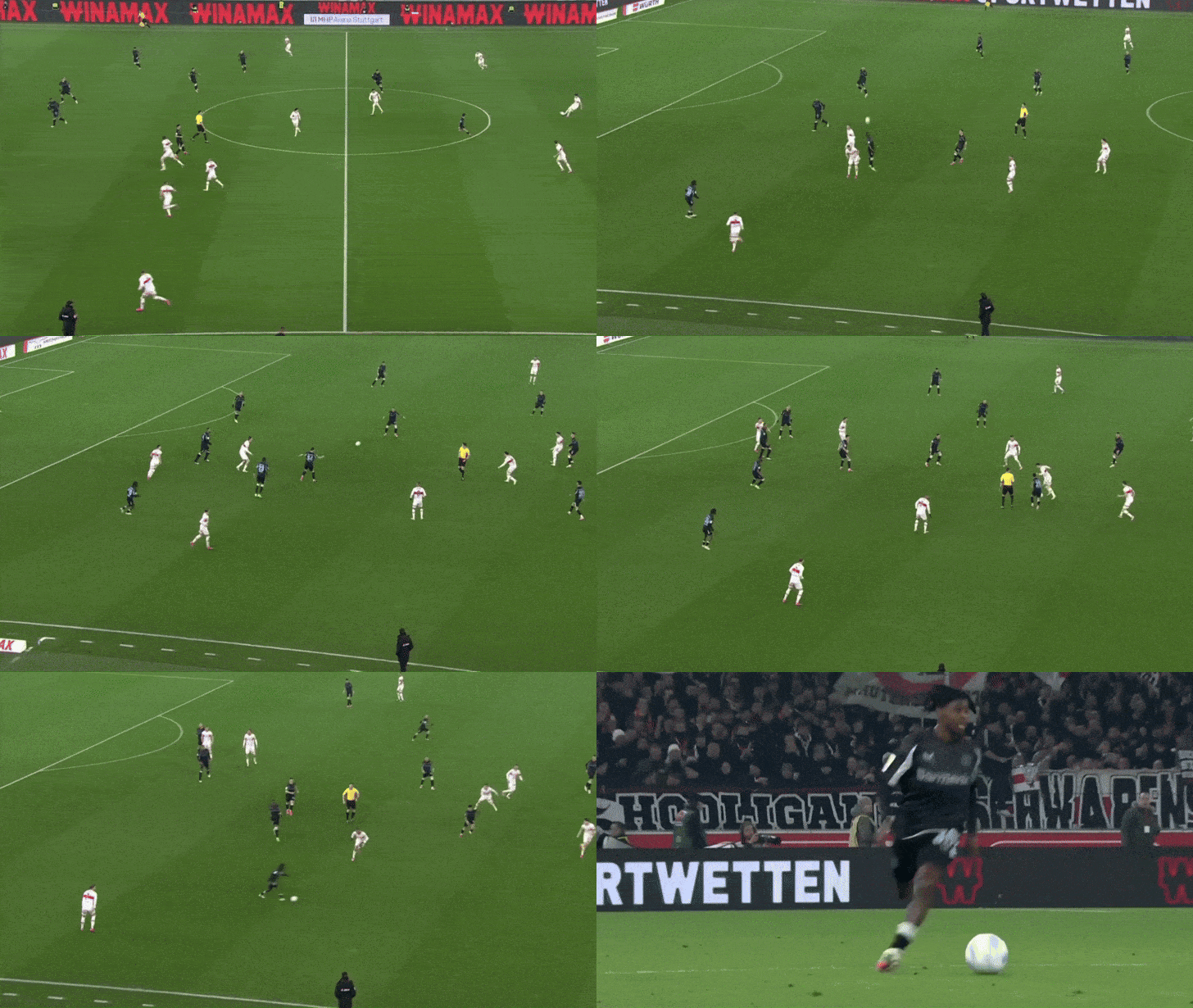
Here he is maintaining an optimal distance with the ballholder, blocking off the passing lane, and dancing according to Millot’s actions before he intercepts the pass.
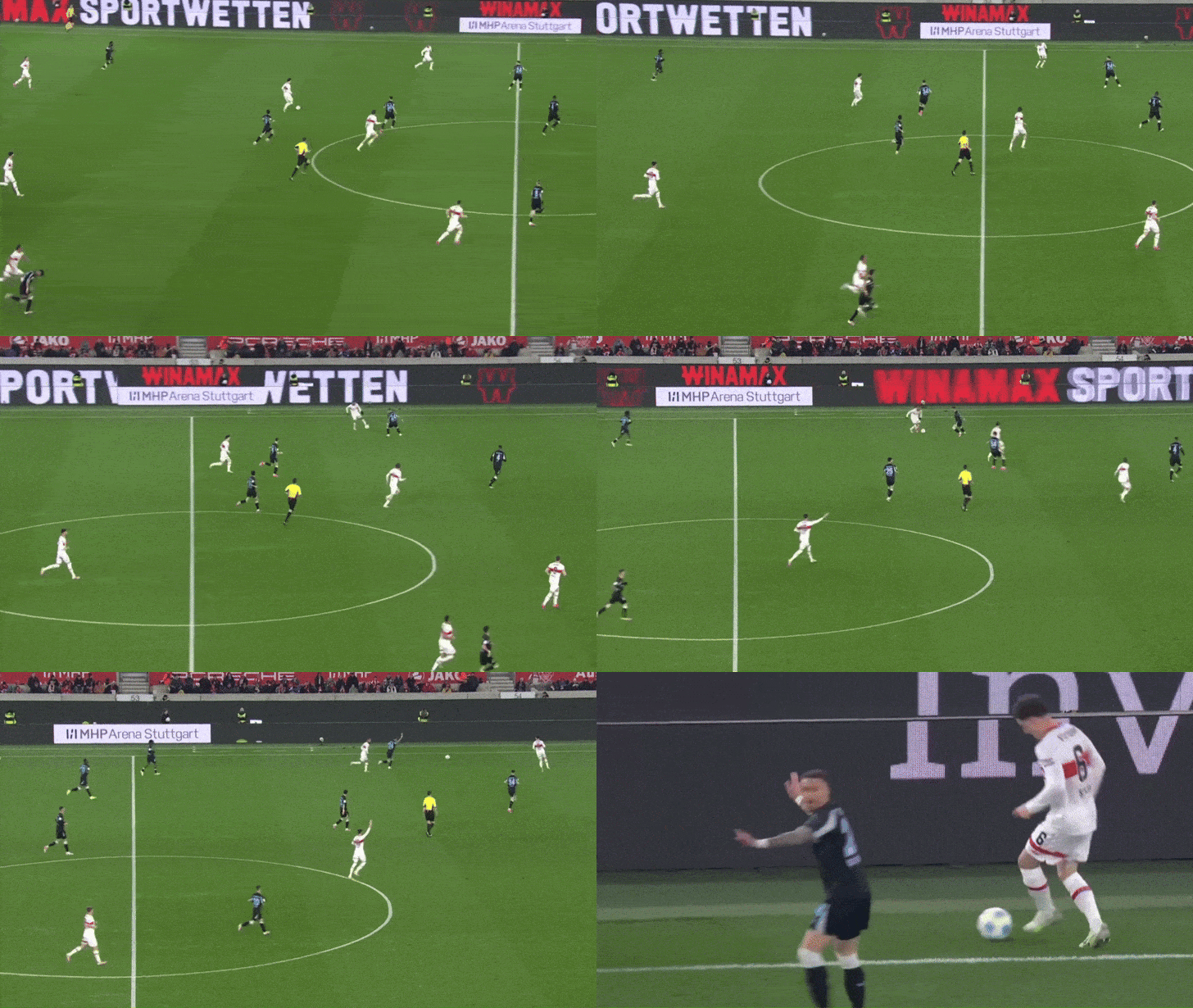
Aleix Garcia recorded 64.29% as a successful ground duel rate, the fourth highest percentage among Bundesliga defensive midfielders who at least played 1300 minutes in the 2024/25 season. For him, it is more about lurking, standing by until the opportunity arises itself.
It may be an opening in which the ballholder still does not exert full control of the ball. Ergo, that is Aleix Garcia’s best chance to come from the blindside and strip it off from the opposition.
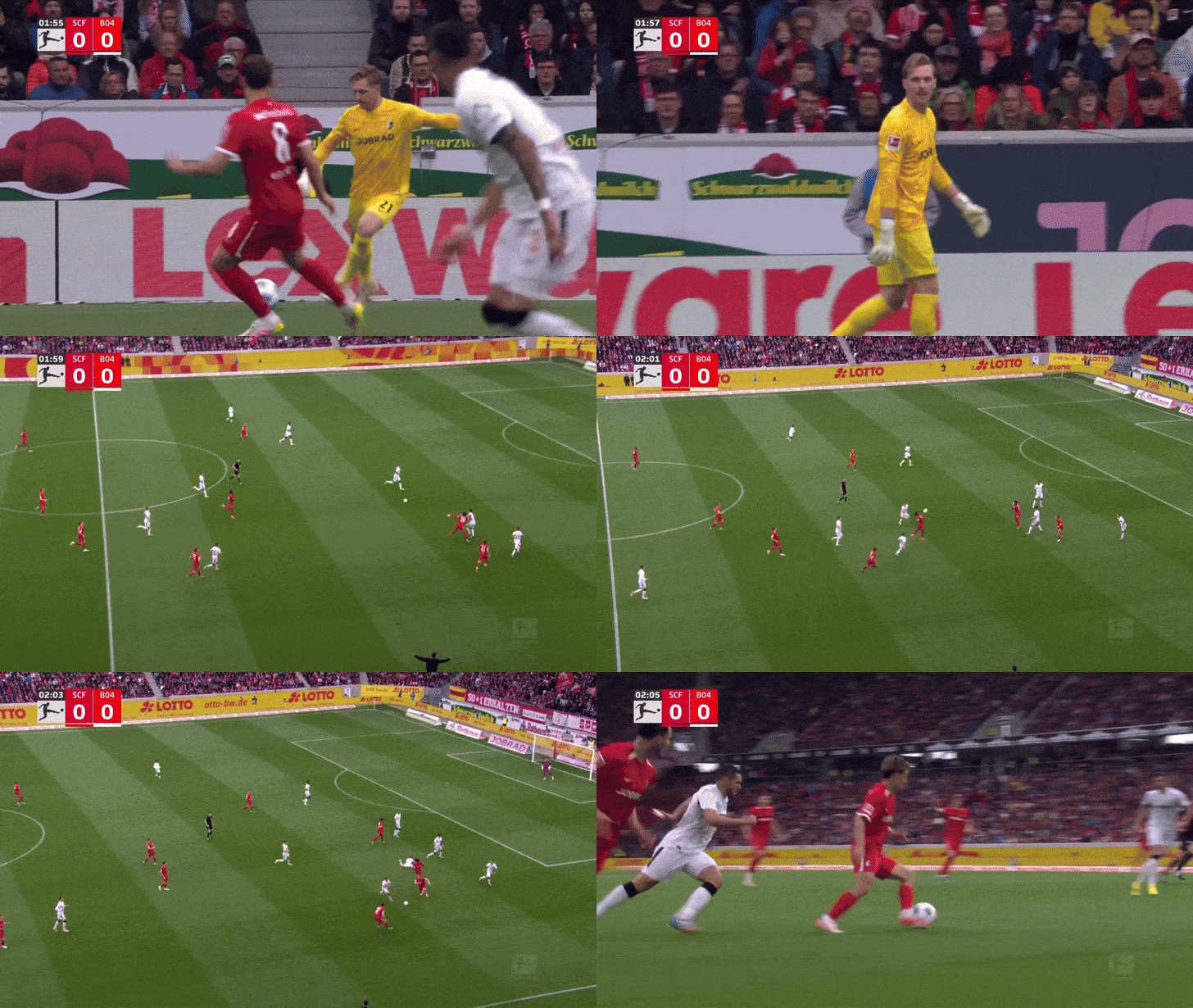
Or a pass that is hard to control, Aleix Garcia would jump onto and cleanly dispossess the receiver.
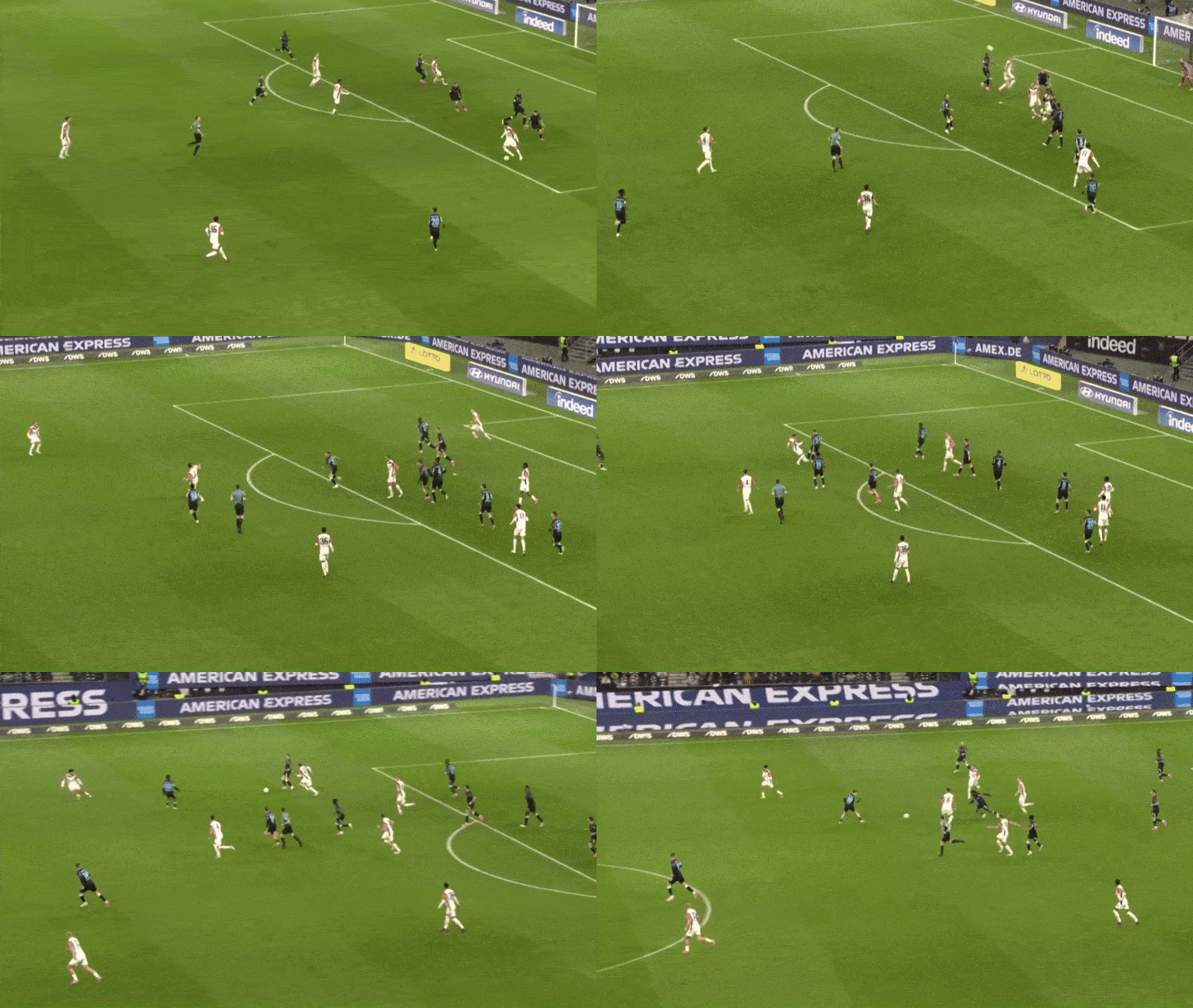
Aerially, Aleix Garcia’s numbers are below the average. He won only 30.8% of his aerial duels. That’s usually due to his approach during the duel.
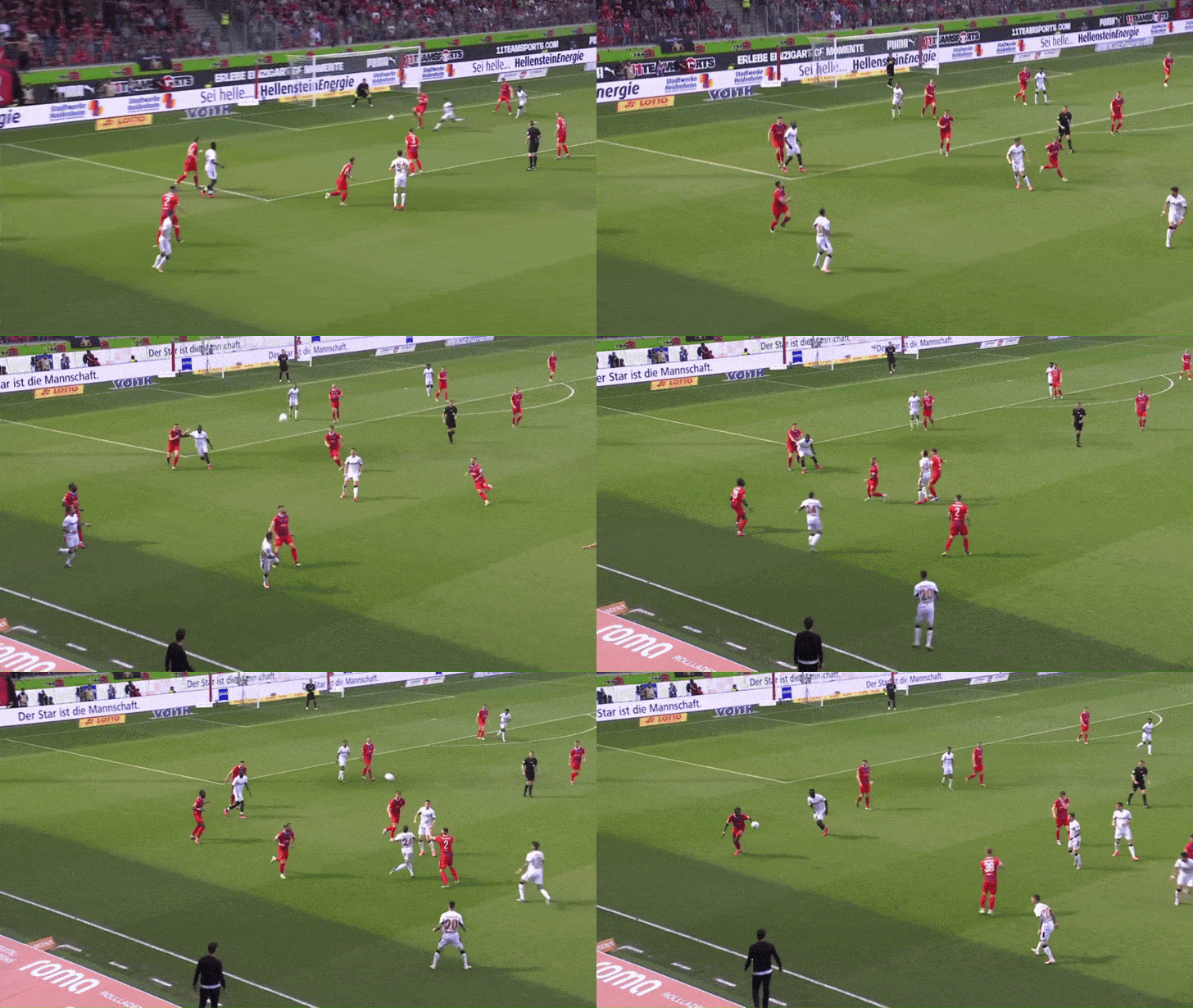
Sometimes, he lost the challenge because he couldn’t generate enough momentum in the leap from a standing position compared to the opponent, who took advantage via a run-up jump to tower over Garcia.
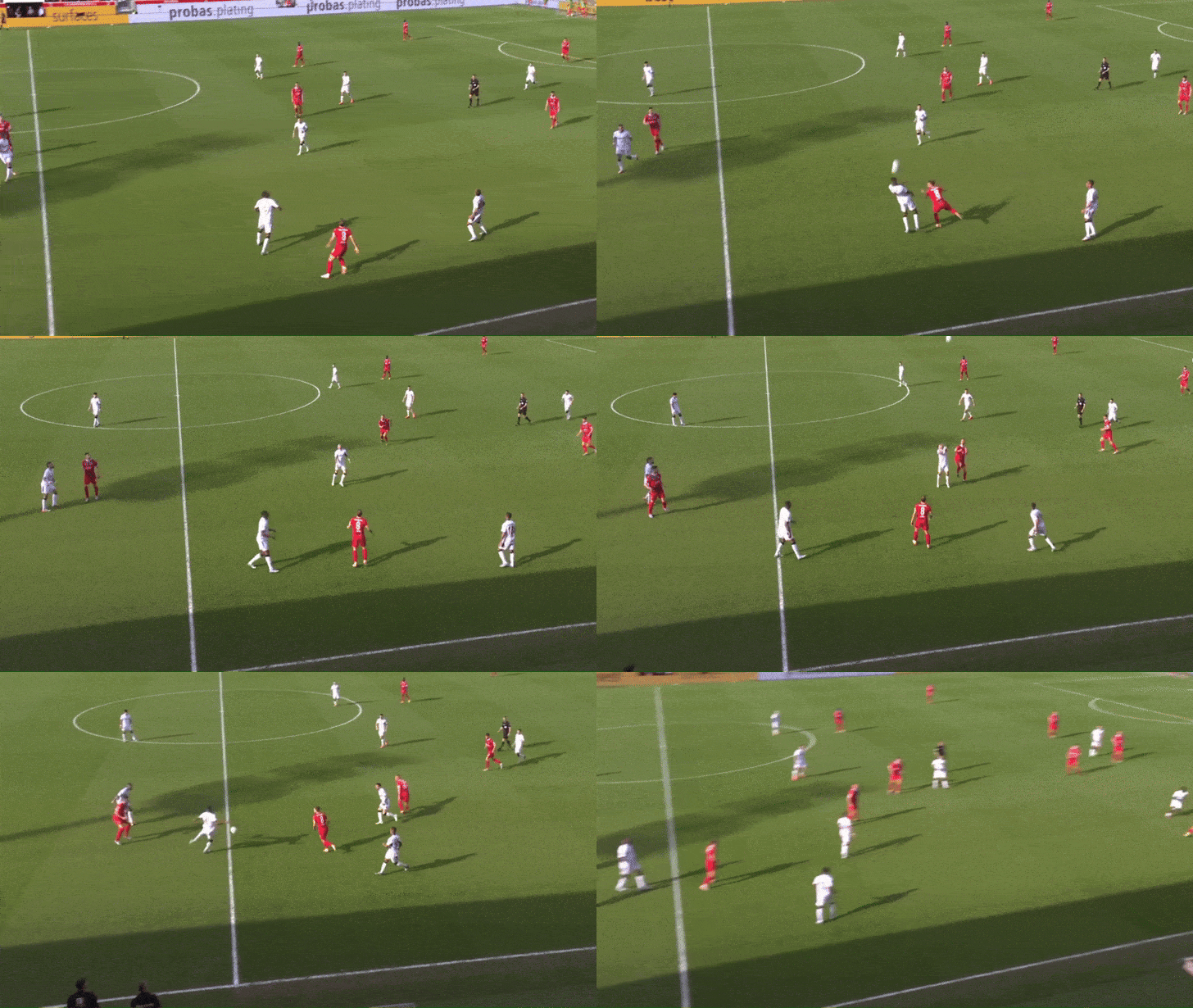
Despite approaching the duel correctly, he misread his opponent’s reaction. In this example, he gains momentum in the jump, but the opposition just puts his hands across Aleix Garcia to unbalance him in the air without committing a foul.
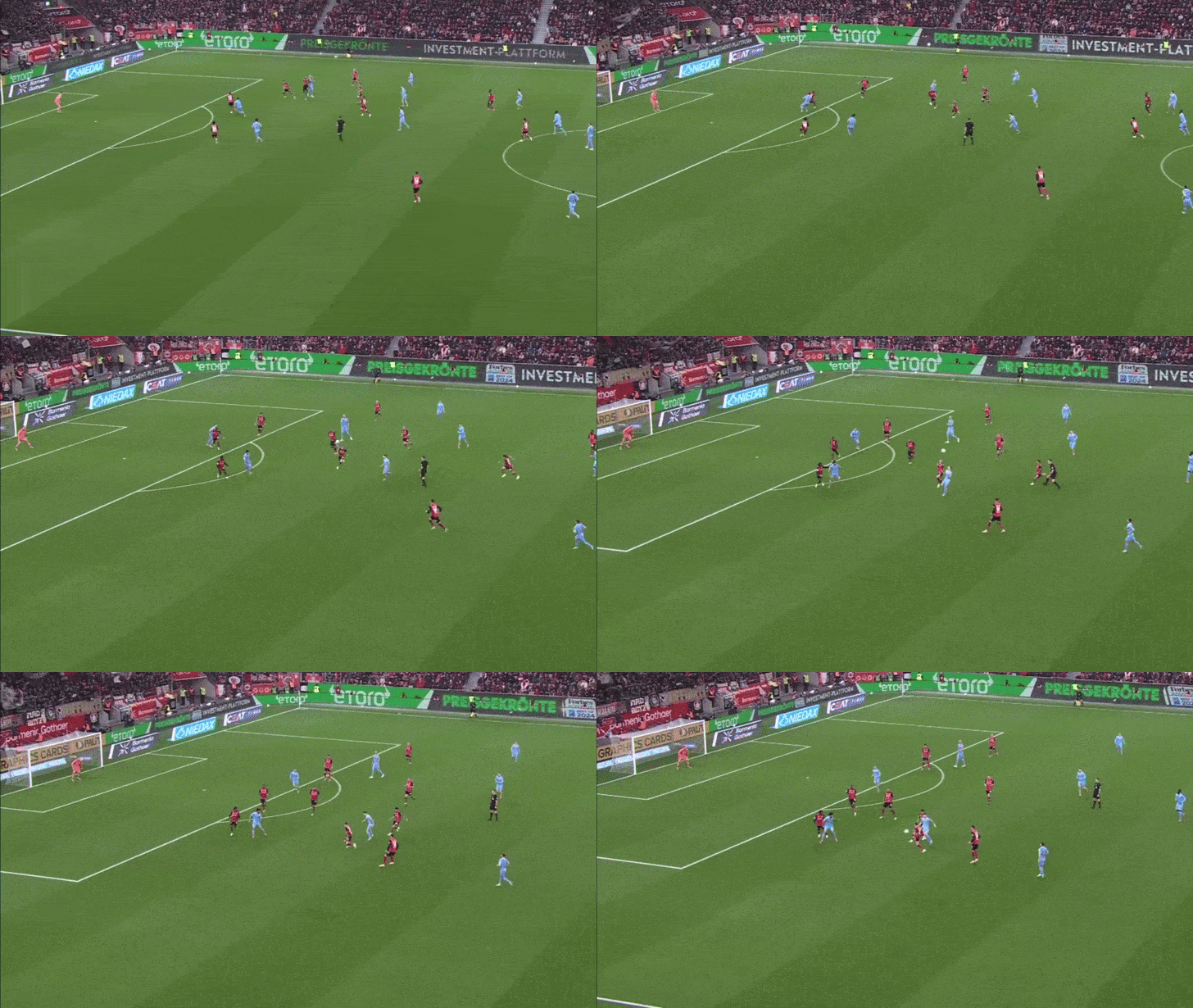
Against physical and robust players, Aleix Garcia usually fails to draw leverage in the air.
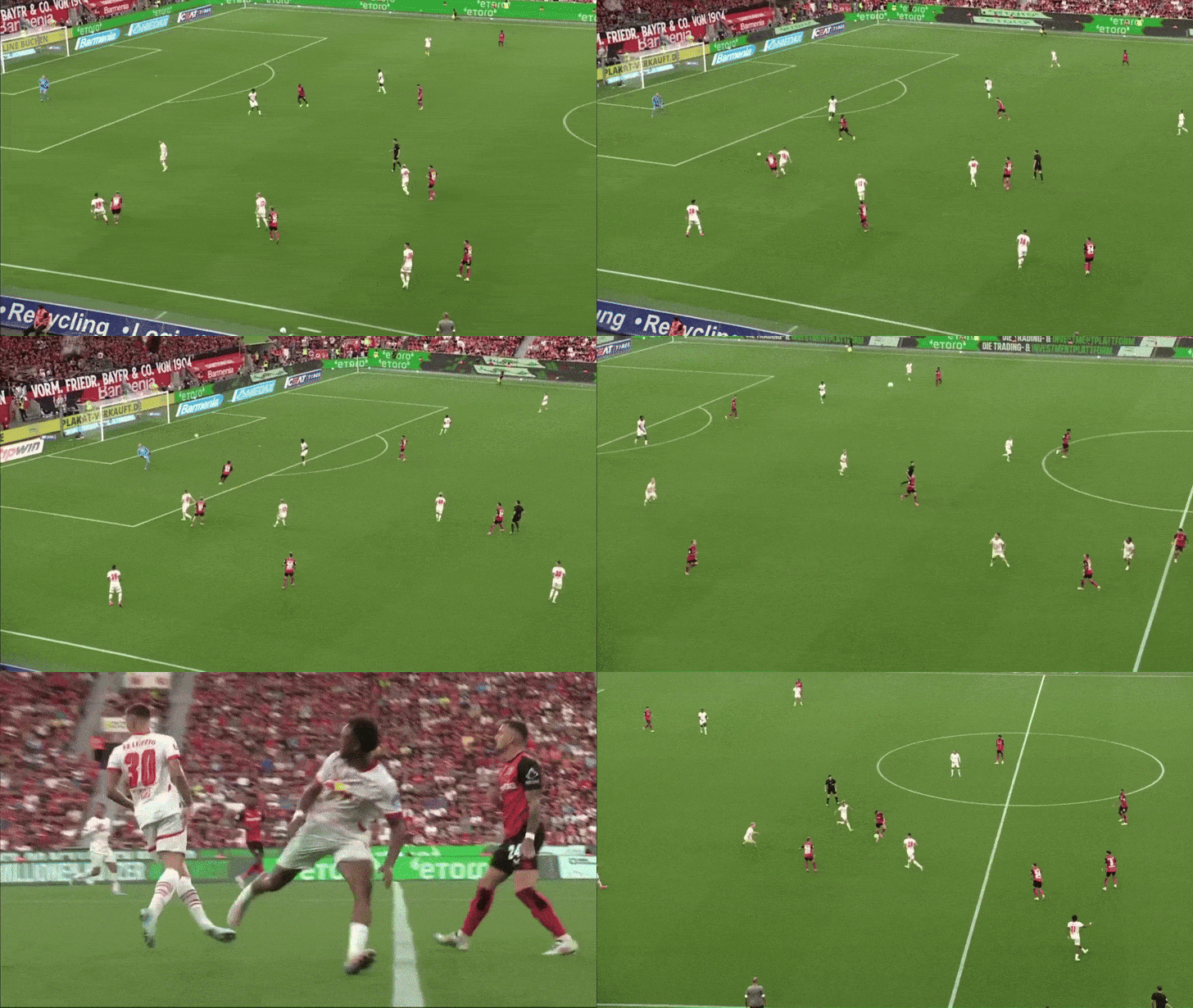
All in all, put someone who eats ground alongside Aleix Garcia and bet on him.
👉 Manuel Locatelli
Manuel Locatelli is soothing under pressure, comfortable with both feet, which enables him to receive with one and pass with the other without needing time to adjust his stance. That is conducive to bypassing pressure via quick receipt and release. He always looks for gaps within the opposition’s block to draw pressure and work the ball out. Under Thiago Motta’s coaching, Manuel Locatelli put more emphasis on finding central passing lanes to walk through.
He provides progression via weighted, line-breaking passes that cut through the opposition block. Or, he exploits the gap between the lines that appears due to the double pivots dropping deeper to invite pressure. Hence, Locatelli could chip the ball over the top to the striker to access the underloaded side or feed one of the attacking midfielders moving toward the gap created.
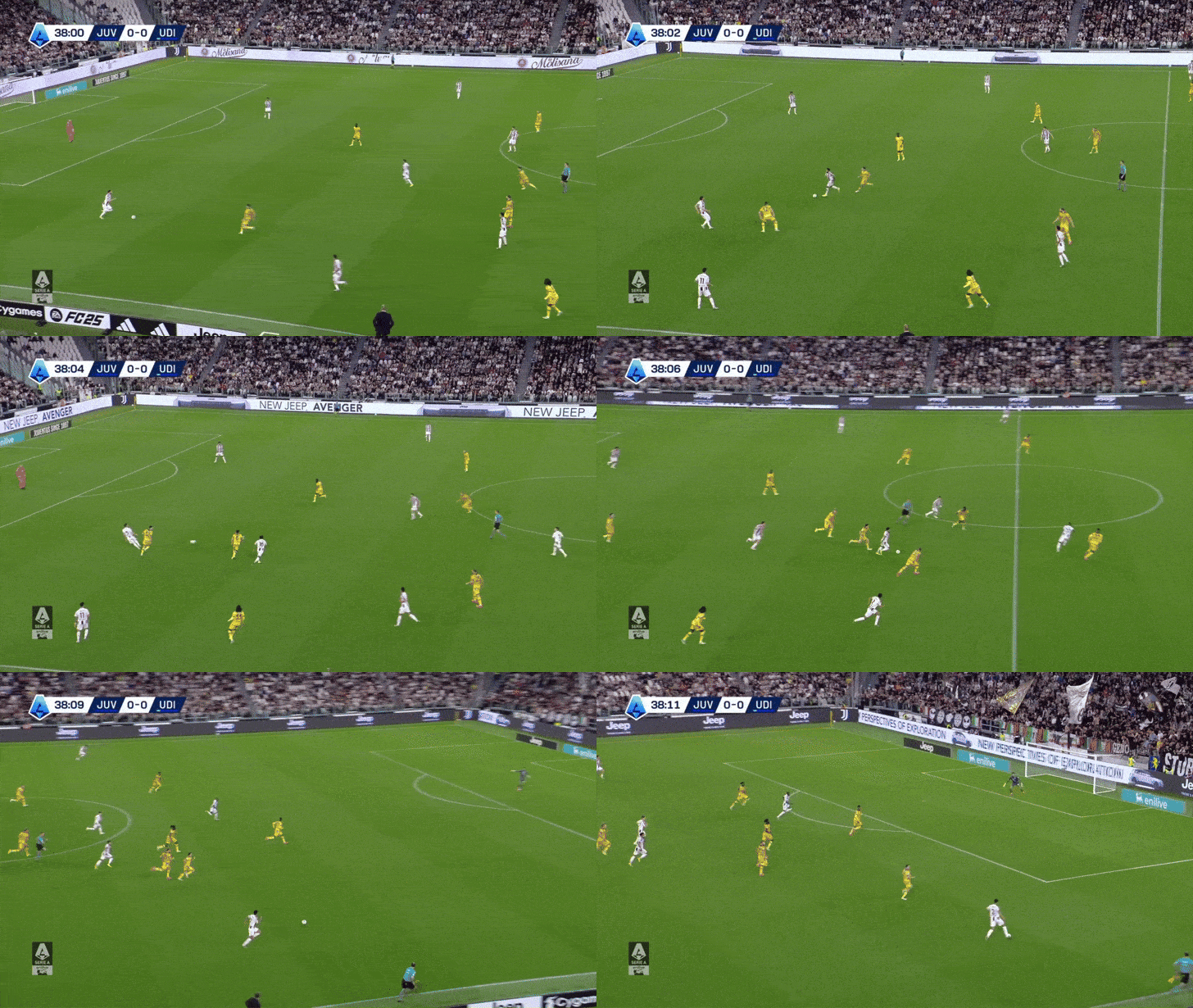
His actions are deceitful. He would take an extra touch to sell fake insinuations and funnel the opponent to where he wants him to unlock an angle, and instantly change the direction to pass.
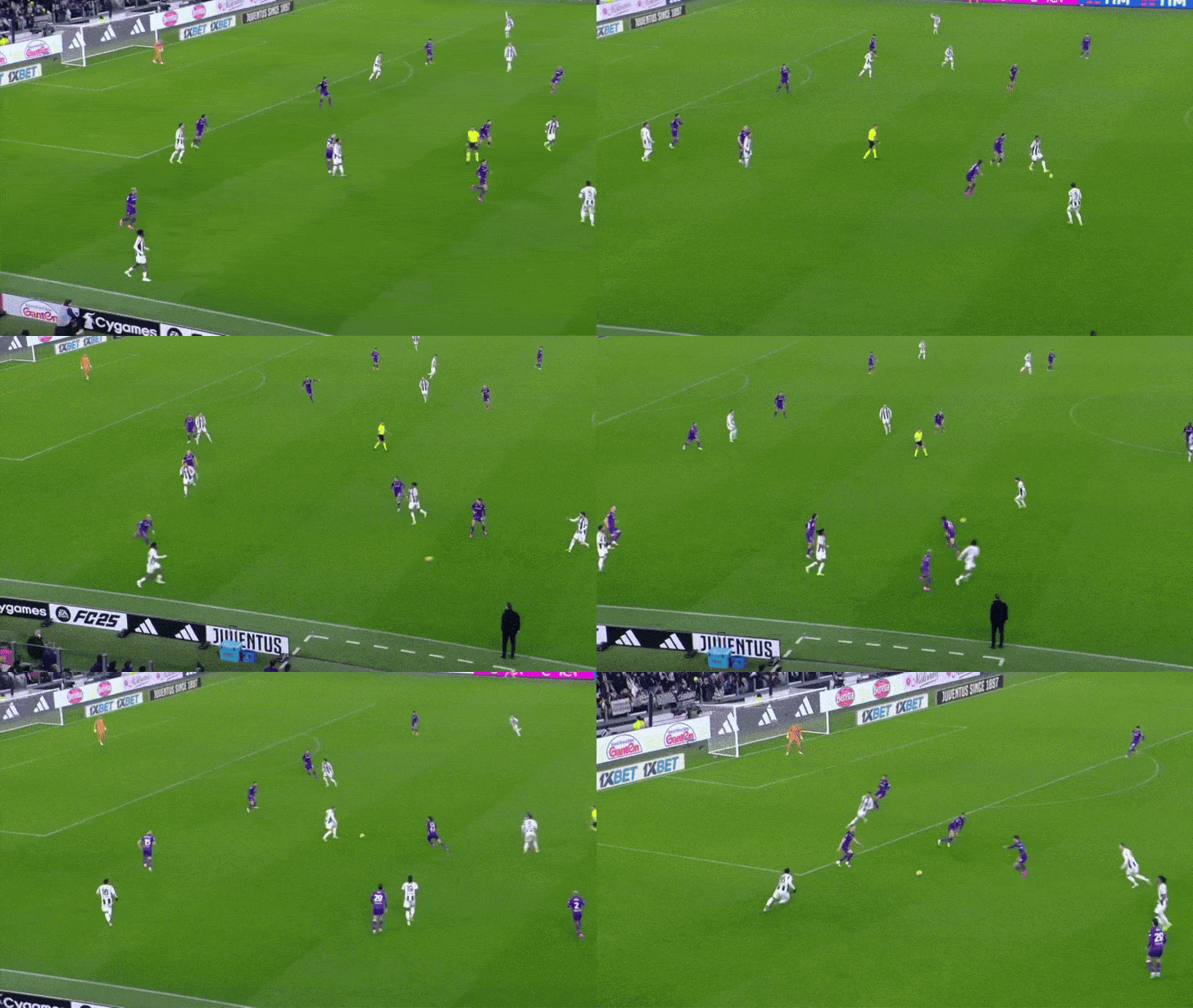
Alternatively, he waits a bit to ensure the opposition's intentions, as indicated by their body language, then he moves in the opposite way and enters the free space ahead.
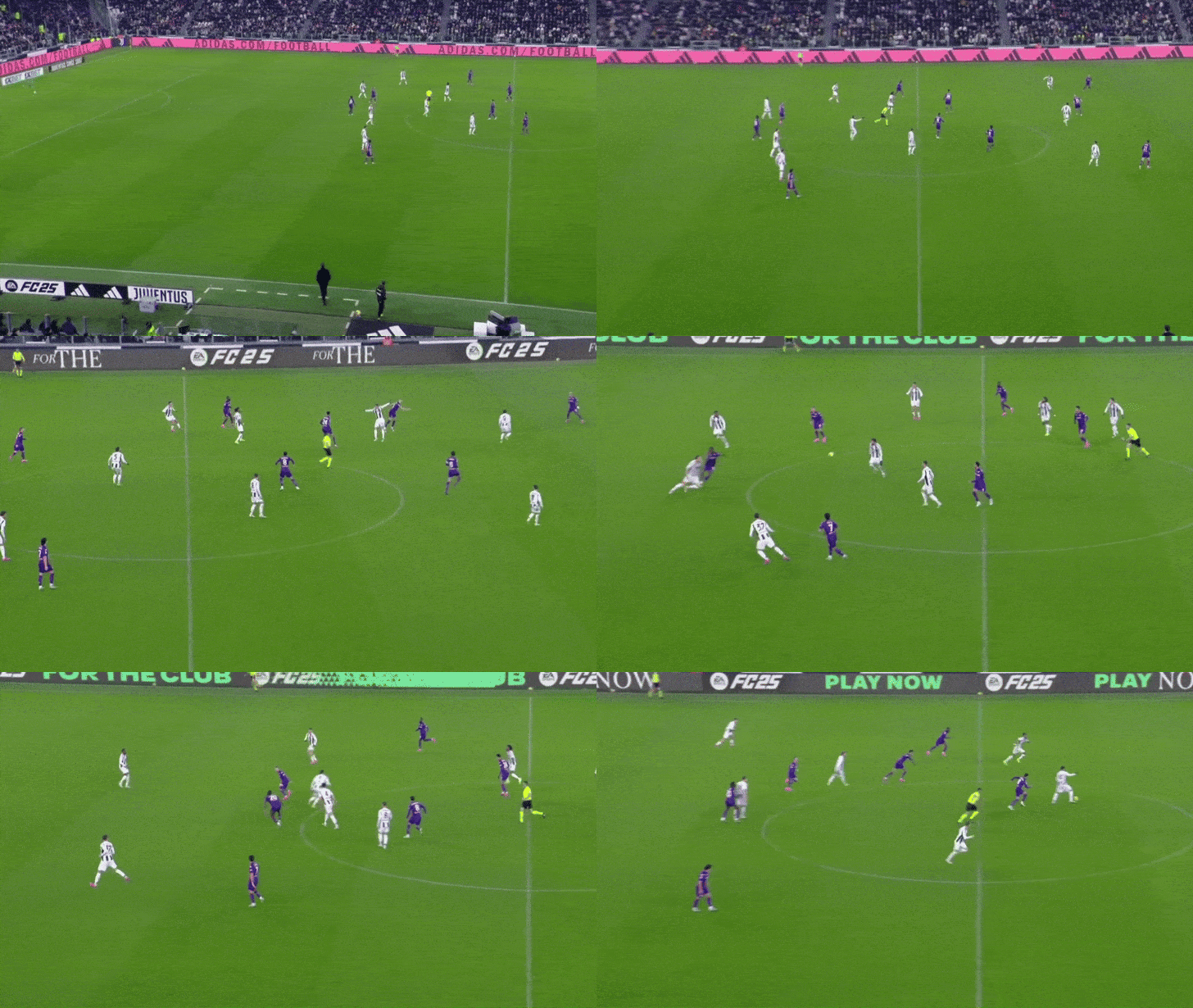
He links from one touch, unlocks passing lanes by coming short, creating separation with the double-six on his back. Even under pressure, where he cannot separate himself from his marker, his first touch works to his advantage, and usually, he resists contact and figures out a way to beat that pressure.
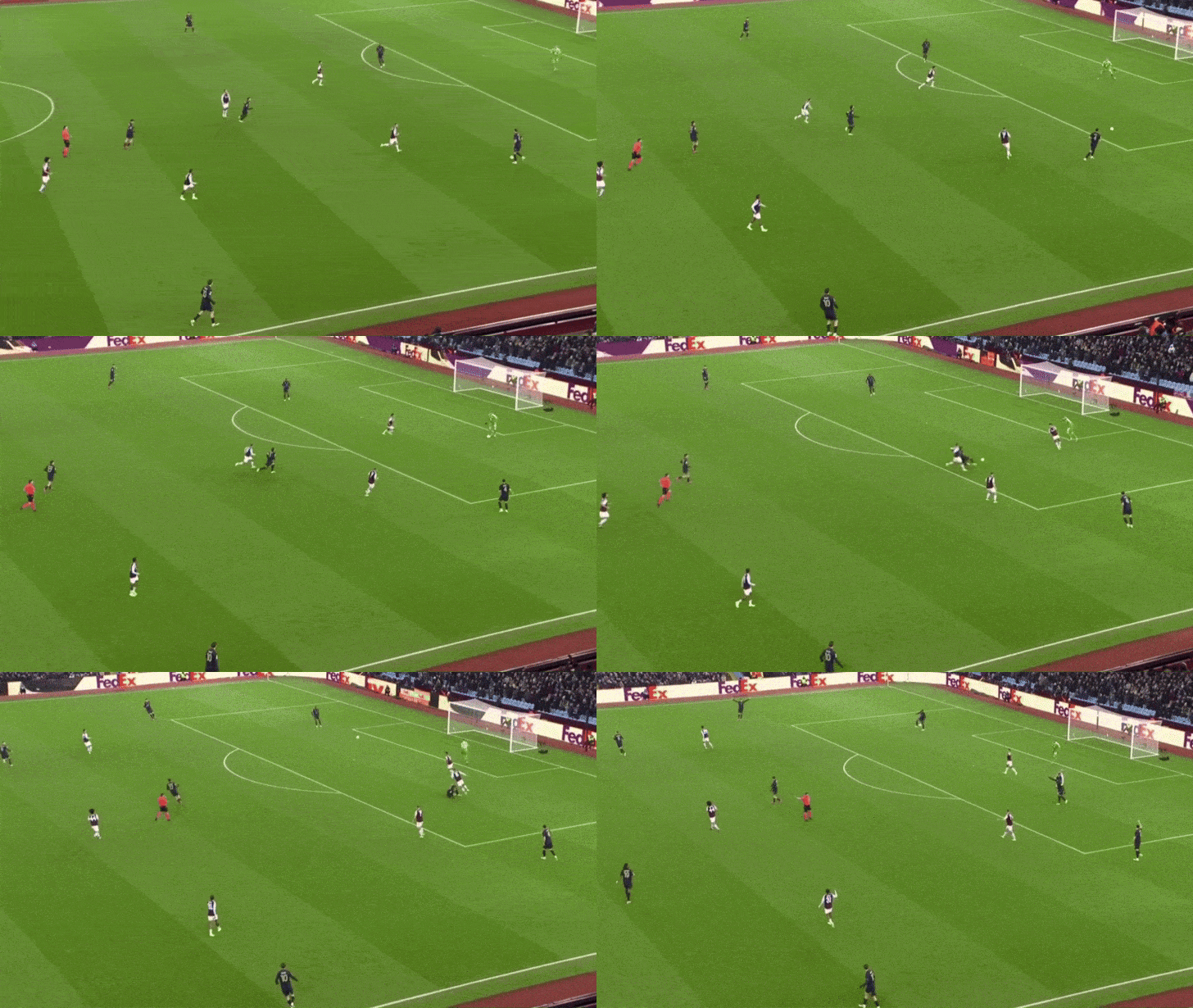
His pre-receiving actions and decisions serve the purpose of moving into a space where he can draw maximum leverage. It can be generating a passing lane, pushing the opponents’ block backward via backpedaling toward their goal, and alleviating the pressure on the ballholder.
Check this. Manuel Locatelli keeps retreating in the direction of Verona’s goal, forcing their second line to drop. That supplies Juventus center-back Lloyd Kelly with space to carry forward and slice Verno’s defense open with a pass to Locatelli. The latter off-ball movement permitted Juventus to work the ball out to the middle third, whereas his receiving, turning, and releasing secured progression.
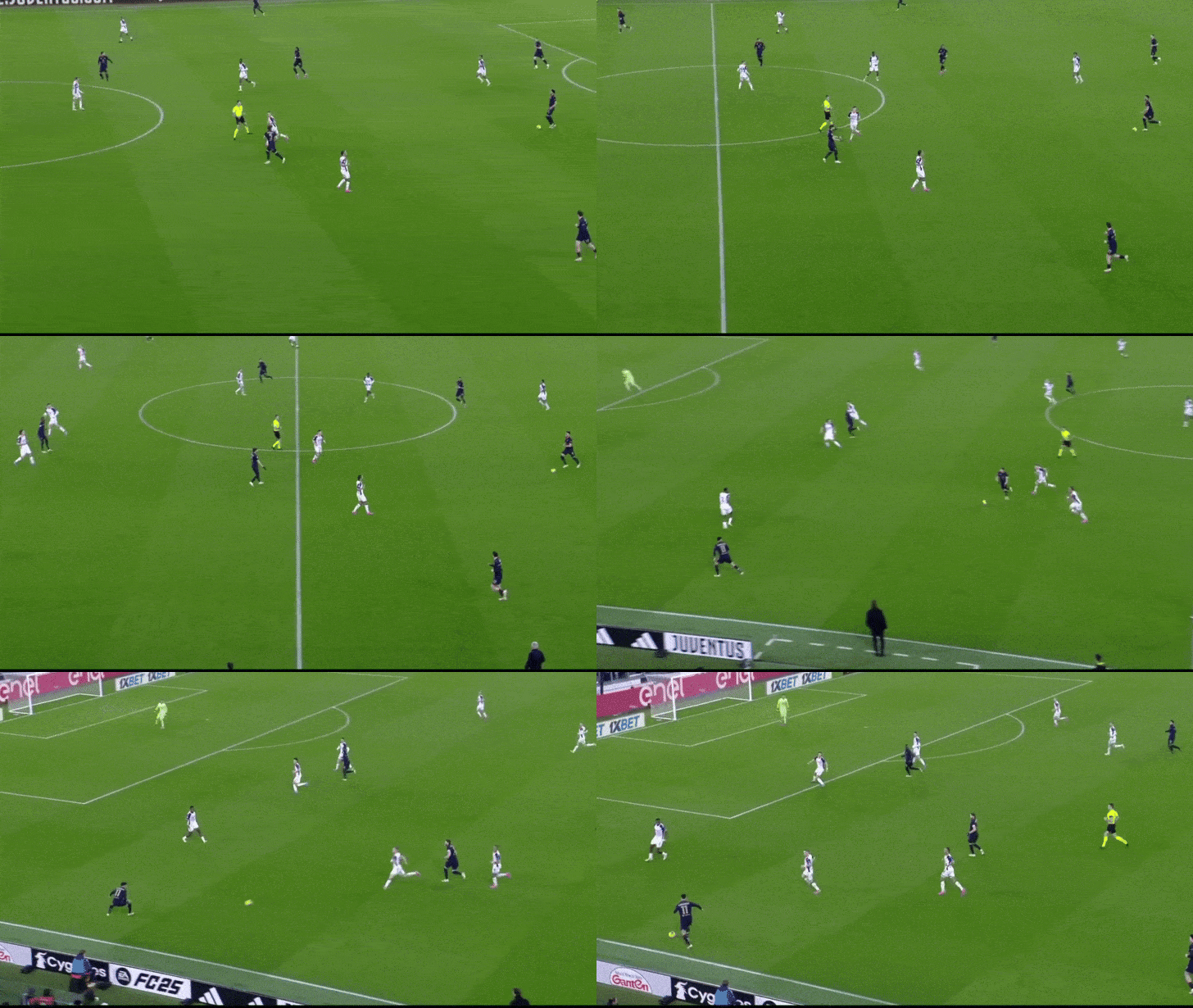
Scanning is a routine for Manuel Locatelli. It aids him in spotting free zones between the lines, sneaking stealthily to set up the optimal scenario for a ball receipt and immediate release.
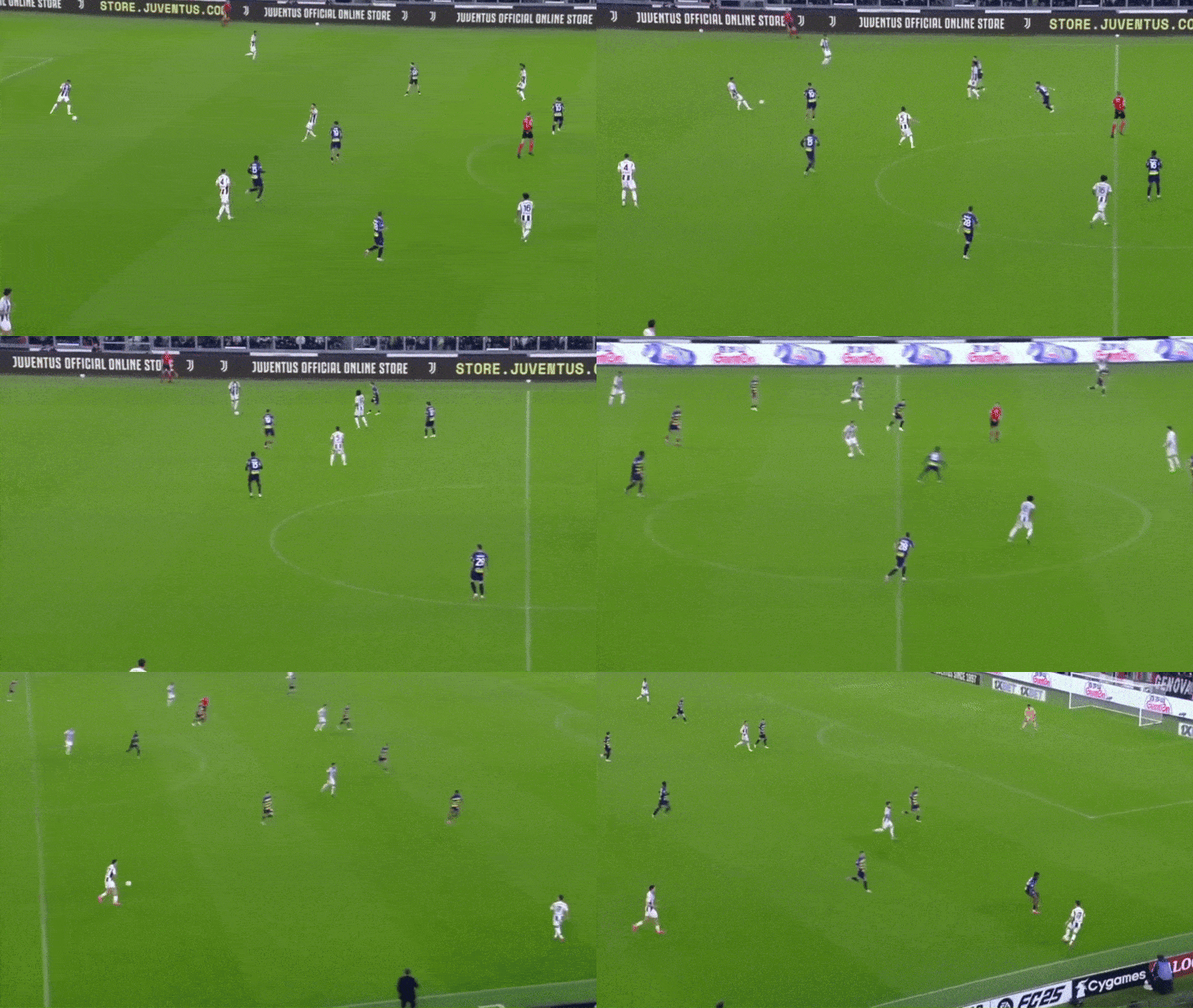
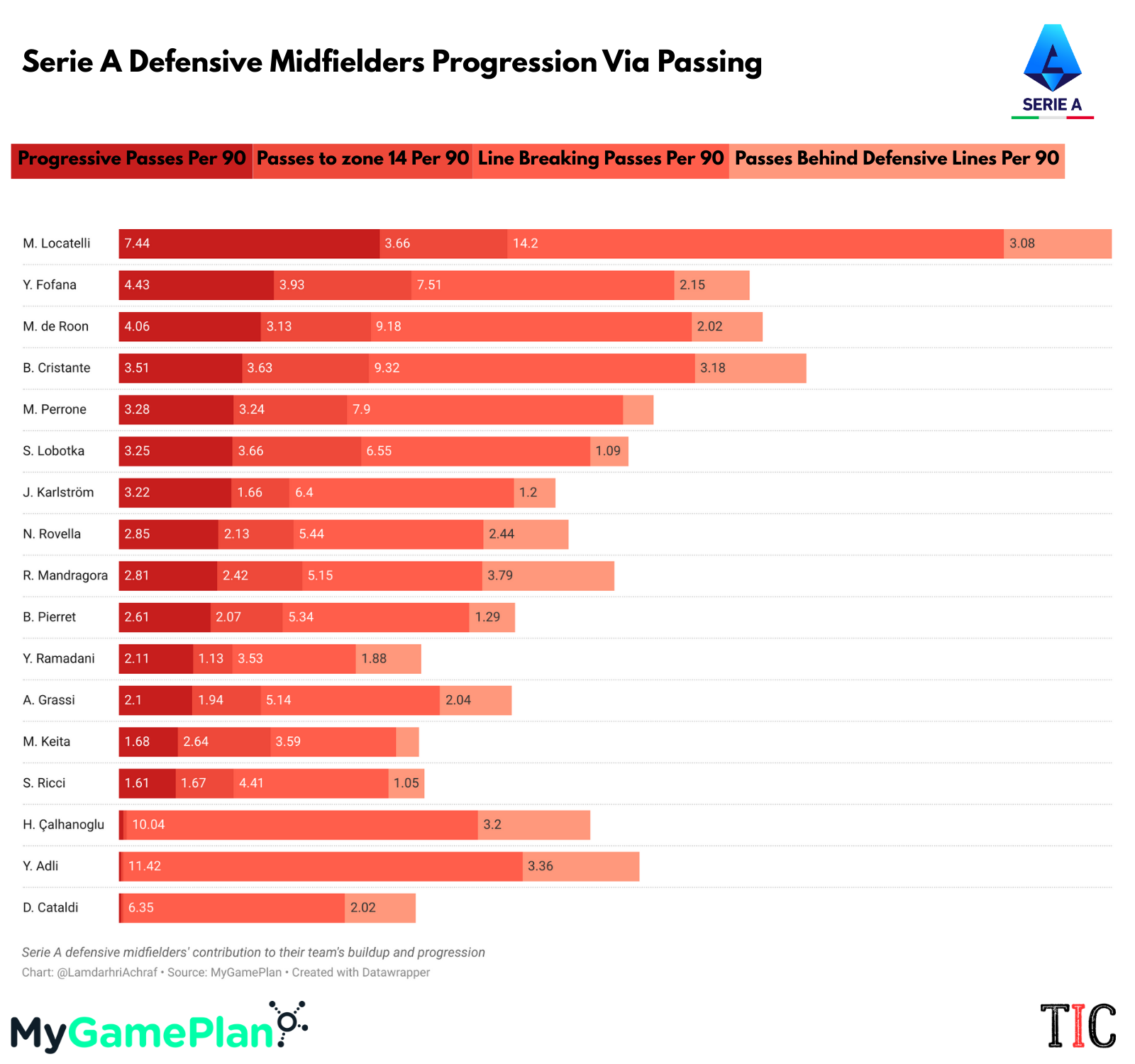
14.2 line-breaks per 90, 3.08 passes behind defensive lines per 90, 9.38 progressive passes per 90, and 3.66 zones 14 passes per 90 are Locatteli's contribution to Juventus’ progression in the 2024/25 season of Serie A. He adopts a crisp, sharp, incisive, versatile, and voluminous passing style. As previously noted, he waits for the gap to appear and slice defenses open. His forward passes always develop the sequence, forcing opponents to retreat and defend deeper.
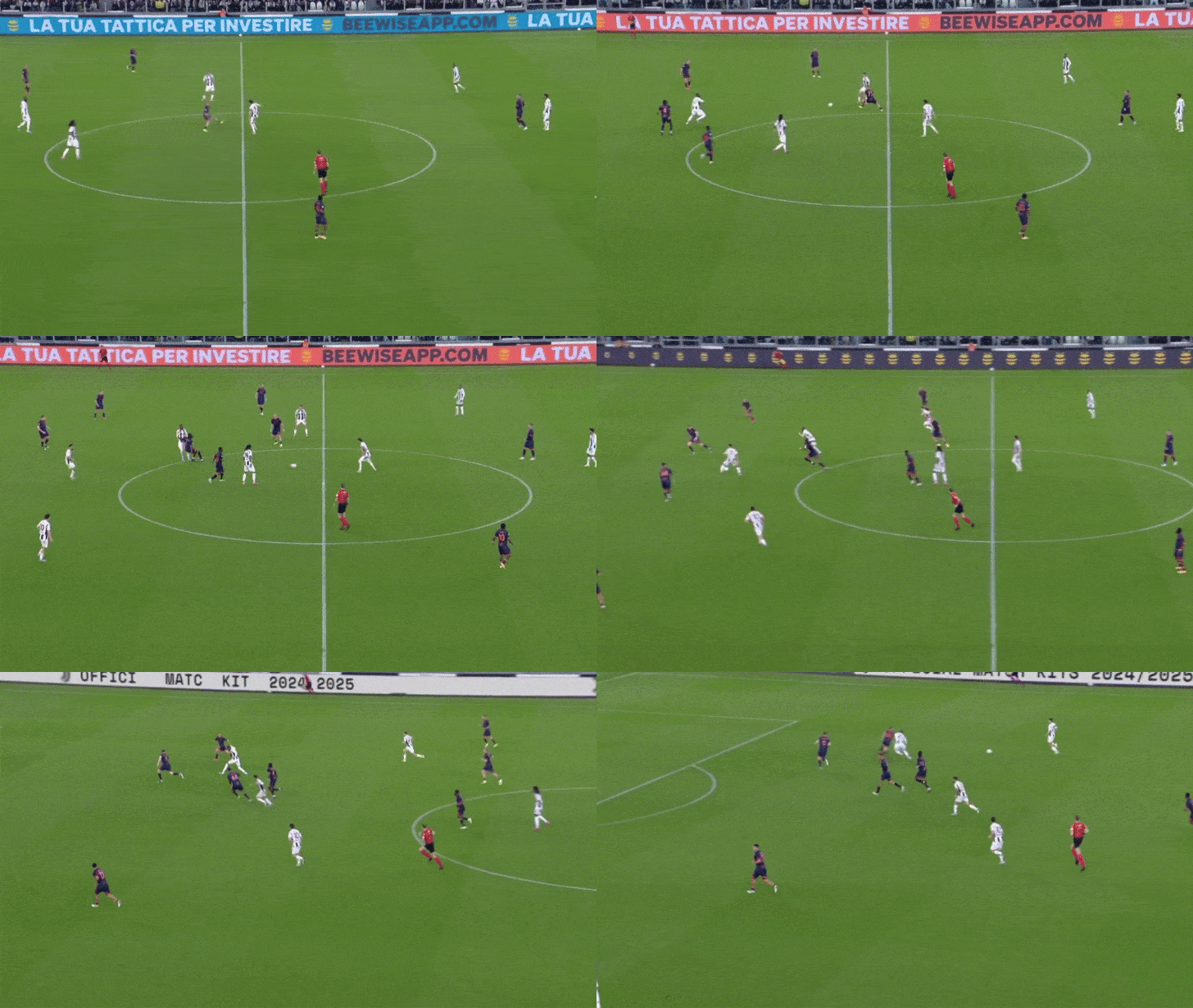
His long passes, especially his switches, are driven, travel with enough speed, height, and enable the exploitation of space on the opposite side. His switches mainly target zones behind defenses or isolating the opposite winger in 1v1 situations. Here is a scene in which he changes the direction of the play toward the right-back. The latter receives in space, making use of the winger, pinning the wingback to whip the cross.
Manuel Locatelli is not a “first-thought carry” midfielder. He relies frequently on his passing quality, whereas his midfield partner is a ball-carrier, like Khéphren Thuram or Teun Koopmeiners. However, when there is an opportunity to carry or dribble, Manuel Locatelli is no slouch in this regard. He smartly reacts based on his opponent's actions to dribble past them. He interprets their body movement to disrupt their momentum.
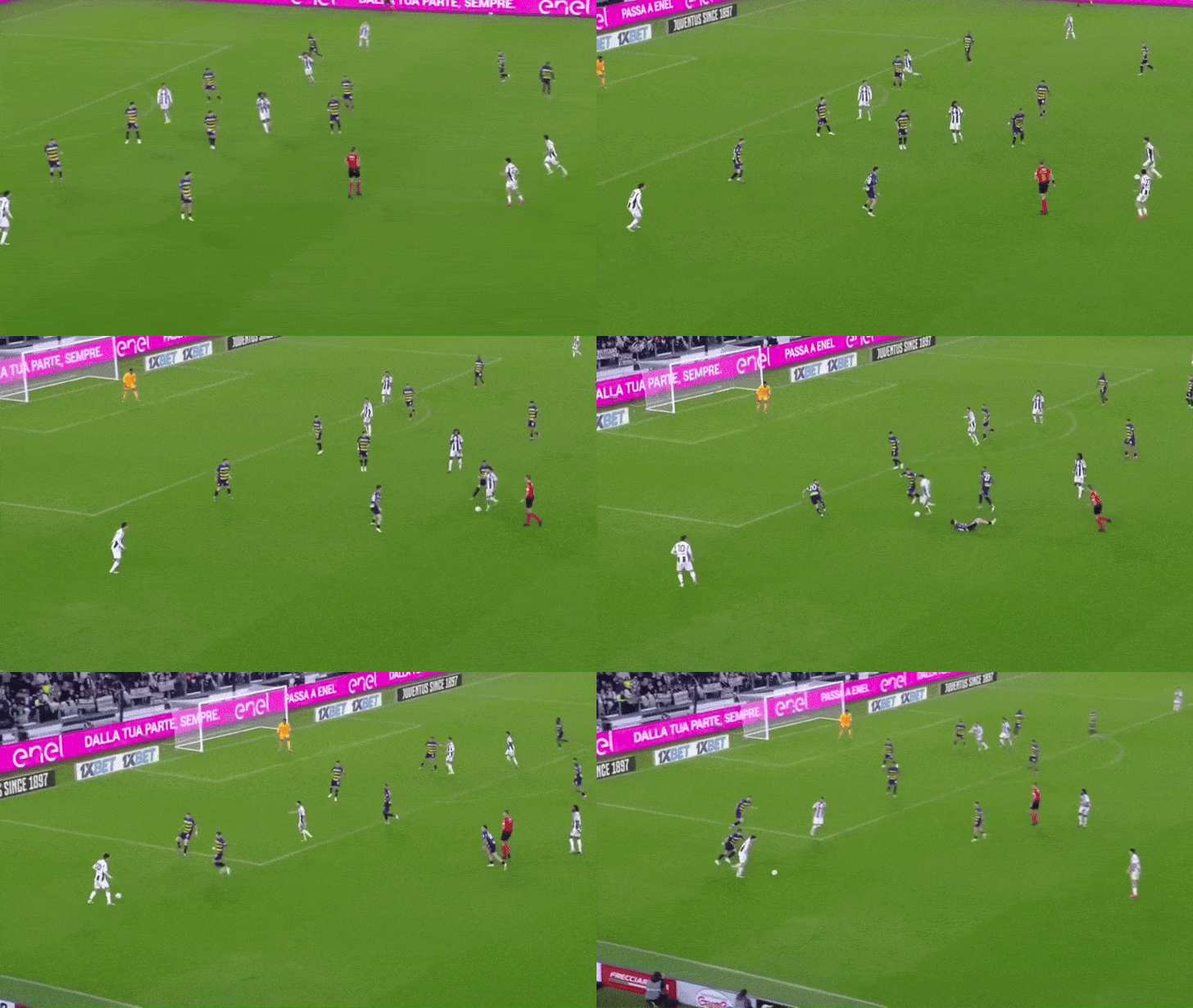
He uses his hands to resist contact and ride challenges until he attracts pressure, and then he releases.
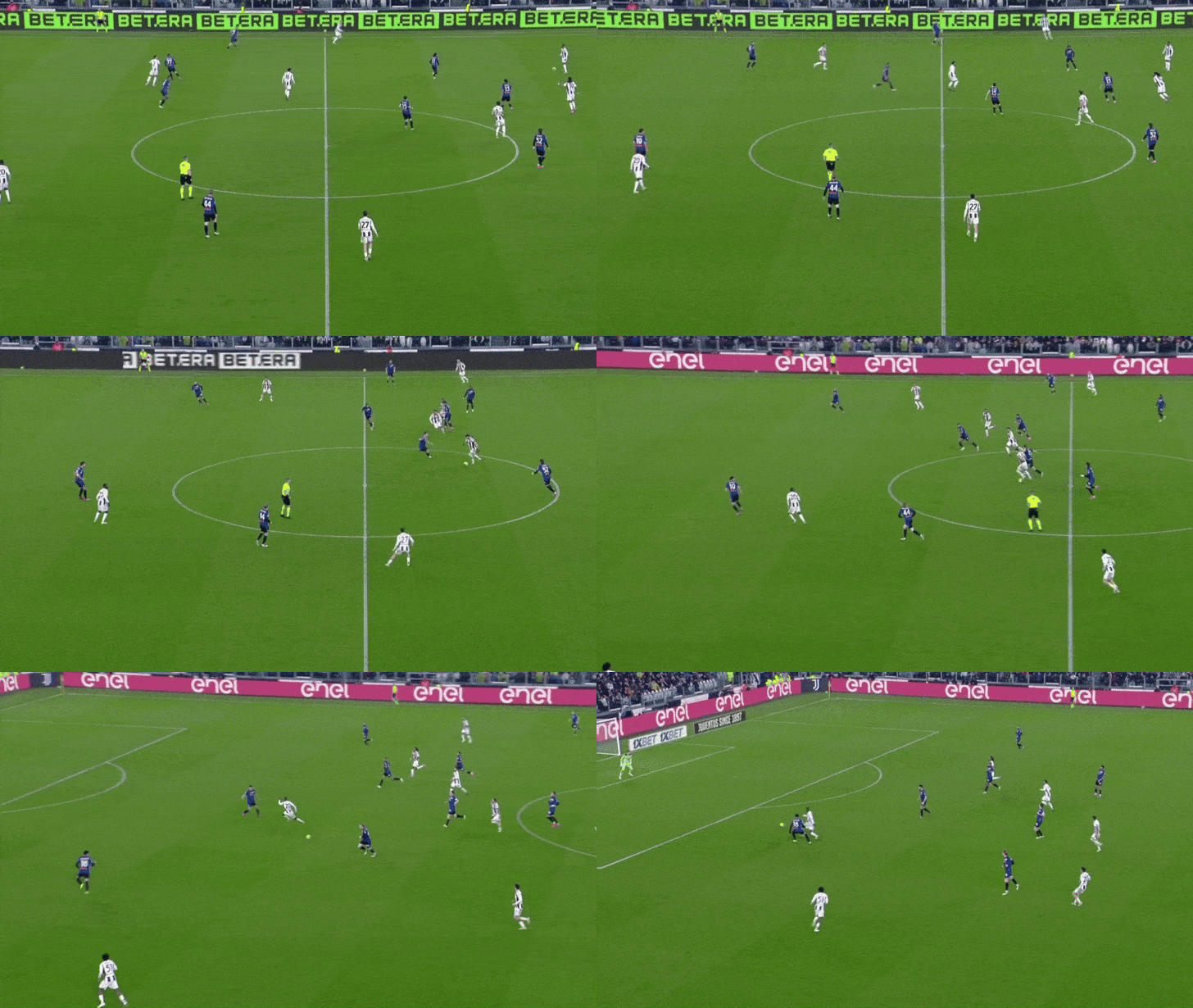
In a high-press situation, Manuel Locatelli counts more on timing his sliding tackles to dispossess the opponent or to intercept the path of the ball at the moment of its release. Near the touchlines, he just slides and directs the ball out, ensuring the counterattack is delayed and affording his teammates time to reorganize. In central areas, his intention is to chase, tackle, or intercept for the sake of regaining and retaining possession.
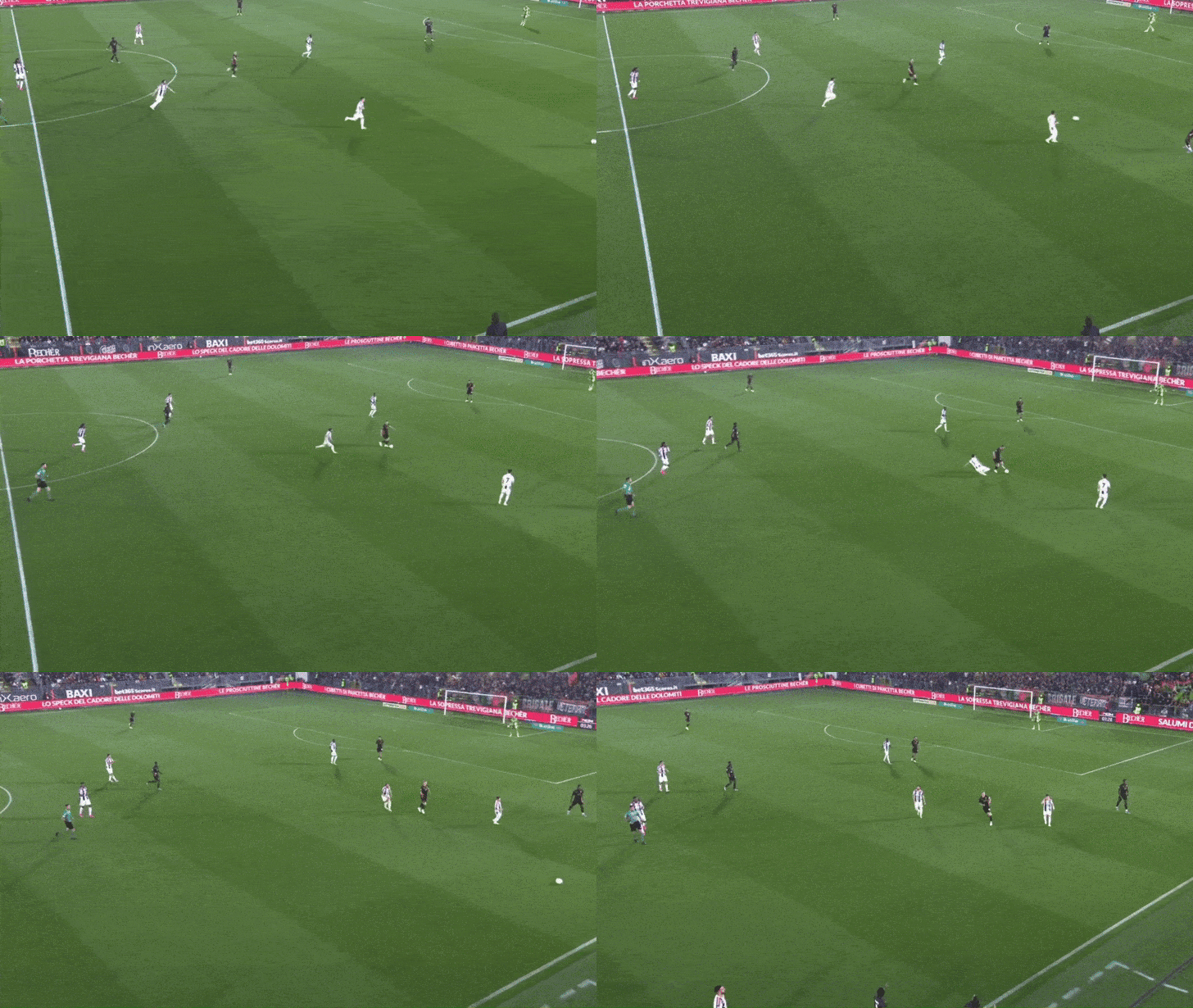
In a zonal defense, Manuel Locatelli intends to fill in gaps that appear as a result of the opposition stretching Juventus’ lines laterally. He covers the inside channels by tracking runners coming from behind to neutralize numerical superiorities.
When the center-backs shuffle across, he steps back to afford defensive support in case of a cross or a cutback. Additionally, he keeps tabs on the edge of the box to pounce on zone 14 intruders.
When he is close enough to the receiver, he springs on the ball when the opponent still does not exert full control of it. He times his tackle to regain possession and could resist contact against physical and powerful players to retain the ball.
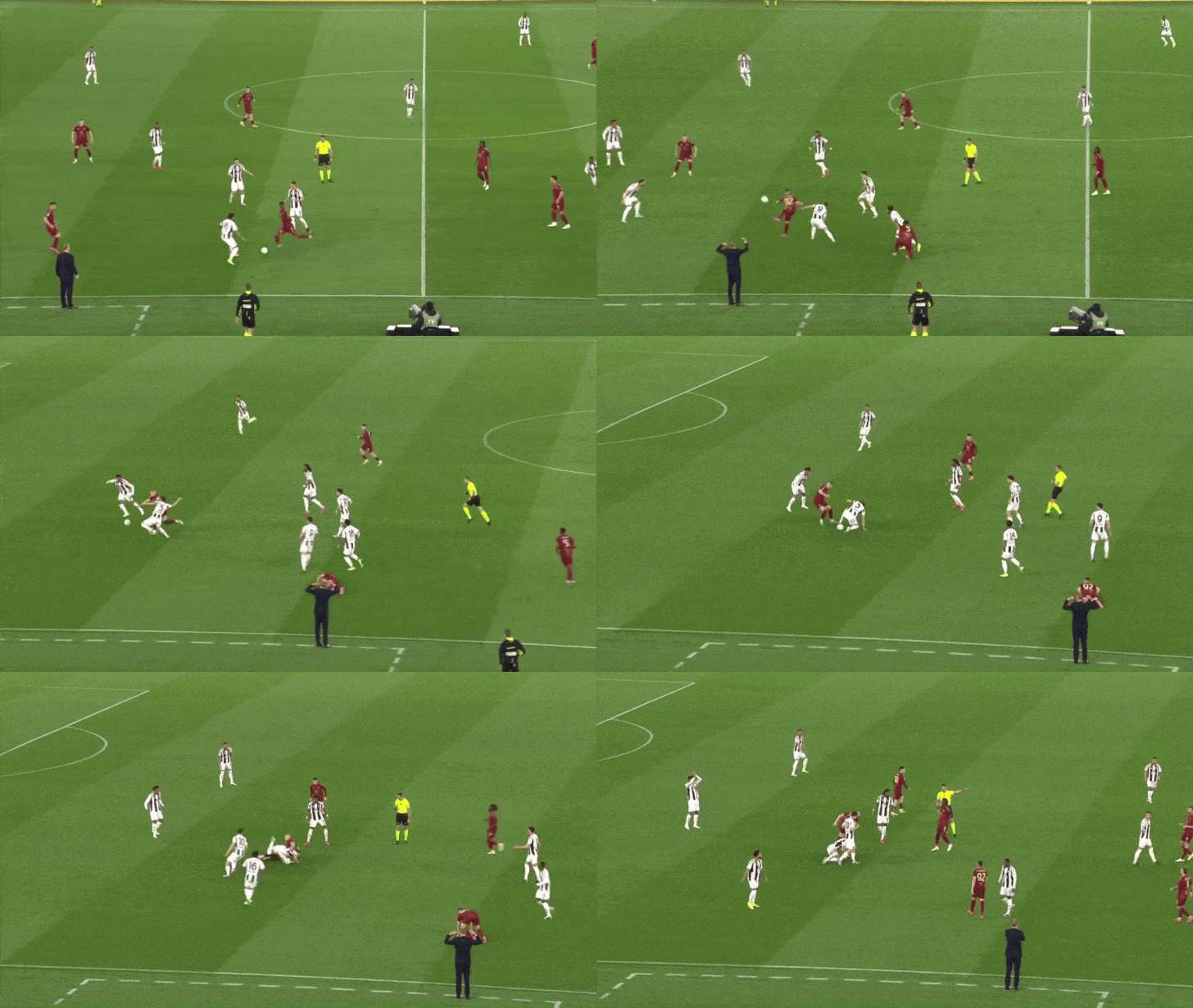
According to MyGamePlan, Manuel Locatelli won 0.48 second balls per 90 after an aerial duel, the fifth-best rate among the defensive midfielders, in Serie A in the 2024/25 season. Operating in the right spots before the aerial plays an important role in Locatelli collecting these balls. However, the missing part of the picture is that Juventus’ headed clearances are directed toward safe places, and where they could easily pick up the second balls.
Aerially, Manuel Locatelli is a top-notch cog, leveraging his long frame to tower over opponents. He reads the flight well and efficiently approaches the duel via scanning his surroundings to form a picture of his subsequent actions. He uses his knees to generate power in the leap. Furthermore, he initiates the duel with controlled run-ups to gain extra momentum and boss his opponent in the air. Moreover, he puts his hands across the dueler’s body to unbalance him without committing fouls. He opts for control rather than random clearances, so his headers are well directed toward zones where his teammates can win the second balls.
👉 Angelo Stiller
Angelo Stiller plays with pausa, takes time to think, and then proceeds. He’s never in a rush when he’s under no pressure. He is always in motion, seeking free space to receive, and trying hard to offer himself a passing option to his teammates.
A good midfielder is, by default, a good scanner, and so is Angelo Stiller. He always pivots his head to check his surroundings and plan his next steps. He usually orchestrates his team's plays from deep positions. He drops to the backline, receives, and then breaks down opponents’ lines via a weighted pass. Joining the defense, in possession, lures one of the players from the second line to push on. As a result, he finds a way to work the ball out through the gap created by his deeper movement.
He can also shift wide when the flanks are empty. It usually results in free space inside the opposing team’s block, as his darts attract pressure. Consequently, it gives his partner in midfield license to come from behind and exploit the free pocket. Or, one of the players in the frontline drops out. The telos is to create an out-in, diagonal passing lane to thread.
Angelo Stiller is a forward thinker and is always looking for options to progress. He is second to Emre Can (59.53%) in terms of forward passes rate, with a 52.43% according to MyGamePlan. In addition, his pass completion rate in general (87.4%) and medium range (90.9%) in particular, put him in the 73rd percentile among midfielders in the Fbref database. In fact, from deeper positions, he waits until the other pivot comes short, while both are baiting the opposite midfielders to press. By doing so, he ensures the opposition lines are stretched vertically to find an outlet dropping between the lines.
His lofted passes to the right side— whether the right-back or winger — are measured, delivered with enough weight, and land with enough speed. And often, it forces immediate pressure on the receiver and creates exploitable space behind.
Angelo Stiller's contribution in terms of carries does not come close to what he affords in terms of passing volume. He is not a ball-carrier in the first place. When he does, it means that he did prior work. Scanning and spotting free space ahead are his pre-carrying rituals. They are a stimulus for him. He usually starts from the backline and advances until a passing option reveals itself.
The German midfielder is over-reliant on his left foot. It renders him predictable, easy to press, and forces him into uncomfortable situations. Under pressure, it drives him to adopt awkward body positions to adjust to his left foot. In case of the appearance of an opening on the right while he’s on the left and closely marked, he cannot recall his right foot for a switch.
Defensively, Angelo Stiller lives off anticipation and positioning. He is not the type who outmuscles his opponents, nor is he aggressive in his defensive actions. In a counterpress situation, he tends to come from the blindside of the ballholder, springs off out of nowhere to minimize his reaction time and regain the ball, consequently. His proactive character allows him to pounce on the pass on its way toward the receiver and then initiate a transition immediately. He times his leg’s spreading to intercept a pass. He rarely lets loose balls and knockdowns slip out of his sight.
He’s average in winning second balls. In fact, Stuttgart won 1.38 second balls in the Bundesliga 2024/25. It’s about being in the right spot to collect the defenders’ controlled clearances.
In the air, Angelo Stiller won 40% of his duels, which is below the average. His approach is usually flawed. He finds difficulty in generating power and momentum while jumping because he starts from a static point. He does not rely on his arms to unbalance his opponent. In addition, he cannot create separation, which makes it easier to destabilize his body during the jump.
👉 Máximo Perrone
In settled play, he comes from behind into space, targeting the blindside of the opponents, and breaks their vertical compactness via weighted, crisp, one-touch play.
He always scans, asks for the ball, and offers verbal communication to teammates in order to provide them insight on where to move to receive or free a space for someone to collect Perrone’s pass. He disguises his intentions and stands on the ball without rushing his actions.
He usually wins a space from his marker, comes short with a side-on stance to unlock all the passing angles along the pitch. He reads the opposition press well, which contributes to a better interpretation of free zones. Additionally, he tends to stroll and draw his opponent’s attention. Then, a sudden change of pace follows to create separation. As a result, it guarantees a passing option for his teammates.
His passes serve the purpose of progression and breaking the opposing team’s lines. When he spots a space behind the defensive lines, he plays chips landing in an area that is out of reach of the goalkeeper. He facilitates the wide combinations via his off-ball movement in the inside channels by pulling his marker out of position and vacating the space behind for a runner to attack.
Maximo Perrone is calm under pressure and usually comes up with good decisions. He established good coordination with the ball to deal with an immediate counterpress.
Maximo Perrone wins 0.36 second balls per 90 according to MyGamePlan, which positions him at an average level among Serie A defensive midfielders with at least 1710 minutes played. Usually, Perrone collects the second ball after a well-controlled clearance headed down by the defenders. Or, his positioning and scanning tip the scales in his favor to grab these balls.
In the air, Maximo Perrone cannot frequently draw leverage. That is because he encounters physical, robust attacks or midfielders who outmuscle him in the duel. His win percentage (44%) in this regard is a reflection of this part of his game. However, Maximo Perrone approaches the air duels well, except for the physical aspect. He usually adopts a side-on stance for quick spins. He relies on an explosive, controlled run-up to generate height and power on the jump with a strong plant of the take-off foot. He uses his arms, putting them across the opponent to unbalance him without committing fouls.
Maximo Perrone registered 0.58 possession gains in the final third in Serie A 2024/25, according to MyGamePlan. The Argentinian reads the press and the opposing team's buildup well. He switches on immediately in case of a backward pass, ball near the touchlines, or the byline. When the play is funneled toward the wide channels, he shifts to ensure the opposing team is suffocated via cutting inside passing lanes, picking up loose balls, and intercepting passes. He passes off smoothly opponents between his teammates, maintaining the shape of the high press.
He covers the channels well in case of a transition. Following a possession loss in the final third and considering the advanced position of the left-back, the scenario is as follows. The left center-back sweeps to cover the left-back evacuated zone. Enter Maximo Perrone to fill in the distance between the center-backs.
👉 Nikola Moro
Nikola Moro is calm, plays with composure and soothing manners, which helps him make good decisions under pressure. When marked closely, he exploits the opponent’s momentum to disrupt it via quick reactions and agile body movements, prodding the ball toward the space his marker came from. By going against the opponent’s momentum, he takes advantage of his inability to brake and turn to access the free zone ahead.
He disguises his on-ball actions, leaving his markers in a dilemma. His movements behind the first lines of pressure unlock passing lanes and access to the middle third. His scanning ability plays a crucial role in him smartly spotting free zones and generating separation to receive and release.
Nikola Moro tends to drop back in the buildup phase and dictate play from deep. By doing so, he invites pressure, evacuating spaces in midfield for front teammates to dart into. He exploits the stretched area between the opponents’ lines to slide line-breaking passes down the inside channels.
He reads well his teammates’ off-ball runs (double and counter-movements between the lines), waiting for the opposition’s backline getting pulled apart to chip a ball over the top for a runner in behind.
In addition, he pulls wide to unlock wide progression when walking through the central corridor isn’t an easy mission to fulfill. By dashing near the flanks from a central position, he poses a question to his marker whether to follow Nikola Moro and vacate his spot or stand still and leave the Croatian midfielder free to act.
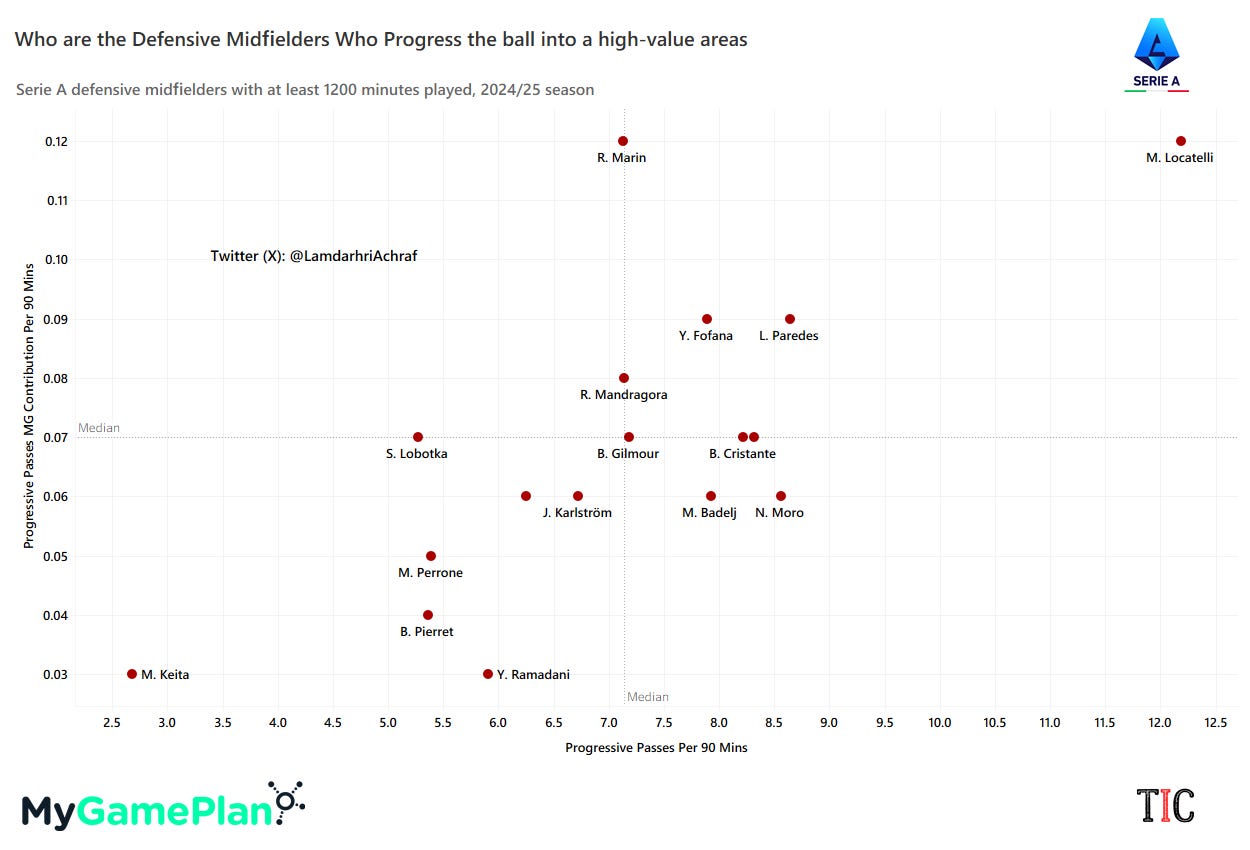
Nikola Mora's switches are neat and sharp, delivered with precision, speed, and height. Furthermore, he provided a volume of progressive passes. Only Manuel Locatelli and Leandro Paredes recorded more than Nikola Moro in this regard, according to MyGamePlan. However, he’s below the average in terms of the value his progressive passes add to the team’s possession.
Defensively, Nikola Moro is an aggressive counter presser; he instantly switches to hunting mode following a possession loss in the final third. His telos is to pounce and narrow the passing and dribbling angles to nip the opposing team’s counterattack in the bud. Then, he aims to steal the ball as quickly as possible and reload the attack immediately.
He covers spaces well behind defenders when they step out and vacate their spots, intercepting and blocking off channel passes and runs.
Nikola Moro ended the Serie A 2024/25 collecting the most second balls (1.05 ) per game among the defensive midfielders with at least 1710 minutes. His approach revolves around reading his teammates’ aerial duels, scanning his surroundings, and nearing the landing area to pick up the ball.
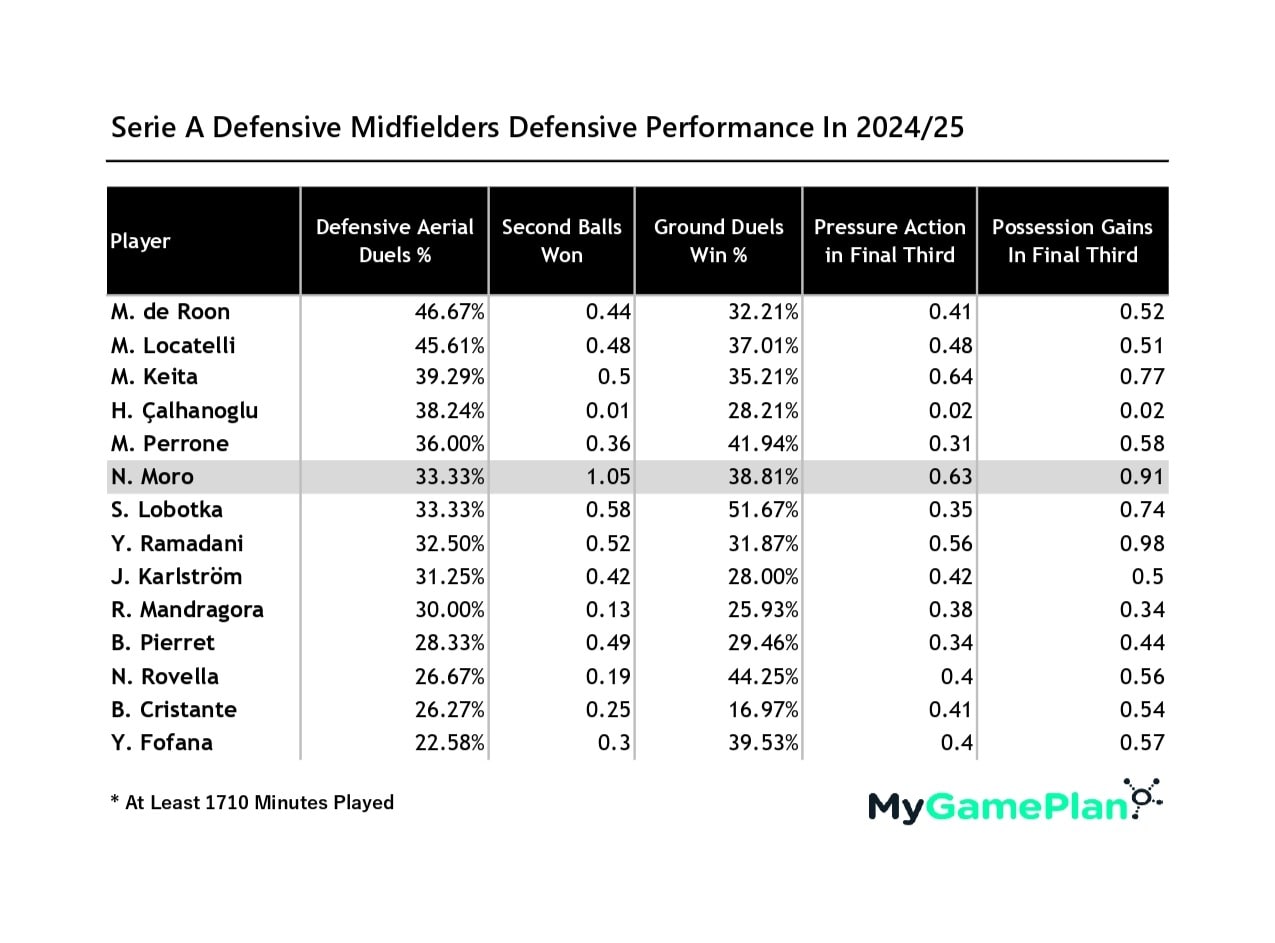
Aerially, Nikola Moro won 51.5% of his aerial duels, which is promising given that he stands at 183 cm. He reads the flight well and always checks his surroundings. He adopts a side-on position to enable quick spins with a plant of the take-off foot to generate momentum while jumping. His anticipation allows him to move into the landing space and comfortably win the ball in the air without being contested. Moreover, his headed clearances are controlled and directed into safe zones.
He tackles a lot, especially in the middle and final third. He also challenges dribblers and tackles them with tenacity. He won 2.01 tackles per 90 minutes in the 224/25 season in Serie A without committing fouls or errors. Nikola Moro has strong physical capabilities that serve him in his ground duels when he gets tight against opponents. He relies on small nudges and makes use of his hands to imbalance his man and poke the ball from unexpected angles.
👉 Nicolo Rovella
Nicola Rovella plays with a calm character and is cunning under pressure. He deceives his marker by signaling fake intentions to direct his opponent to where he wants him. And then, he changes his direction via a quick spin with the ball and accesses the free spaces he had planned beforehand.
He can drop into the backline, dummying his movement to draw pressure from the midfield. That allows the front central players to dart into the space vacated in the middle of the park and open up a passing lane to unlock progression through the opponents. His positional awareness and close proximity to the ball and teammates serve him well in interpreting free spaces and threading passes in tight zones from first-time touch.
The 23-year-old provides solutions via line breaks and progressive passes. However, the volume of his productivity in this regard doesn’t level up to a world-class midfielder like Manuel Locatelli. According to MyGamePlan, in the 2024/25 season, Nicolo Rovella slided 5.44 line-breaking passes per 90 in Serie A, while Manuel Locatelli registered 14.2 passes per 90. In fact, Nicolo Rovella is tasked with initiating the buildup, dropping to the backline, and playing cautiously.
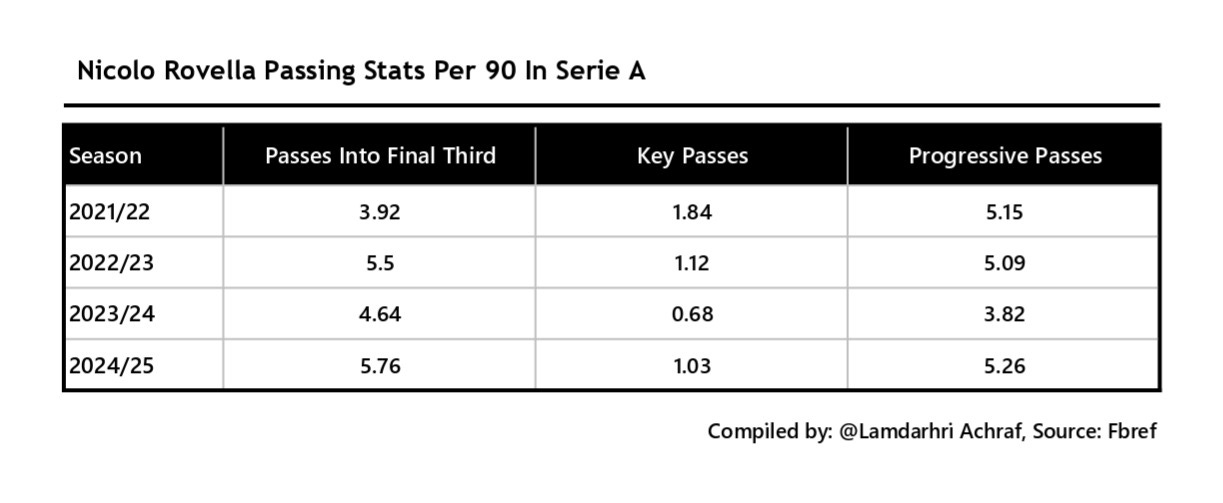
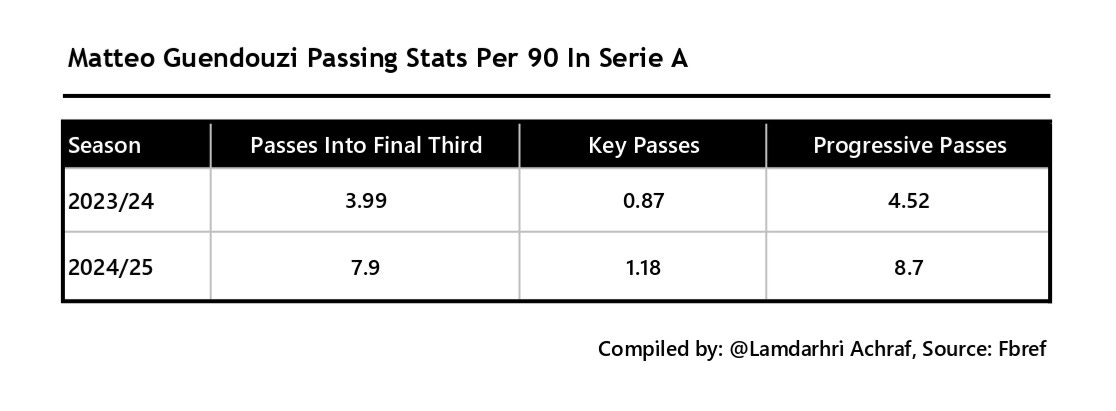
His midfield partner, Matteo Guendouzi, racked up more numbers regarding progression, as the Frenchman usually is the one who receives from the players behind the ball and connects between the defensive and final thirds.
Additionally, Nicolo Rovella could exploit the space behind the defensive lines when he spots a runner. He delivered 2.44 passes regarding this aspect. Nevertheless, his passes behind the backlines are often out of reach or overhit, especially the long balls.
His switches are accurate, enabling far-side exploitation. The deliveries are hit with enough speed, weight, and height. They drive through, which permits quick ball control before the opposing team can shift across.
Defensively, Nicolo Rovella is always in motion across the pitch when Lazio defends in a low block. He provides inside and central corridors coverage, preventing the opposition from gaining an advantage through channel runs behind the fullbacks or center-backs. Additionally, he positions himself well around the penalty area to collect the opponent’s cutbacks.
He has a good sense of anticipation. He is at the right place at the right time to intervene defensively. His statistics in this regard are as follows:
Interceptions: 1.61 per 90 min, ranks in 93rd percentile among midfielders;
Tackles in the middle third: 1.17 per 90 min, ranks in 74th percentile among midfielders;
Tackles in the defensive third: 1.31 per 90 min, ranks in 89th percentile among midfielders;
Dribblers tackled: 1.36 per 90 min, ranks in 85th percentile among midfielders;
Rovella switches on immediately following a possession loss. He tends to establish contact with the ball before the receiver to regain it and allow his team to turn over.

The Italian midfielder was second in winning ground duels (44.25%) among Serie A defensive midfielders with at least 1710 minutes played in the 2024/25 season. He usually gets tight against opponents, trying to imbalance them, making use of his hands without committing fouls, and prodding the ball from unexpected angles.
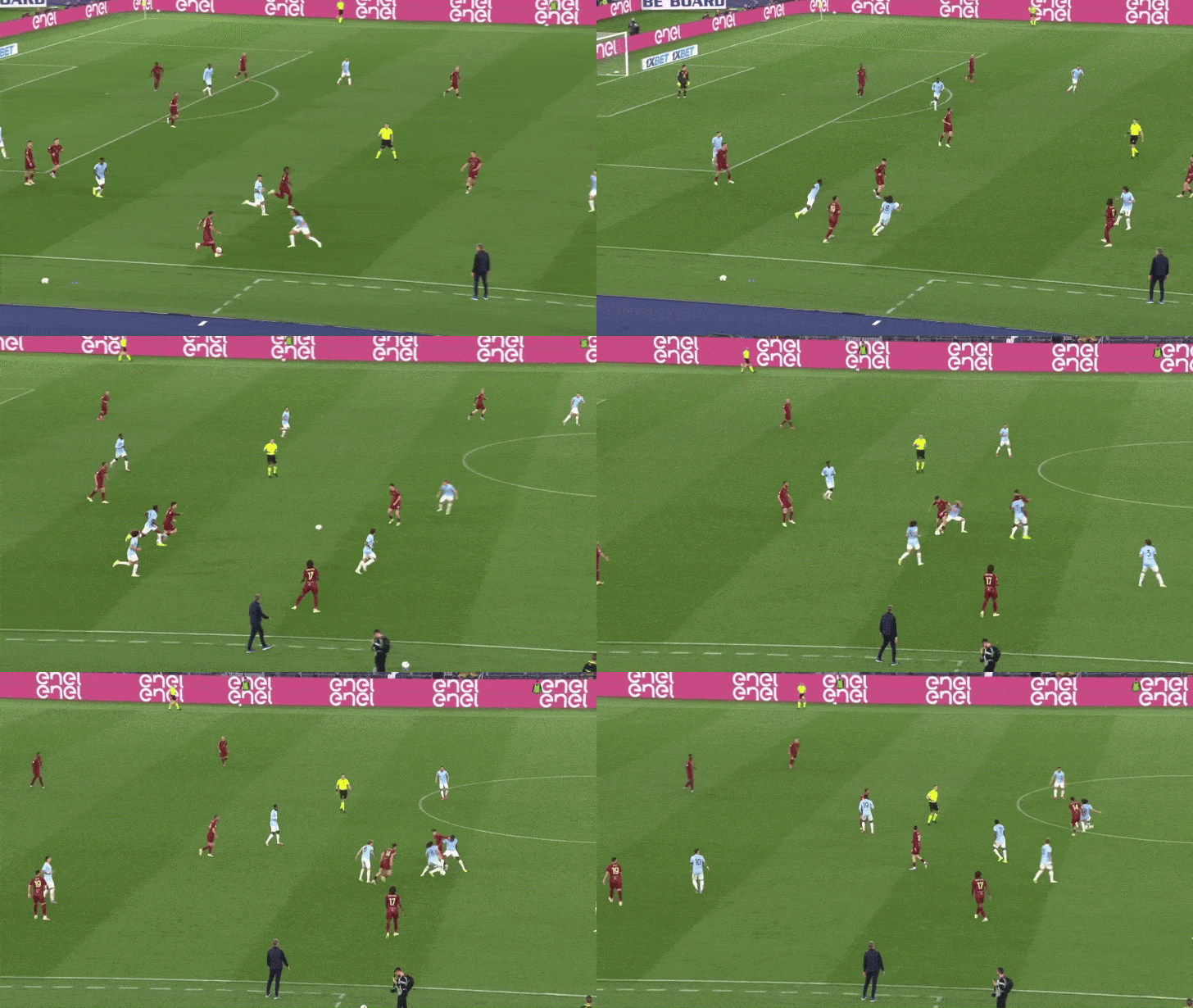
Nicollo Rovela doesn’t shine aerially. The aerial duels are a part of his game that needs improvement. He can be outplayed easily by strong opponents. In the jump, he does not generate momentum or height. That saw him getting bossed and destabilized in the air.
The stats used are valid for the 2024/25 season.
This is an incomplete scouting article that has been sidelined in my draft since last summer. The work started in July and was supposed to be finished by the end of August. However, you can plan however you like, but life is full of unexpected events. The 2025/26 season kicked off, and I got totally immersed, and this project gathered a little bit of dust since then.
So, I hope you accept my apology.
I’m waiting for the end of the season to try carrying out the same experience and bring it to completion.
So, stay tuned and Bare With Me.
If you’re enjoying what we are producing—whether it’s an analysis, scouting, or opinion—Please subscribe, leave a comment, and drop a like. It helps us know that people out there value the work, and it boosts us on the Substack algorithms.
“Sharing knowledge is not about giving people something, or getting something from them. That is only valid for information sharing. Sharing knowledge occurs when people are genuinely interested in helping one another develop new capacities for action; it is about creating learning processes.”~Peter Senge